 Bryce Tozer · · 3 min
Rethinking MCP: From App to Workflow Servers
Table of Contents
Users don’t care about servers, they care about actions and outcomes. The core insight is decoupling tools from traditional app-based servers to create workflow-specific server bundles.
The Problem
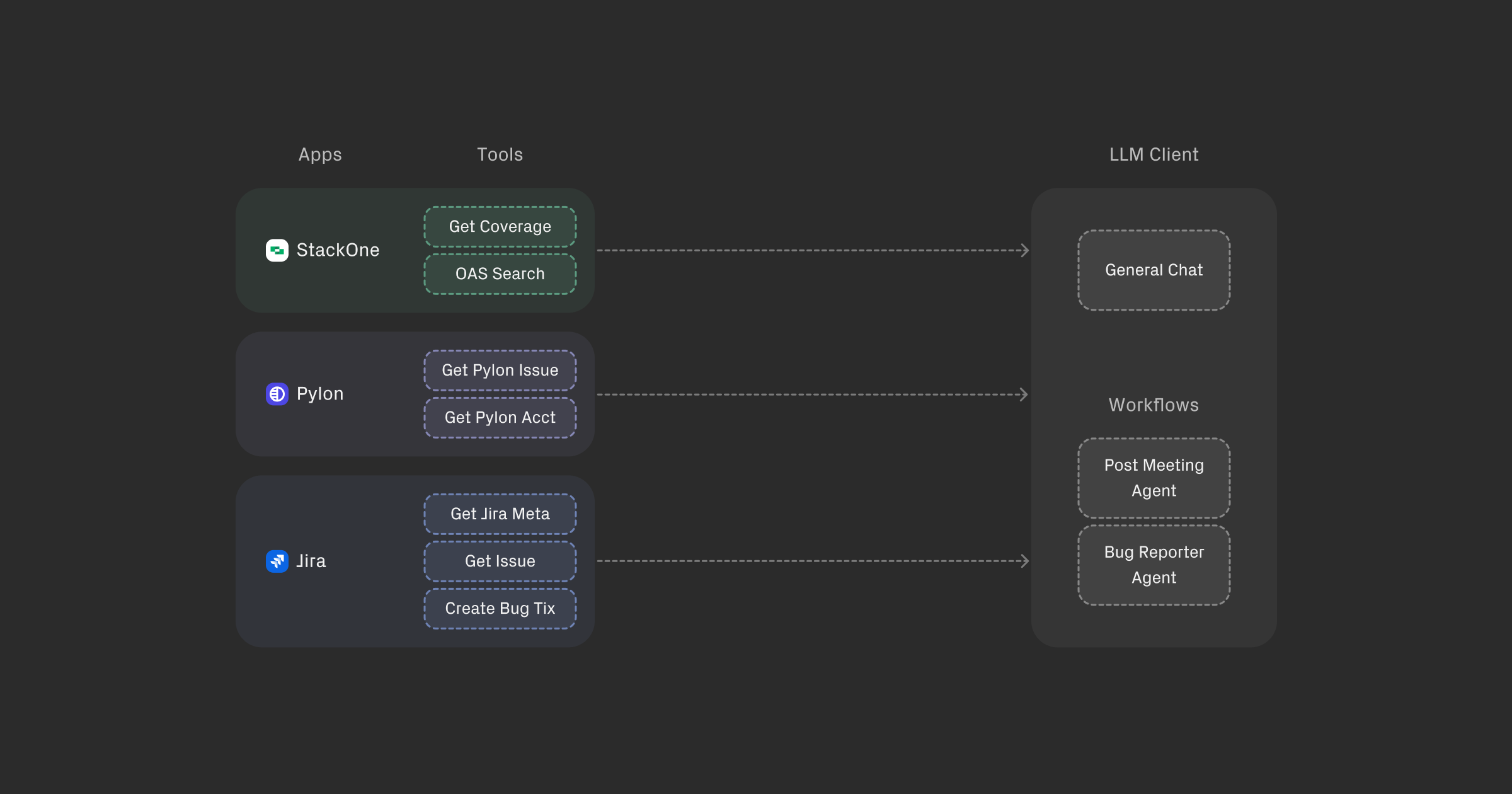
Current MCP implementation creates several pain points:
Tool Limits
Platforms like Claude enforce hard limits (40 tools maximum), forcing users to continuously toggle tools on/off. This creates dangerous scenarios where dependency relationships between tools — such as retrieving metadata before creating tickets — remain invisible to both users and AI systems.
Performance Degradation
When an LLM has access to a heap of tools, it performs worse. Symptoms include unnecessary web searches and inability to disambiguate similar concepts (engineering tickets versus support tickets).
Tool Customization
Users lack ability to tailor generic tools for specific workflows without technical expertise. A “Create Jira ticket” tool should behave differently for bug reports versus integration issues.
New Approaches
The post presents three potential directions:
Option 1: Better LLM Clients — Solving tool management within LLM interfaces themselves through improved design.
Option 2: Workflow-Based Tool Servers — The proposed solution enabling users to bundle tools from multiple apps into workflow-specific servers. This approach includes:
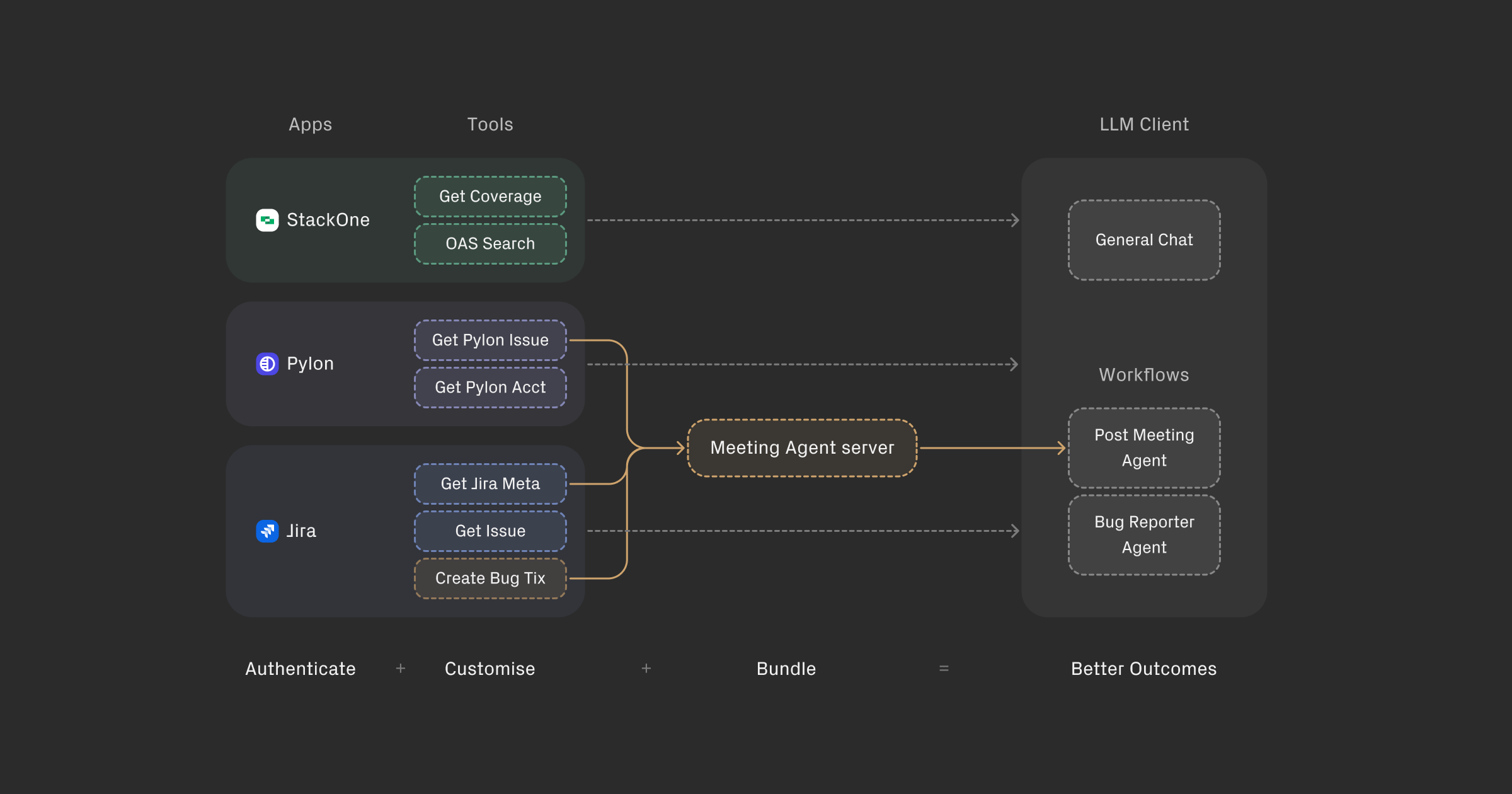
- Authentication: Controlling tool visibility at the app level
- Customization: Tailoring generic tools through code customization
- Bundling: Creating workflow-specific servers with relevant tools only
- Prompt Management: Including system prompts with bundled tools
- Portability: Maintaining consistency across different platforms
Option 3: Better Tool Calling — Improving AI decision-making about which tools to invoke through feedback mechanisms.
Conclusion
These approaches work together complementarily, with workflow-based servers better reflecting how people actually work by prioritizing outcomes over infrastructure considerations.