 Matt Carey · · 5 min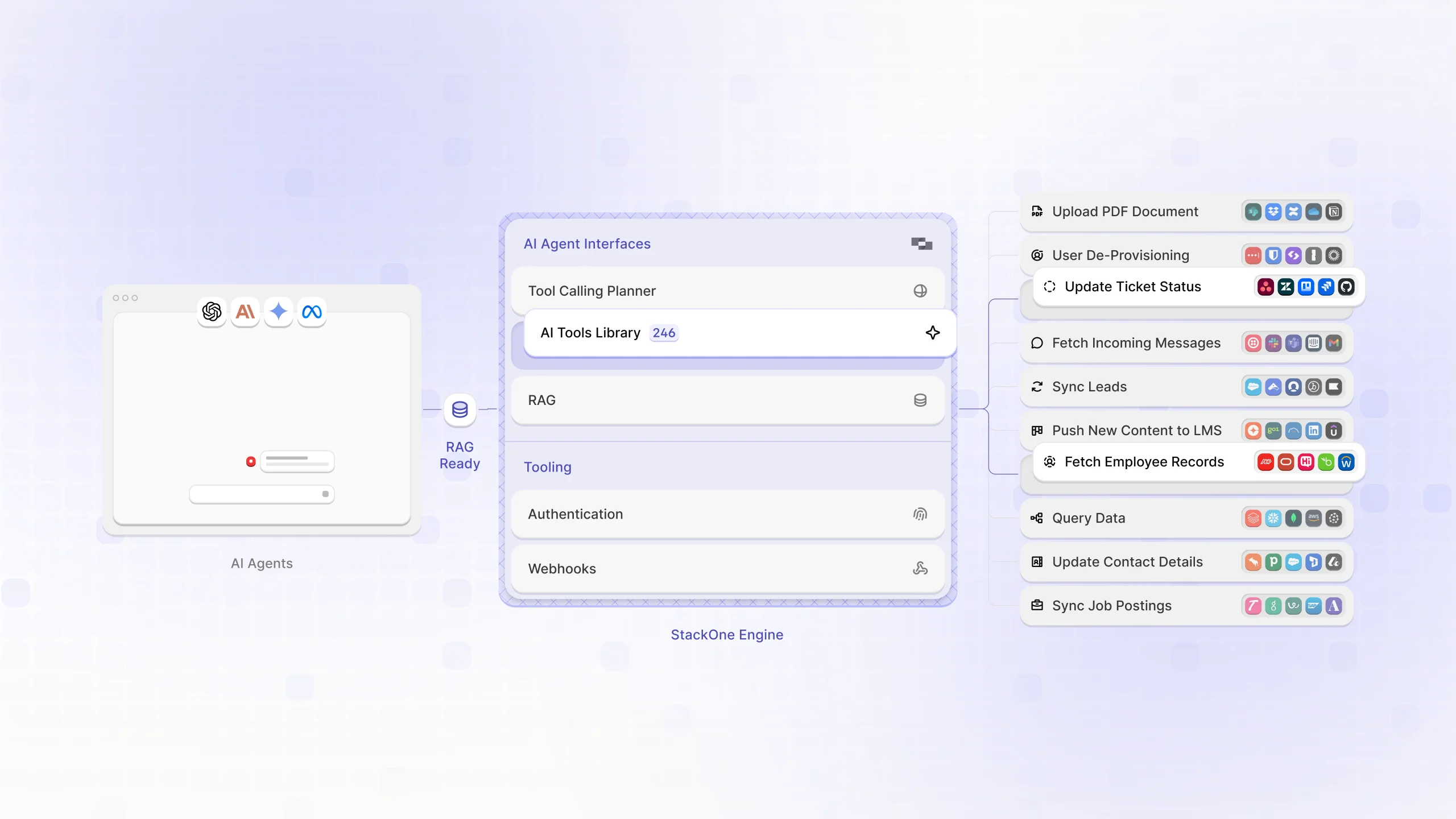
StackOne ToolSet: Enabling Agentic Integrations for Hundreds of Enterprise SaaS
Table of Contents
Recent months have seen growing adoption of StackOne for building AI agents — including HR assistants, virtual recruiters, and personal assistants. However, this expansion revealed a critical challenge: integrating SaaS API calls into agents is still harder than it should be.
Traditional SDKs and APIs weren’t designed for AI agents, forcing engineers to hard-code API calls into tools, create custom OpenAPI-to-tool converters, or rely on emerging MCP servers.
We identified an opportunity to improve the developer experience by releasing the StackOne ToolSet — an AI-native interface that lets AI agents interact with hundreds of SaaS applications.

Agents and Integrations
StackOne’s platform simplifies integrations across over 200 enterprise applications, normalizing more than 16,000 fields into consistent schemas. Whether pulling data from Workday, Hibob, Salesforce, or Attio, agents receive clean, structured data.
Why This Matters for Tool Calling
Garbage in, garbage out — and it’s no different when it comes to tool calling APIs. Disparate endpoint naming, poorly named schema properties, and unclear usage guidance compromise tool performance. Standardized inputs and outputs eliminate this complexity, providing LLM-based agents a predictable interface.
Data Efficiency Benefits
StackOne dramatically improves data efficiency. An employee record in StackOne contains attributes most apps expect, making outputs significantly more concise than underlying APIs.
Token Efficiency Example: Fetching a single employee record from Workday via StackOne uses less than 4% of tokens required by Workday’s native SOAP API — making responses over 25x more concise.
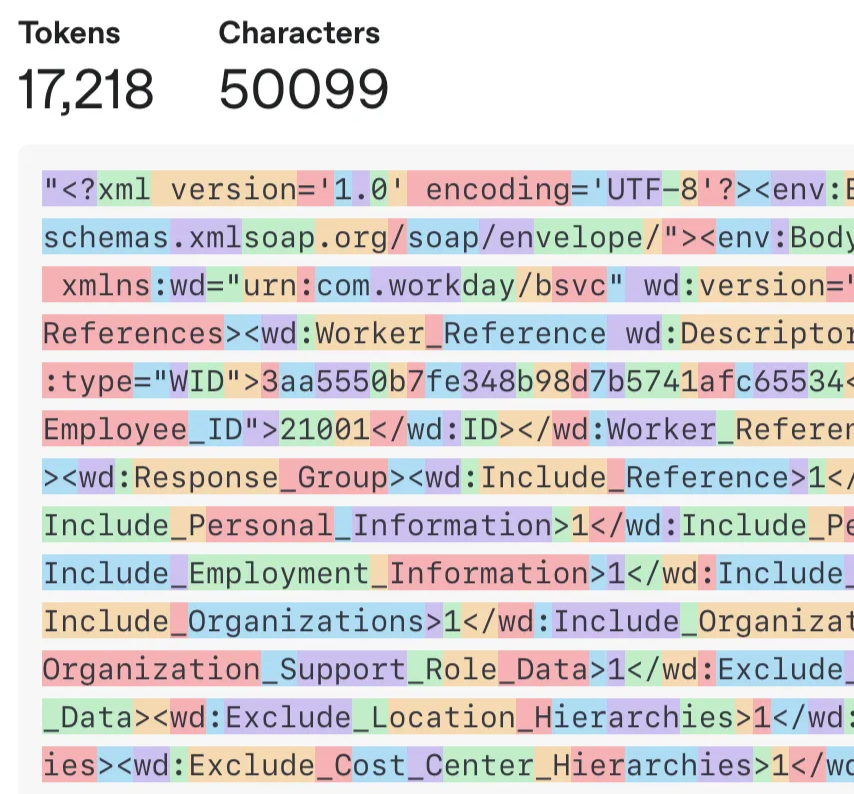
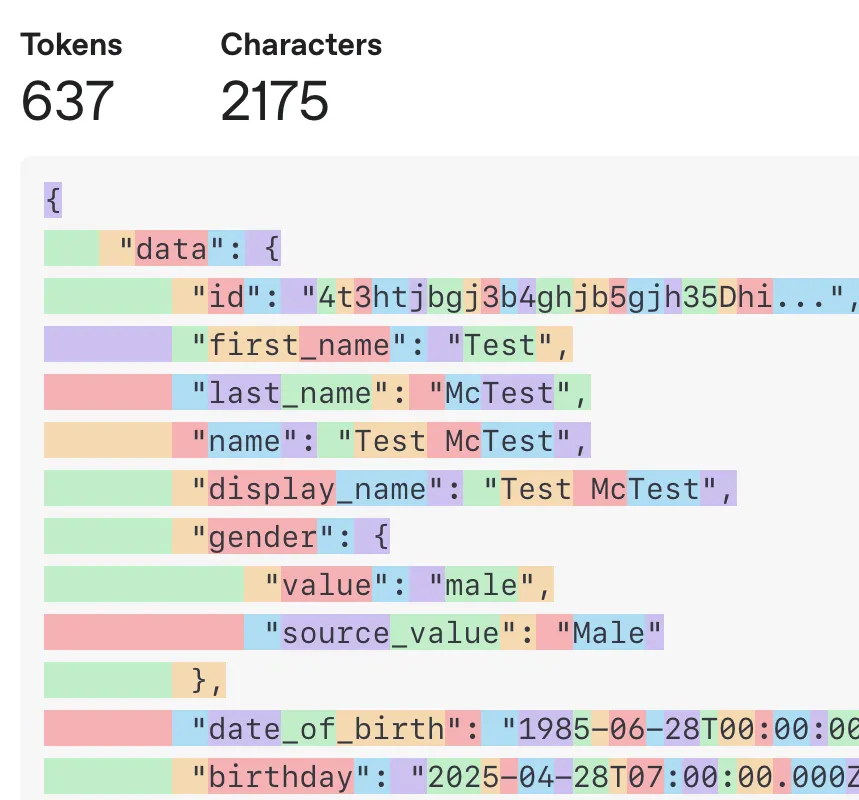
This efficiency matters because reasoning degrades around 10k tokens in most LLMs, making raw enterprise APIs impractical for AI agents without preprocessing.
Simplified Authentication
StackOne abstracts all authentication management behind a single API key, allowing agents to act on any customer-connected SaaS regardless of underlying authentication methods. This elegantly solves tool authentication challenges for AI agents.
Real-Time Responses
Built on real-time architecture, StackOne acts as a pass-through proxy, transforming requests and responses in real time. When agents create or update data in system-of-record, they can immediately query those records — crucial for user expectations that agents “do something” and immediately confirm completion.
Bridging the Gap from SDKs to Tools
Standard SDKs are ergonomic for developer code, but AI agents require function/tool calling syntax. Converting numerous API calls into LLM tools seemed like unnecessary overhead.
Emerging Standards Reviewed
We examined:
- Wildcard AI’s agents.json format for machine-readable endpoint descriptions
- Model Context Protocol (MCP) from Anthropic for LLM interactions with external tools
- OpenAI’s SDK tool definitions, which became de facto standard for open-source inference libraries

Rather than wait for market adoption of standards, StackOne chose a toolset-first approach, inspired by other API-first companies (such as Stripe and Vercel) to provide immediately usable solutions while remaining flexible for future standards.
Introducing the StackOne ToolSet
StackOne ToolSet transforms StackOne’s integrations into AI tools that integrate smoothly with LLM frameworks. Available in TypeScript (Node.js) and Python, it’s an open-source, experimental SDK tailor-made for AI agent development.
While some early players in the AI integrations space have rushed to release catalogs of low-level tools for common apps, we’ve been quietly focused on building the best option for agents that actually want to interact reliably with SaaS tools.
Key Features
- Tool Filtering: Filter exposed endpoints using glob patterns, controlling agent permissions with precision
- Out-of-the-Box AI Library Integrations: Works with OpenAI function calling, LangChain, CrewAI, and Vercel’s AI SDK
- Managed StackOne Context: Handles Account IDs, API keys, and required headers automatically
- Lightweight: TypeScript package has zero runtime dependencies
Installation
# Install for Node.js (TypeScript/JavaScript)
npm install @stackone/ai

# Install for Python
pip install stackone-ai
Resources
- TypeScript SDK: stackone-ai-node repository
- Python SDK: stackone-ai-python repository
Conclusion
StackOne positions the ToolSet as advancing its mission to be the universal integration layer for modern software. We encourage early feedback on this experimental release and invite non-customers to contact ai@stackone.com for demonstrations.