Connect
Optimize
Secure
Announcing StackOne Defender: leading open-source prompt injection guard for your agent • Read More →
Production-ready Brainier MCP server with 45 extensible actions — plus built-in authentication, security, and optimized execution.
 StackOne
Coverage
Create, read, update, and delete across Brainier — and extend your agent's capabilities with custom actions.

Authentication
Per-user OAuth in one call. Your Brainier MCP server gets session-scoped tokens with zero credentials stored on your infra.
Agent Auth →
Security
Every Brainier tool response scanned for prompt injection in milliseconds — 88.7% accuracy, all running on CPU.
Prompt Injection Defense →
Performance
Free up to 96% of your agent's context window to enhance reasoning and reduce cost, on every Brainier call.
Tools Discovery →A Brainier MCP server lets AI agents read and write Brainier data through the Model Context Protocol — Anthropic's open standard for connecting LLMs to external tools. StackOne's Brainier MCP server ships with 45 pre-built actions, fully extensible via the Connector Builder — plus managed authentication, prompt injection defense, and optimized agent context. Connect it from MCP clients like Claude Desktop, Cursor, and VS Code, or from agent frameworks like OpenAI Agents SDK, LangChain, and Vercel AI SDK.
Every action from Brainier's API, ready for your agent. Create, read, update, and delete — scoped to exactly what you need.
Create a new user with the information provided (assignment changes may take up to an hour to propagate)
Retrieve user information for users that meet filter criteria
Retrieve all user information for a given user ID
Update a pre-existing user with new information (assignment changes may take up to an hour to propagate)
Create a new group with the information provided
Retrieve group information for groups that meet filter criteria
Retrieve all group information for a given group ID
Update a pre-existing group with new information provided
Retrieve role information for roles that meet filter criteria
Retrieve all role information for a given role ID
Retrieve learning object information for multiple learning objects based on filter criteria
Retrieve all learning object information for a given object ID
Grant front-end access to a learning object for a user or group (must pass either user_id or group_id, but not both)
Retrieve the users and groups who have been granted access to a learning object
Remove front-end access to a learning object for a user or group (must pass either user_id or group_id, but not both)
Create a record for a user/object combination with a status such as Complete or Failed
Retrieve started or completed records in the system, with optional date and filter parameters
Update the status of a user object record (e.g., moving from Started to Complete)
Create an empty assignment batch (can also create a bookmark or recommendation)
Retrieve all assignment batches that the caller has access to
Add a user to an assignment batch
Retrieve all user IDs that are part of an assignment (individually or through a group)
Remove a user from an assignment batch
Add a group to an assignment batch
Retrieve all group IDs that are part of an assignment
Remove a group from an assignment batch
Add a learning object to an assignment batch
Retrieve all learning object IDs that are part of an assignment
Remove a learning object from an assignment batch
Bookmark a learning object for the current user
Remove a bookmark for a learning object
Add a single user to the specified group within the context of a role (assignment changes may take up to an hour to propagate)
Retrieve all comments for a given learning object
Retrieve all schedule information for a given class object
Retrieve all questions and possible answers for a quiz or survey
Retrieve additional configuration options for a quiz or survey set in the Brainier LMS backend
Retrieve answers provided by a user for all questions in a quiz or survey for a single record
Retrieve all assigned objects and assignment information for a particular user
Retrieve all system tags or tags associated with objects the user has access to
Retrieve all learning objects that the caller has bookmarked
Retrieve all authors associated with a learning object
Retrieve all authors the caller has access to (associated with accessible objects)
Retrieve all learning objects that have the specified user or faculty as an author
Remove a single user from a group (assignment changes may take up to an hour to propagate)
Delete a user object record to unregister a user from a class (only works for class objects)
One endpoint. Any framework. Your agent is talking to Brainier in under 10 lines of code.
MCP Clients
Agent Frameworks

 JSON
JSON{
"mcpServers": {
"stackone": {
"command": "npx",
"args": [
"-y",
"mcp-remote@latest",
"https://api.stackone.com/mcp?x-account-id=<account_id>",
"--header",
"Authorization: Basic <YOUR_BASE64_TOKEN>"
]
}
}
}122+ actions
79+ actions
78+ actions
72+ actions
69+ actions
69+ actions
67+ actions
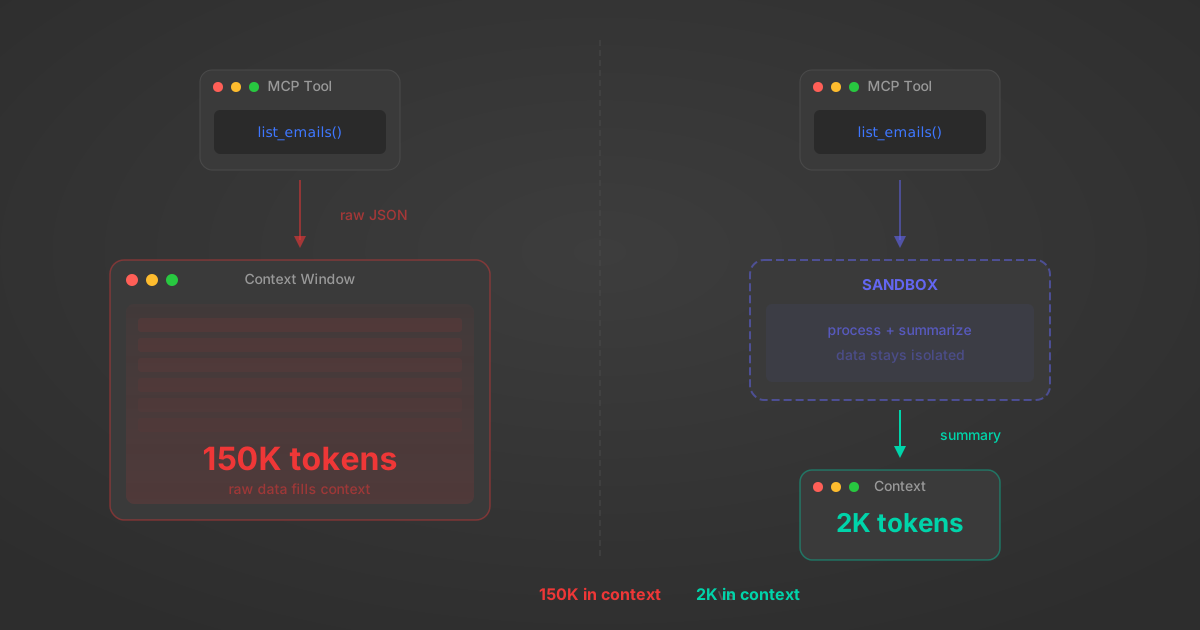
Anthropic's code_execution processes data already in context. Custom MCP code mode keeps raw tool responses in a sandbox. 14K tokens vs 500.
11 min
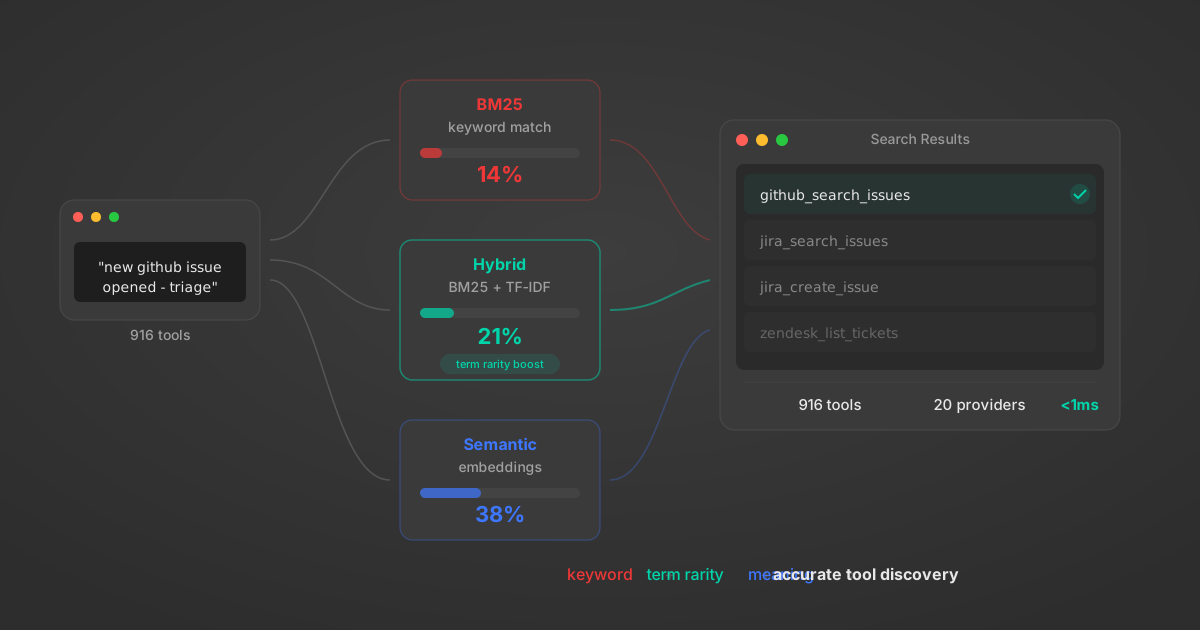
Benchmarking BM25, TF-IDF, and hybrid search for MCP tool discovery across 916 tools. The 80/20 TF-IDF/BM25 hybrid hits 21% Top-1 accuracy in under 1ms.
10 min
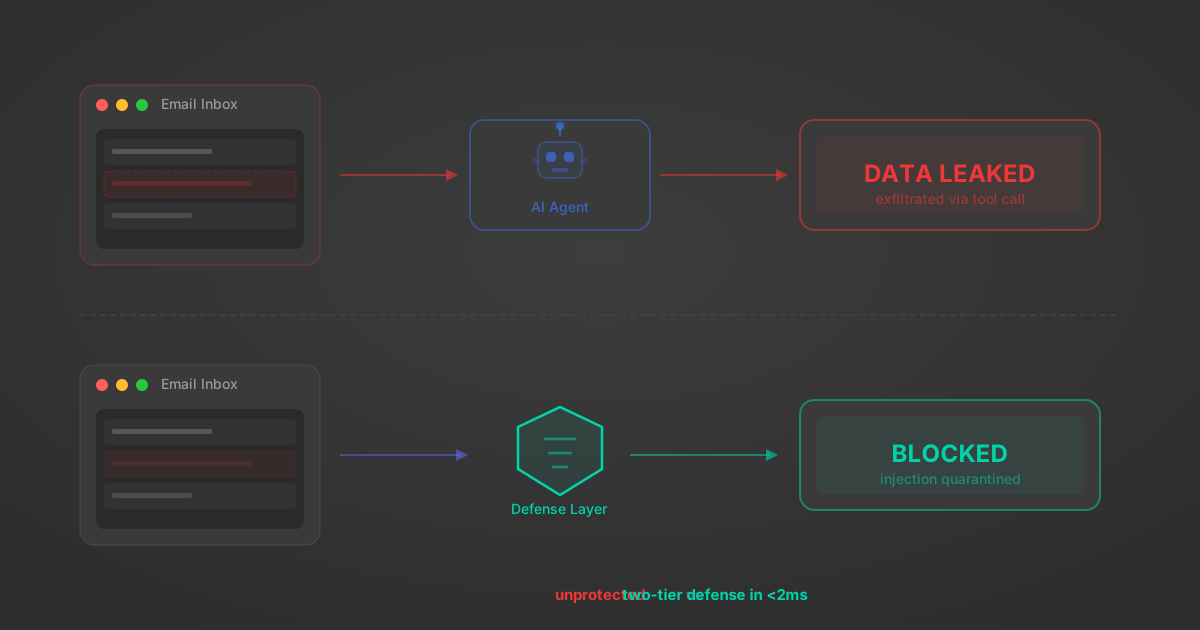
MCP tools that read emails, CRM records, and tickets are indirect prompt injection vectors. Here's how we built a two-tier defense that scans tool results in ~11ms.
12 min
origin_owner_id.All the tools you need to build and scale AI agent integrations, with best-in-class connectivity, execution, and security.