Connect
Optimize
Secure
Announcing StackOne Defender: leading open-source prompt injection guard for your agent • Read More →
Production-ready Campaign Monitor MCP server with 73 extensible actions — plus built-in authentication, security, and optimized execution.
 StackOne
Coverage
Create, read, update, and delete across Campaign Monitor — and extend your agent's capabilities with custom actions.

Authentication
Per-user OAuth in one call. Your Campaign Monitor MCP server gets session-scoped tokens with zero credentials stored on your infra.
Agent Auth →
Security
Every Campaign Monitor tool response scanned for prompt injection in milliseconds — 88.7% accuracy, all running on CPU.
Prompt Injection Defense →
Performance
Free up to 96% of your agent's context window to enhance reasoning and reduce cost, on every Campaign Monitor call.
Tools Discovery →A Campaign Monitor MCP server lets AI agents read and write Campaign Monitor data through the Model Context Protocol — Anthropic's open standard for connecting LLMs to external tools. StackOne's Campaign Monitor MCP server ships with 73 pre-built actions, fully extensible via the Connector Builder — plus managed authentication, prompt injection defense, and optimized agent context. Connect it from MCP clients like Claude Desktop, Cursor, and VS Code, or from agent frameworks like OpenAI Agents SDK, LangChain, and Vercel AI SDK.
Every action from Campaign Monitor's API, ready for your agent. Create, read, update, and delete — scoped to exactly what you need.
Add a new administrator to the Campaign Monitor account
Retrieve all administrators for the Campaign Monitor account
Retrieve details for a specific administrator by email address
Update the name or email address of an existing administrator
Remove an administrator from the Campaign Monitor account
Retrieve the primary contact administrator for the Campaign Monitor account
Set the primary contact for the Campaign Monitor account
Create a new draft email campaign for a client
Send or schedule a draft campaign to its recipients
Create a new custom field for a subscriber list
Retrieve all custom fields defined for a subscriber list
Update the name and preference center visibility of a custom field
Delete a custom field from a subscriber list
Create a new subscriber segment within a specific list
Retrieve details of a specific segment by its ID
Update the title and rules of an existing segment
Delete an existing segment
Add or update a single subscriber in a subscriber list
Bulk import multiple subscribers into a subscriber list
Retrieve details for a specific subscriber in a list
Update the details of an existing subscriber in a list
Permanently delete a subscriber from a subscriber list
Create a new email template for a client
Copy an existing email template to the same or a different client
Retrieve details for a specific email template
Update the name or content source of an existing email template
Permanently delete an email template
Send a transactional smart email to one or more recipients
Retrieve all smart transactional email templates for a client
Retrieve a list of sent transactional messages with filtering options
Retrieve details for a specific transactional message
Register a webhook to receive notifications for subscriber list events
Retrieve all webhooks configured for a subscriber list
Permanently delete a webhook from a subscriber list
Send a preview of a draft campaign to specified email addresses
Create a new subscriber list for a client
Send a transactional email with fully custom content
Retrieve all clients associated with the authenticated account
Retrieve billing details for the authenticated account (requires account-level API key)
Retrieve details for a specific client including their API key, contact information, and basic account details
Retrieve all sent campaigns for a specific client
Retrieve all subscriber lists for a specific client
Retrieve all email templates for a specific client
Retrieve all segments across all lists for a specific client
Retrieve all draft (unsent) campaigns for a specific client
Retrieve all scheduled campaigns for a specific client
Retrieve the current date and time in the account's configured timezone
Retrieve all valid timezone names accepted by the Campaign Monitor API
Retrieve all valid country names accepted by the Campaign Monitor API
Retrieve a performance summary for a sent campaign
Retrieve all email bounces for a sent campaign
Retrieve all email opens for a sent campaign
Retrieve all link clicks for a sent campaign
Retrieve all recipients of a sent campaign
Retrieve all unsubscribes resulting from a sent campaign
Retrieve all spam complaints for a sent campaign
Retrieve details and statistics for a subscriber list
Retrieve comprehensive summary statistics for a subscriber list
Retrieve all active subscribers for a subscriber list
Retrieve all unsubscribed subscribers for a subscriber list
Retrieve all bounced subscribers for a subscriber list
Retrieve all deleted subscribers for a subscriber list
Retrieve all segments defined for a subscriber list
Retrieve campaign history for a specific subscriber
Retrieve details for a specific smart transactional email
Update the settings for an existing subscriber list
Update the available options for a multi-select custom field
Delete a draft campaign from the account
Delete a subscriber list and all its subscribers
Unsubscribe an email address from a subscriber list
Send a test payload to a webhook endpoint to verify it is reachable and responding correctly
Activate a previously deactivated webhook so it resumes receiving event notifications
Deactivate a webhook to temporarily pause event notifications without deleting it
One endpoint. Any framework. Your agent is talking to Campaign Monitor in under 10 lines of code.
MCP Clients
Agent Frameworks

 JSON
JSON{
"mcpServers": {
"stackone": {
"command": "npx",
"args": [
"-y",
"mcp-remote@latest",
"https://api.stackone.com/mcp?x-account-id=<account_id>",
"--header",
"Authorization: Basic <YOUR_BASE64_TOKEN>"
]
}
}
}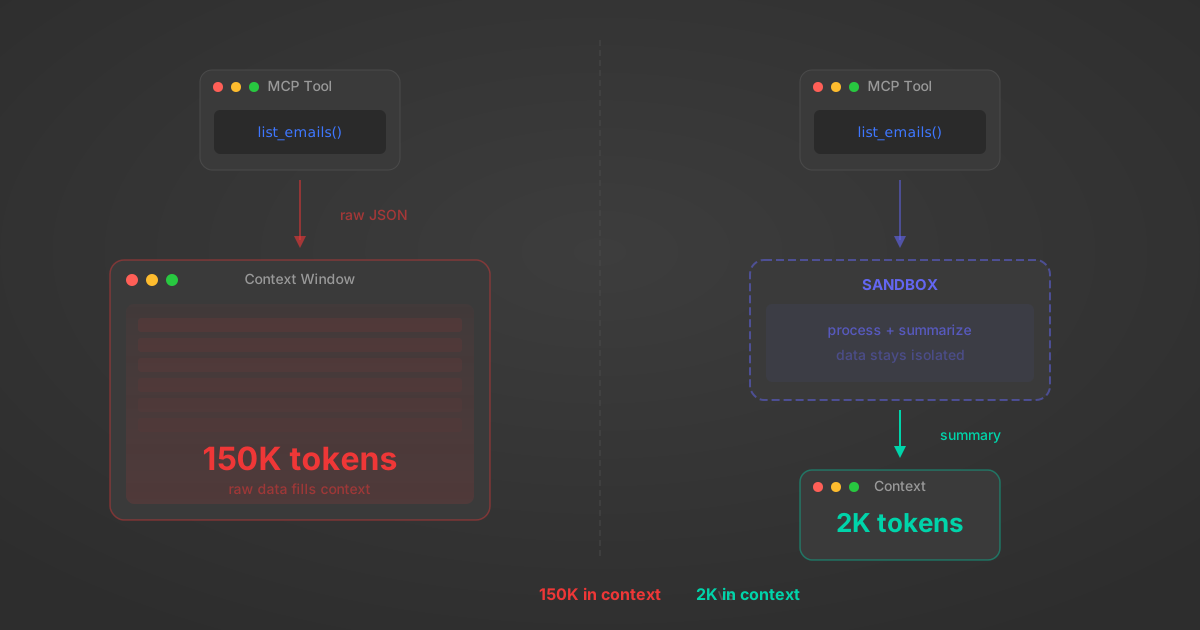
Anthropic's code_execution processes data already in context. Custom MCP code mode keeps raw tool responses in a sandbox. 14K tokens vs 500.
11 min
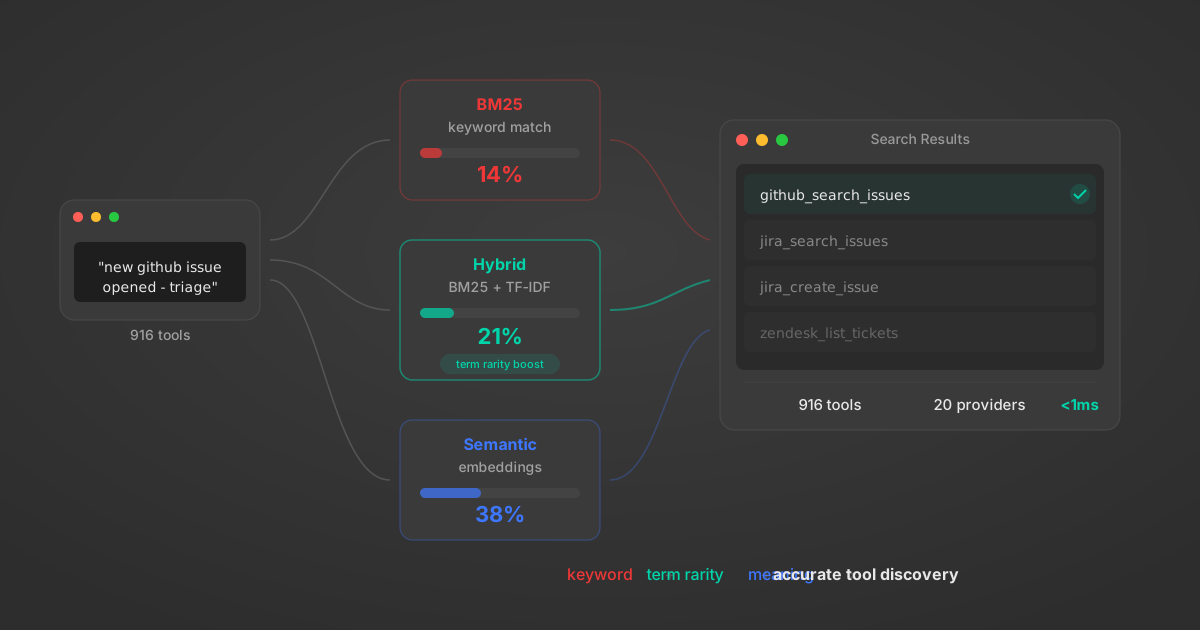
Benchmarking BM25, TF-IDF, and hybrid search for MCP tool discovery across 916 tools. The 80/20 TF-IDF/BM25 hybrid hits 21% Top-1 accuracy in under 1ms.
10 min
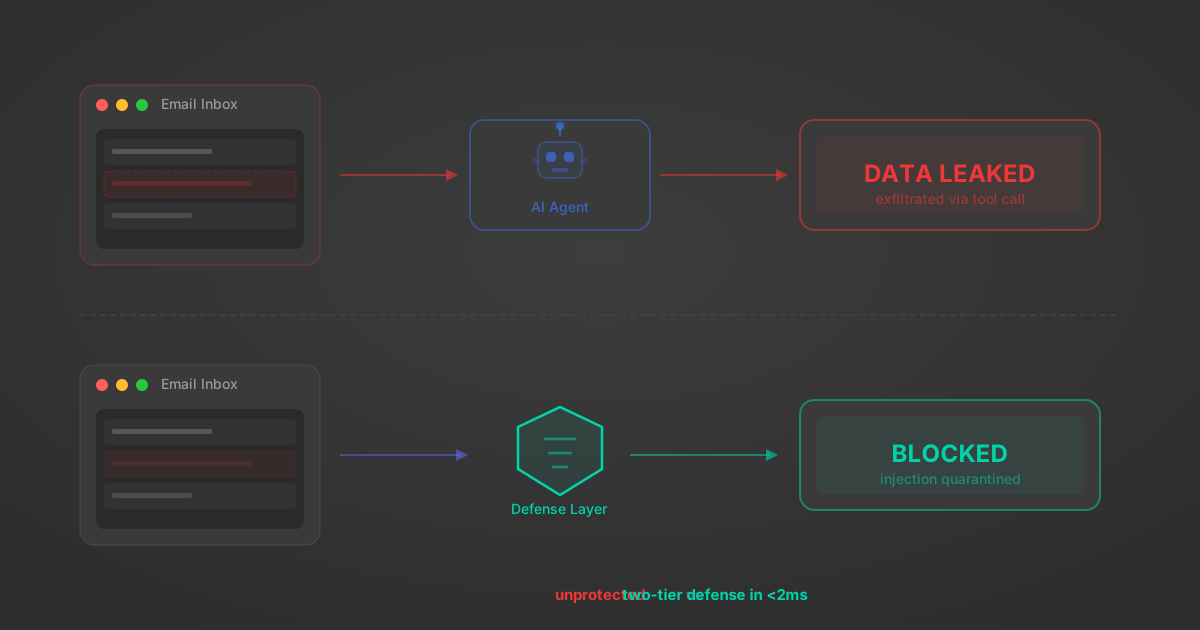
MCP tools that read emails, CRM records, and tickets are indirect prompt injection vectors. Here's how we built a two-tier defense that scans tool results in ~11ms.
12 min
origin_owner_id.All the tools you need to build and scale AI agent integrations, with best-in-class connectivity, execution, and security.