Connect
Optimize
Secure
Announcing StackOne Defender: leading open-source prompt injection guard for your agent • Read More →
Production-ready Docebo MCP server with 56 extensible actions — plus built-in authentication, security, and optimized execution.
 StackOne
Coverage
Create, read, update, and delete across Docebo — and extend your agent's capabilities with custom actions.

Authentication
Per-user OAuth in one call. Your Docebo MCP server gets session-scoped tokens with zero credentials stored on your infra.
Agent Auth →
Security
Every Docebo tool response scanned for prompt injection in milliseconds — 88.7% accuracy, all running on CPU.
Prompt Injection Defense →
Performance
Free up to 96% of your agent's context window to enhance reasoning and reduce cost, on every Docebo call.
Tools Discovery →A Docebo MCP server lets AI agents read and write Docebo data through the Model Context Protocol — Anthropic's open standard for connecting LLMs to external tools. StackOne's Docebo MCP server ships with 56 pre-built actions, fully extensible via the Connector Builder — plus managed authentication, prompt injection defense, and optimized agent context. Connect it from MCP clients like Claude Desktop, Cursor, and VS Code, or from agent frameworks like OpenAI Agents SDK, LangChain, and Vercel AI SDK.
Every action from Docebo's API, ready for your agent. Create, read, update, and delete — scoped to exactly what you need.
Create a new user in the Docebo platform with username, email, and password
Retrieve a list of all users in the Docebo platform with optional filtering and pagination
Retrieve detailed information for a specific user by their Docebo user ID
Update an existing user's information in the Docebo platform
Import or update multiple users in the Docebo platform in a single batch operation
Delete multiple users by user IDs in a single batch operation
Delete a user from the Docebo platform
Create a new course in the Docebo platform
Retrieve a list of all courses in the Docebo platform with optional filtering and pagination
Retrieve detailed information for a specific course by ID
Update an existing course in the Docebo platform with comprehensive settings including enrollment options, time options, player settings, and more
Import multiple courses in a single batch operation
Delete a course from the Docebo platform
Enroll a user in a course with optional level, validity dates, session assignment, and custom enrollment fields
Retrieve enrollment details for a specific user in a specific course. Returns a single enrollment record with dates, status, completion time, and score. Both course ID and user ID are required
Update an existing enrollment with comprehensive options including dates, status, level, session assignment, and custom fields
Import multiple enrollments in a single batch operation. Each item requires enrollment_date (YYYY-MM-DD format). Supports comprehensive options including status, scores, and assignment types
Un-enroll one or more users from one or more courses or learning plans, with options to reset learning tracks and delete issued certificates
Create a new learning plan in the Docebo platform
Retrieve a list of all learning plans in the Docebo platform
Retrieve detailed information for a specific learning plan by ID
Update an existing learning plan in the Docebo platform
Delete a learning plan from the Docebo platform
Create multiple learning objects (training materials) in a single batch operation. Different lo_type values require different fields (e.g., video requires lo_url, file requires lo_filename, scorm requires a valid SCORM zip URL)
Retrieve detailed information for a specific learning object (training material) by ID, including title, description, type, visibility, and associated course
Create a new course category in the Docebo platform
Retrieve detailed information for a specific category by ID
Update an existing category in the Docebo platform
Delete a category from the Docebo platform
Retrieve a list of ILT (Instructor-Led Training) sessions for a classroom course in the Docebo platform
Retrieve detailed information for a specific ILT session including instructors, dates, and enrollment settings
Delete an ILT session from a course in the Docebo platform
Create a new ILT location in the Docebo platform for scheduling training sessions
Retrieve a list of all ILT locations in the Docebo platform with optional sorting and pagination
Update an existing ILT location in the Docebo platform
Delete an ILT location from the Docebo platform
Retrieve a list of branches of given or root level in the Docebo platform
Create or update multiple organizational branches in a single batch operation
Delete multiple organizational branches in a single batch operation
Create a new organizational branch in the Docebo platform
Get details of a selected branch
Update selected branch in the Docebo platform
Delete an organizational branch from the Docebo platform
Send a message to a user
Get setting information about a specific user
Retrieve all learning objects (training materials) for a specific course
Retrieve all enrollments associated with a specific course with filtering by status, level, branch, group, and more
Retrieve a list of all certifications in the Docebo platform
Retrieve a list of all course categories in the Docebo platform
Retrieve child categories for a specific parent category
Retrieve all enrollments for a specific ILT session with filtering and pagination options
Retrieve information about a branch's users
Import certifications for multiple users in a single batch operation
Enroll a single user in a learning plan
Unenroll a user from a learning plan
Assign users to an organizational branch
One endpoint. Any framework. Your agent is talking to Docebo in under 10 lines of code.
MCP Clients
Agent Frameworks

 JSON
JSON{
"mcpServers": {
"stackone": {
"command": "npx",
"args": [
"-y",
"mcp-remote@latest",
"https://api.stackone.com/mcp?x-account-id=<account_id>",
"--header",
"Authorization: Basic <YOUR_BASE64_TOKEN>"
]
}
}
}122+ actions
79+ actions
78+ actions
72+ actions
69+ actions
69+ actions
67+ actions
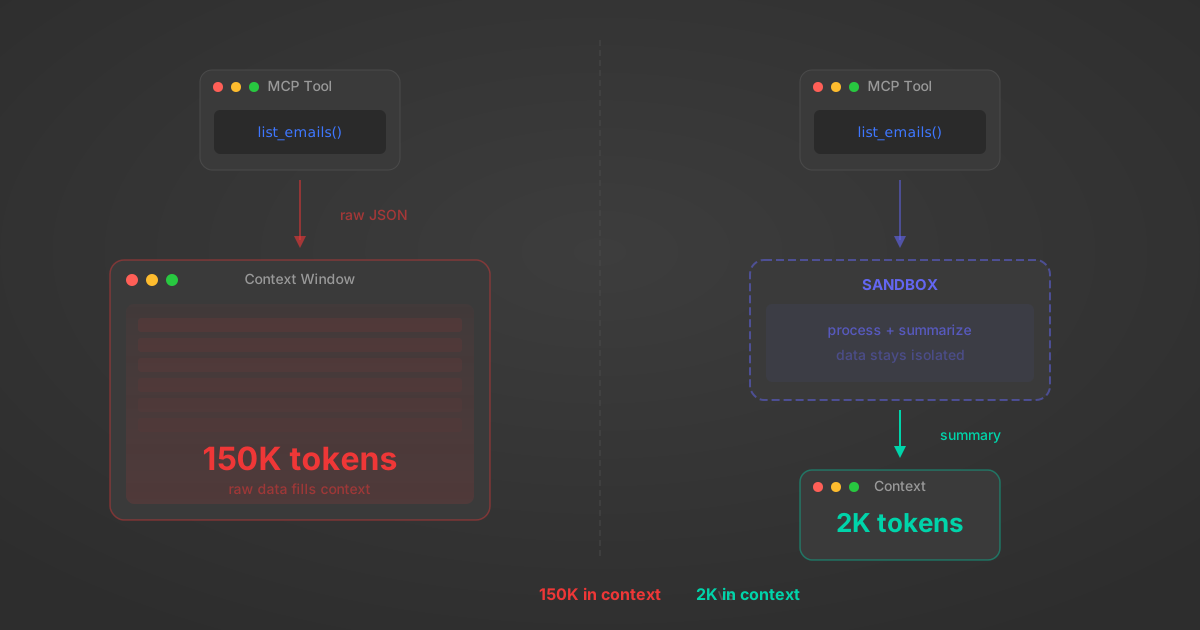
Anthropic's code_execution processes data already in context. Custom MCP code mode keeps raw tool responses in a sandbox. 14K tokens vs 500.
11 min
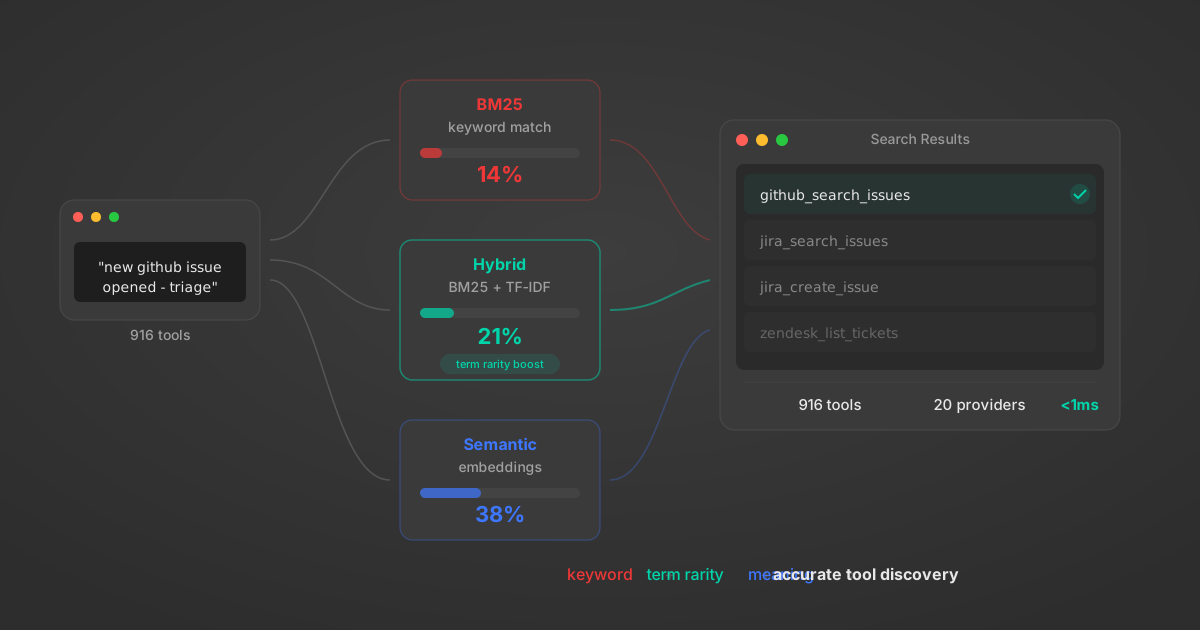
Benchmarking BM25, TF-IDF, and hybrid search for MCP tool discovery across 916 tools. The 80/20 TF-IDF/BM25 hybrid hits 21% Top-1 accuracy in under 1ms.
10 min
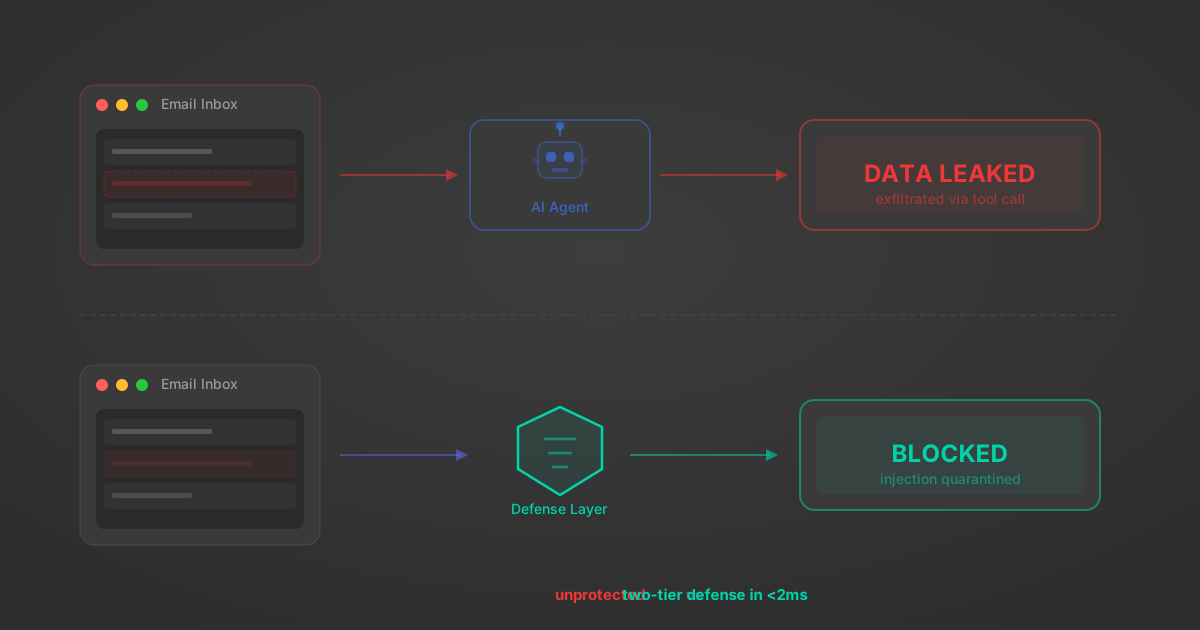
MCP tools that read emails, CRM records, and tickets are indirect prompt injection vectors. Here's how we built a two-tier defense that scans tool results in ~11ms.
12 min
origin_owner_id.All the tools you need to build and scale AI agent integrations, with best-in-class connectivity, execution, and security.