Connect
Optimize
Secure
Announcing StackOne Defender: leading open-source prompt injection guard for your agent • Read More →
Production-ready Figma MCP server with 39 extensible actions — plus built-in authentication, security, and optimized execution.
 StackOne
Coverage
Create, read, update, and delete across Figma — and extend your agent's capabilities with custom actions.

Authentication
Per-user OAuth in one call. Your Figma MCP server gets session-scoped tokens with zero credentials stored on your infra.
Agent Auth →
Security
Every Figma tool response scanned for prompt injection in milliseconds — 88.7% accuracy, all running on CPU.
Prompt Injection Defense →
Performance
Free up to 96% of your agent's context window to enhance reasoning and reduce cost, on every Figma call.
Tools Discovery →A Figma MCP server lets AI agents read and write Figma data through the Model Context Protocol — Anthropic's open standard for connecting LLMs to external tools. StackOne's Figma MCP server ships with 39 pre-built actions, fully extensible via the Connector Builder — plus managed authentication, prompt injection defense, and optimized agent context. Connect it from MCP clients like Claude Desktop, Cursor, and VS Code, or from agent frameworks like OpenAI Agents SDK, LangChain, and Vercel AI SDK.
Every action from Figma's API, ready for your agent. Create, read, update, and delete — scoped to exactly what you need.
Post a new comment on a Figma file as either a standalone comment or a threaded reply to an existing comment
Retrieve all comments and comment threads from a Figma file, including user information, timestamps, and threaded replies
Permanently delete a specific comment from a Figma file, removing it from the design's comment thread
Add an emoji reaction to a comment for quick engagement without writing a full reply
Retrieve all emoji reactions added to a specific comment, including who reacted and when
Remove an emoji reaction from a comment that you previously added
Create a new webhook to receive events from Figma
Get all webhooks for a given context (team, project, file) or plan
Get details of a specific webhook by ID
Update an existing webhook configuration
Permanently delete a webhook
Get developer resources (links) attached to nodes in a file
Delete a specific developer resource link from a file
Retrieves the complete JSON representation of a Figma file including all pages, frames, components, layers, and their properties with full design data and document tree structure
Retrieves specific nodes from a Figma file by their IDs without fetching the entire file structure, enabling efficient targeted data extraction for individual components, frames, or design elements
Retrieves download URLs for all user-uploaded images used as fills in a Figma file, including photos, textures, and bitmap assets embedded in the design
Retrieves lightweight metadata about a Figma file including name, thumbnail, timestamps, editor type, version information, and sharing permissions without fetching the full document structure
Retrieves all projects within a specified team, including project names, IDs, and metadata. Useful for team workspace navigation, project discovery, and organizational management.
Retrieves all design files within a specific project, including file names, keys, thumbnail URLs, and last modified timestamps. Essential for file discovery, project content auditing, and building custom dashboards.
Get information about the currently authenticated user
Retrieve all published components from a team's shared library with pagination support, useful for building component browsers and syncing design systems
Retrieve all published components from a specific Figma file's library, returning component metadata without pagination
Retrieve detailed metadata for a specific component by its unique component key
Retrieve all published component sets (variant groups) from a team's shared library with pagination support
Retrieve all published component sets (variant groups) from a specific Figma file's library without pagination
Retrieve detailed metadata for a specific component set (variant group) by its unique key
Get webhook delivery logs from the last week
Get local and remote variables used in a file (Enterprise only)
Get published variables from a file library (Enterprise only)
Get time series data on component actions (insertions, detachments) in a library (Enterprise only)
Get summary data on component instance counts across all files (Enterprise only)
Get time series data on style actions (insertions, detachments) in a library (Enterprise only)
Get summary data on style instance counts across all files (Enterprise only)
Get time series data on variable actions in a library (Enterprise only)
Get summary data on variable instance counts across all files (Enterprise only)
Renders and exports images of specific nodes from a Figma file in multiple formats (PNG, JPG, SVG, PDF) with customizable scale, bounds, and rendering options for asset generation and design automation workflows
Bulk create, update, and delete variables and variable collections (Enterprise only)
Bulk create developer resource links across multiple files
Bulk update existing developer resource links
One endpoint. Any framework. Your agent is talking to Figma in under 10 lines of code.
MCP Clients
Agent Frameworks

 JSON
JSON{
"mcpServers": {
"stackone": {
"command": "npx",
"args": [
"-y",
"mcp-remote@latest",
"https://api.stackone.com/mcp?x-account-id=<account_id>",
"--header",
"Authorization: Basic <YOUR_BASE64_TOKEN>"
]
}
}
}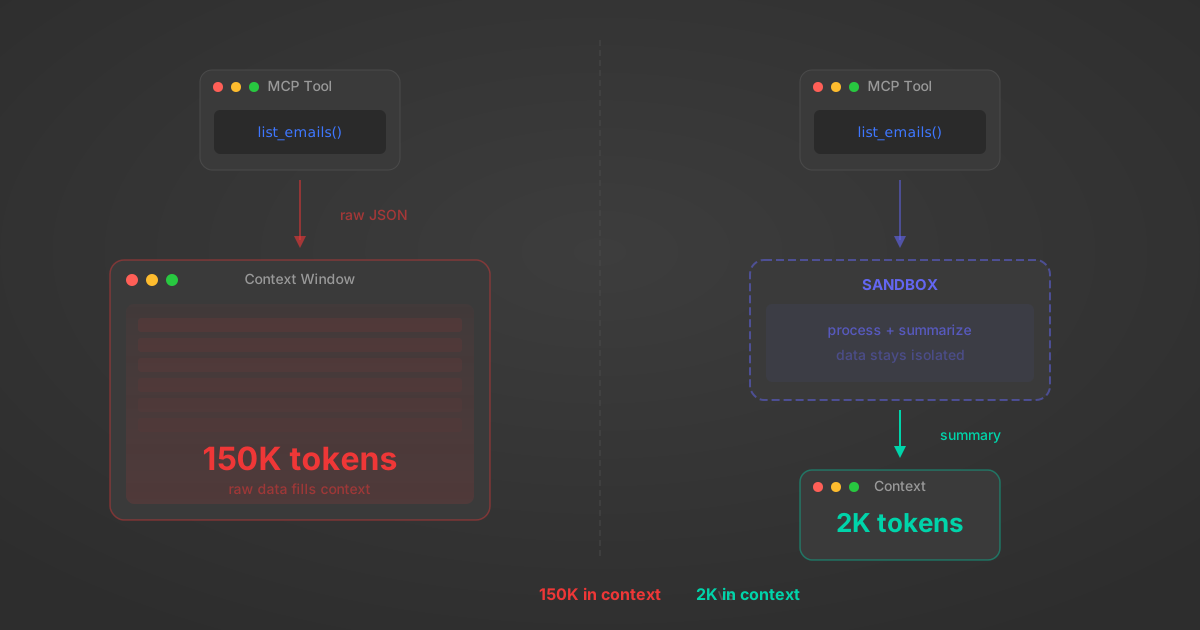
Anthropic's code_execution processes data already in context. Custom MCP code mode keeps raw tool responses in a sandbox. 14K tokens vs 500.
11 min
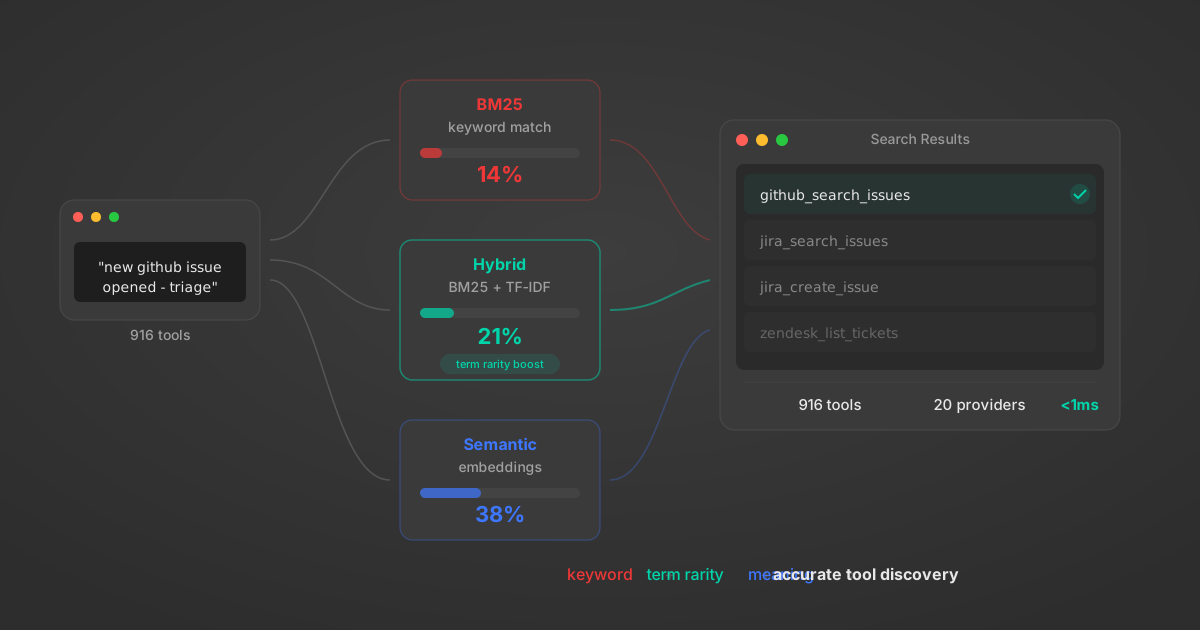
Benchmarking BM25, TF-IDF, and hybrid search for MCP tool discovery across 916 tools. The 80/20 TF-IDF/BM25 hybrid hits 21% Top-1 accuracy in under 1ms.
10 min
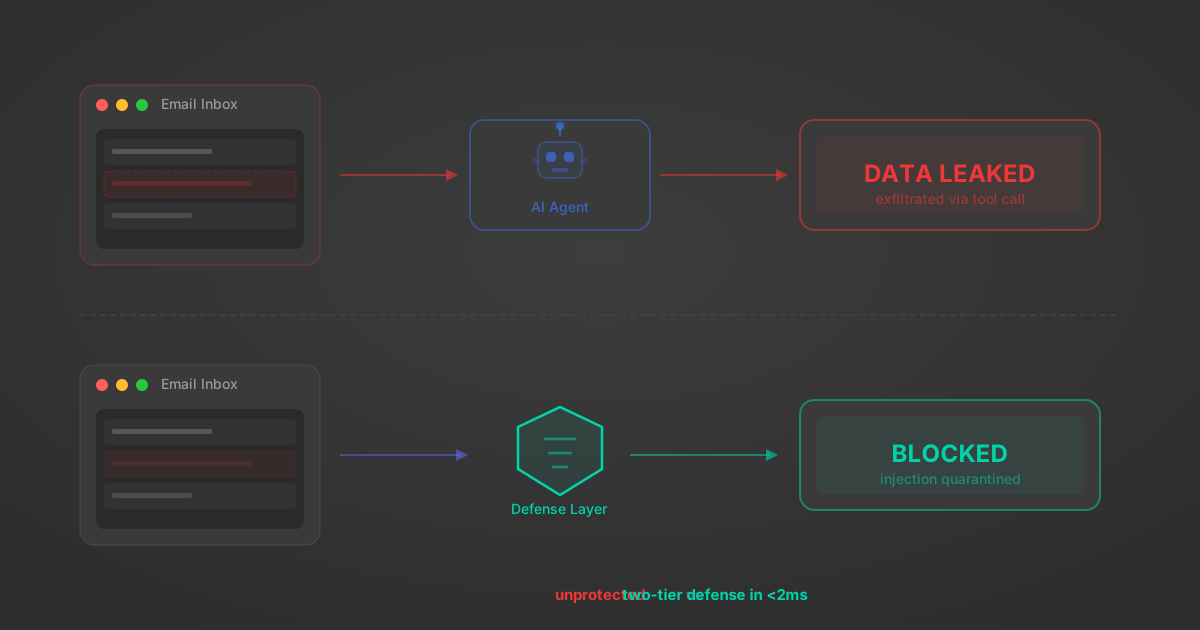
MCP tools that read emails, CRM records, and tickets are indirect prompt injection vectors. Here's how we built a two-tier defense that scans tool results in ~11ms.
12 min
origin_owner_id.All the tools you need to build and scale AI agent integrations, with best-in-class connectivity, execution, and security.