Connect
Optimize
Secure
Announcing StackOne Defender: leading open-source prompt injection guard for your agent • Read More →
Production-ready Zoho Sprints MCP server with 75 extensible actions — plus built-in authentication, security, and optimized execution.
 StackOne
Coverage
Create, read, update, and delete across Zoho Sprints — and extend your agent's capabilities with custom actions.

Authentication
Per-user OAuth in one call. Your Zoho Sprints MCP server gets session-scoped tokens with zero credentials stored on your infra.
Agent Auth →
Security
Every Zoho Sprints tool response scanned for prompt injection in milliseconds — 88.7% accuracy, all running on CPU.
Prompt Injection Defense →
Performance
Free up to 96% of your agent's context window to enhance reasoning and reduce cost, on every Zoho Sprints call.
Tools Discovery →A Zoho Sprints MCP server lets AI agents read and write Zoho Sprints data through the Model Context Protocol — Anthropic's open standard for connecting LLMs to external tools. StackOne's Zoho Sprints MCP server ships with 75 pre-built actions, fully extensible via the Connector Builder — plus managed authentication, prompt injection defense, and optimized agent context. Connect it from MCP clients like Claude Desktop, Cursor, and VS Code, or from agent frameworks like OpenAI Agents SDK, LangChain, and Vercel AI SDK.
Every action from Zoho Sprints's API, ready for your agent. Create, read, update, and delete — scoped to exactly what you need.
Create a new agile project in a Zoho Sprints portal with configurable settings.
Update an existing project's name, description, status, or configuration settings.
Permanently delete a project and all its associated sprints, items, and data.
Add new or existing portal members to a project.
Retrieve all members assigned to a specific project with their roles and permissions.
Remove a member from a project, revoking their access to project resources.
Create a new sprint in a project with a defined name, description, and date range.
Update a sprint's name, description, dates, or other properties.
Delete a specific sprint permanently.
Create a new work item in a sprint or backlog with full configuration options.
Retrieve all work items within a specific sprint or backlog.
Update a work item's properties including name, status, priority, assignees, and dates.
Move one or more work items to a different sprint, or to a sprint in a different project.
Permanently delete a work item and all its associated comments, attachments, and time logs.
Retrieve all file attachments associated with a specific work item.
Remove a specific file attachment from a work item.
Create a child sub-item under a parent work item to break down work into smaller tasks.
Retrieve all sub-items (child tasks) belonging to a specific parent work item.
Update a sub-item's name, status, assignees, priority, or dates.
Permanently delete a sub-item from a work item.
Create a new work item directly in the project backlog for future sprint planning.
Update properties of a backlog item including name, priority, description, or assignee.
Permanently delete a backlog item and all its associated data.
Create a new epic to group related work items across multiple sprints under a strategic initiative.
Retrieve all epics in a project with their status, item counts, and completion progress.
Update an epic's name, description, owner, color, or archive status.
Delete an epic, unlinking all associated work items which remain in their sprints.
Create a new release to track a set of features or fixes for delivery to end users.
Retrieve all releases in a project with their status, target dates, and item completion progress.
Update a release's name, goal, dates, owners, status, or color.
Delete a release, unlinking all associated work items which remain in their sprints.
Add a new comment to a work item to provide updates, ask questions, or document decisions.
Retrieve all comments on a specific work item in chronological order.
Edit the content of an existing comment on a work item.
Permanently remove a comment from a work item.
Add one or more users to a workspace with assigned roles and profiles.
Retrieve all users in a workspace with pagination. Applicable only for admins.
Remove a specific user from the workspace, revoking all their access.
Create a new work item status for a project workflow.
Retrieve all work item statuses configured for a specific project.
Rename an existing work item status in a project.
Delete a custom work item status from a project's workflow.
Create a new custom tag to categorize and group work items in a workspace.
Update a custom tag's name and color in a workspace.
Delete a custom tag from a workspace, removing it from all associated work items.
Log time spent working on a specific work item with date, duration, and billability.
Retrieve the list of time logs for a project grouped by date or user.
Update an existing time log entry to correct duration, date, notes, or approval status.
Delete a time log entry from a project.
Associate one or more work items with a specific epic in a project.
Associate one or more work items with a specific release.
Retrieve all Zoho Sprints workspaces (teams) accessible to the authenticated user.
Retrieve detailed information about a specific Zoho Sprints workspace (team) by its ID.
Retrieve all projects within a Zoho Sprints portal with pagination support.
Retrieve detailed information about a specific project by its ID.
Retrieve all sprints within a project, including active, upcoming, and completed sprints.
Retrieve detailed information about a specific sprint including its goal, dates, and completion status.
Retrieve the currently active sprint for a project.
Retrieve complete details of a specific work item by ID, including all metadata and custom fields.
Retrieve the activity history and change log for a specific work item.
Retrieve all item types configured for a project, including type IDs and names.
Retrieve all priority types configured for a project, including priority IDs and names.
Retrieve the backlog ID for a project, required for all backlog item operations.
Retrieve all work items in the project backlog that are not yet assigned to a sprint.
Retrieve complete details of a specific backlog item by its ID.
Retrieve detailed information about a specific epic including its linked items and progress.
Retrieve all work items associated with a specific epic in a sprint or backlog.
Retrieve all release stages configured for a project.
Retrieve detailed information about a specific release including linked items and deployment status.
Retrieve all custom tags in a workspace for categorizing and filtering work items.
Move one or more backlog items into a specific sprint during sprint planning.
Move one or more sprint work items back to the project backlog.
Update the workspace role assigned to a specific user.
Mark an active sprint as completed.
Start a sprint that is in "not started" status to begin the sprint cycle.
One endpoint. Any framework. Your agent is talking to Zoho Sprints in under 10 lines of code.
MCP Clients
Agent Frameworks

 JSON
JSON{
"mcpServers": {
"stackone": {
"command": "npx",
"args": [
"-y",
"mcp-remote@latest",
"https://api.stackone.com/mcp?x-account-id=<account_id>",
"--header",
"Authorization: Basic <YOUR_BASE64_TOKEN>"
]
}
}
}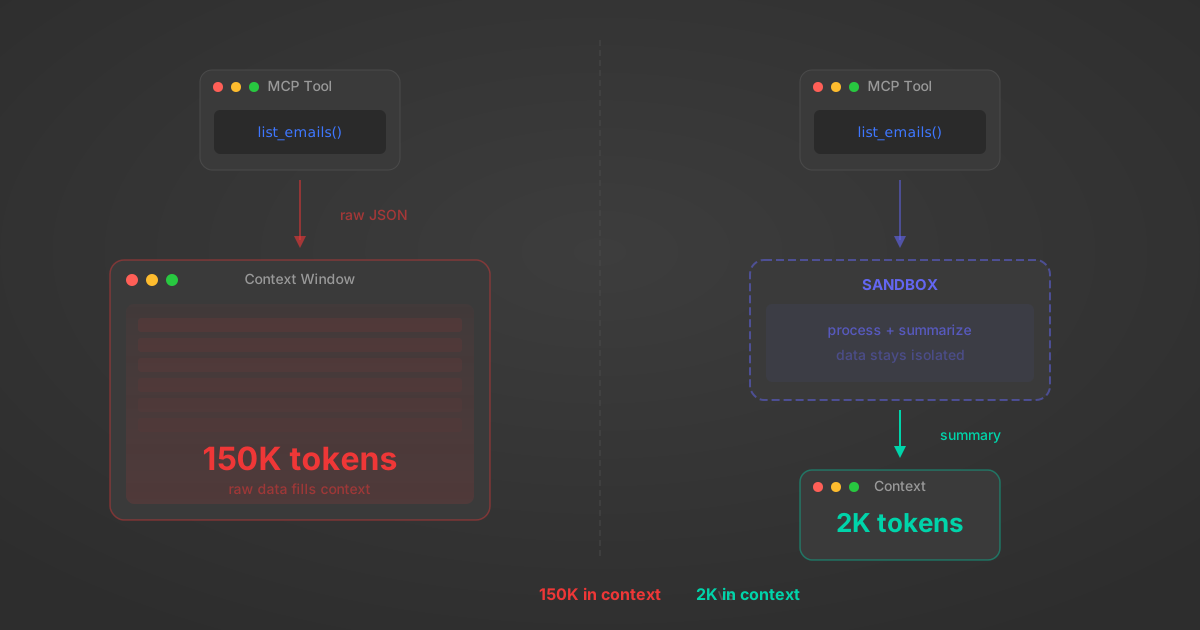
Anthropic's code_execution processes data already in context. Custom MCP code mode keeps raw tool responses in a sandbox. 14K tokens vs 500.
11 min
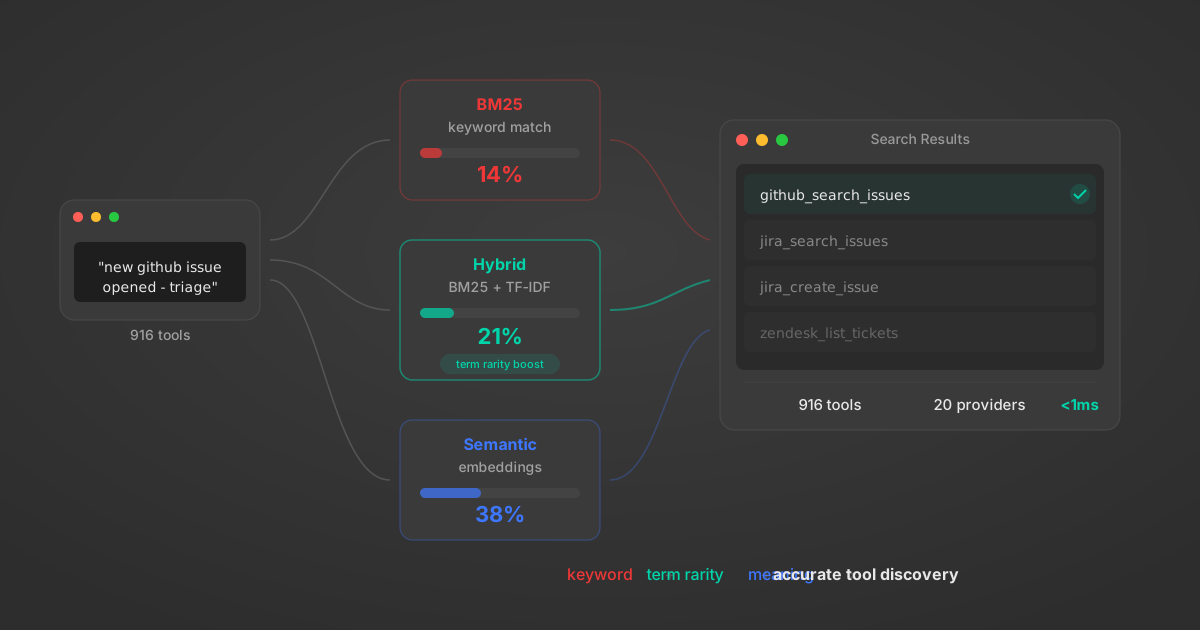
Benchmarking BM25, TF-IDF, and hybrid search for MCP tool discovery across 916 tools. The 80/20 TF-IDF/BM25 hybrid hits 21% Top-1 accuracy in under 1ms.
10 min
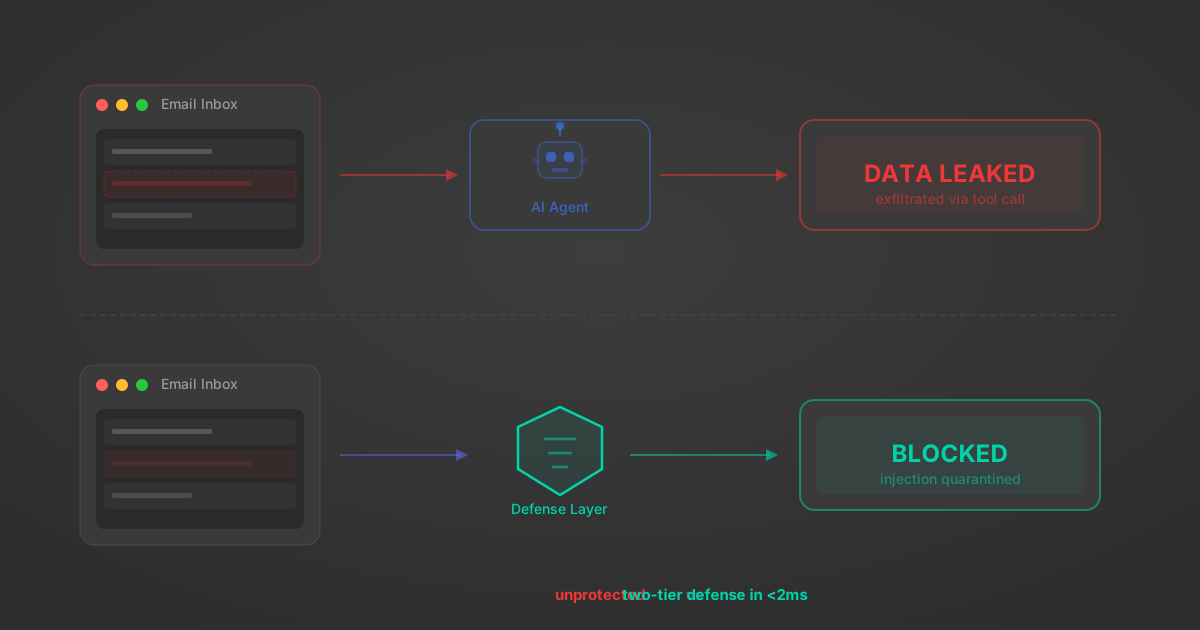
MCP tools that read emails, CRM records, and tickets are indirect prompt injection vectors. Here's how we built a two-tier defense that scans tool results in ~11ms.
12 min
origin_owner_id.All the tools you need to build and scale AI agent integrations, with best-in-class connectivity, execution, and security.