Connect
Optimize
Secure
Announcing StackOne Defender: leading open-source prompt injection guard for your agent • Read More →
Production-ready Zoom MCP server with 54 extensible actions — plus built-in authentication, security, and optimized execution.
 StackOne
Coverage
Create, read, update, and delete across Zoom — and extend your agent's capabilities with custom actions.

Authentication
Per-user OAuth in one call. Your Zoom MCP server gets session-scoped tokens with zero credentials stored on your infra.
Agent Auth →
Security
Every Zoom tool response scanned for prompt injection in milliseconds — 88.7% accuracy, all running on CPU.
Prompt Injection Defense →
Performance
Free up to 96% of your agent's context window to enhance reasoning and reduce cost, on every Zoom call.
Tools Discovery →A Zoom MCP server lets AI agents read and write Zoom data through the Model Context Protocol — Anthropic's open standard for connecting LLMs to external tools. StackOne's Zoom MCP server ships with 54 pre-built actions, fully extensible via the Connector Builder — plus managed authentication, prompt injection defense, and optimized agent context. Connect it from MCP clients like Claude Desktop, Cursor, and VS Code, or from agent frameworks like OpenAI Agents SDK, LangChain, and Vercel AI SDK.
Every action from Zoom's API, ready for your agent. Create, read, update, and delete — scoped to exactly what you need.
Schedule a new meeting with comprehensive configuration options including recurring schedules and advanced settings
Retrieve all scheduled meetings for a user with pagination and filtering options
Get comprehensive details for a specific meeting including settings, participants, and join information
Modify scheduled meeting details including time, settings, and recurrence patterns
Delete a scheduled meeting or specific occurrence of a recurring meeting with optional email notifications
Add interactive polls, quizzes, or surveys to meetings for real-time audience engagement
Retrieve all polling questions configured for a meeting to gather participant feedback
Provision a new user account with specified license type and organizational settings
Retrieve all users in the account with filtering by status, role, and license type for user management
Get comprehensive user profile information including account details, settings, and organizational data
Modify user profile fields, license assignments, and organizational attributes
Remove a user from the account with options to transfer ownership of meetings, webinars, and content
Get comprehensive user configuration including meeting preferences, recording options, and feature enablements
Modify user configuration across all settings categories for personalization and policy enforcement
Schedule a broadcast webinar with registration, panelists, and interactive features for large audiences
Retrieve all scheduled and upcoming webinars for a host with support for large-scale broadcasts
Get comprehensive webinar configuration including registration settings, panelist details, and join URLs
Modify webinar configuration including schedule, settings, and recurring series with rate limiting
Remove a webinar with optional cancellation notifications to panelists and registrants
Submit webinar registration with contact details and custom questions for large-scale events
Retrieve all webinar registrants with filtering by status and tracking source for registration management
Create private or public Team Chat channels with customizable permissions and member management
Get comprehensive channel information including settings, membership, and metadata
Permanently remove a Team Chat channel and all its message history
Get all channel members with their roles and contact information for membership management
Batch remove up to 20 members from a channel for efficient membership management
Send rich text messages with mentions, files, interactive cards, and scheduling to contacts or channels
Modify previously sent message content, files, and interactive cards with edit history tracking
Remove previously sent messages from conversations or channels with sender-only permissions
Create a new user group for organizing users and applying bulk settings with rate limits
Retrieve all user groups in the account for organizational management and bulk operations
Get group information including name and membership statistics for management and reporting
Rename a group to reflect organizational changes while preserving members and settings
Permanently remove a user group while preserving individual user accounts
Batch add up to 30 users to a group using IDs or email addresses for efficient provisioning
Get all group members with user details for membership management and reporting
Remove a single user from a group while preserving their account and settings
Submit registration for a user to attend a meeting requiring pre-registration
Get participant attendance data and metrics from completed meetings for reporting and analytics
Retrieve historical meeting metadata and summary information for completed meetings
Get a chronological list of all past occurrences for recurring meetings
Retrieve all questions and answers from completed meetings for engagement analysis and follow-up
Retrieve all future scheduled meetings for a user with pagination support
Retrieve the formatted invitation text for sharing meeting details externally
Retrieve all permissions and access rights assigned to a user for authorization and compliance auditing
Get detailed attendee participation data from completed webinars for engagement analytics
Retrieve all questions and answers from webinars for engagement analysis and content creation
Retrieve all Team Chat channels a user belongs to for channel management and navigation
Retrieve chat message history with filtering, search, and pagination for conversations and channels
Forcibly end an active meeting programmatically via API
Batch approve, deny, or cancel meeting registrations for access control management
Control user account access and time tracking with activate, deactivate, clock in, and clock out actions
Check if an email address is registered in your Zoom account to prevent duplicate accounts
Invite up to five members to a channel in a single batch operation
One endpoint. Any framework. Your agent is talking to Zoom in under 10 lines of code.
MCP Clients
Agent Frameworks

 JSON
JSON{
"mcpServers": {
"stackone": {
"command": "npx",
"args": [
"-y",
"mcp-remote@latest",
"https://api.stackone.com/mcp?x-account-id=<account_id>",
"--header",
"Authorization: Basic <YOUR_BASE64_TOKEN>"
]
}
}
}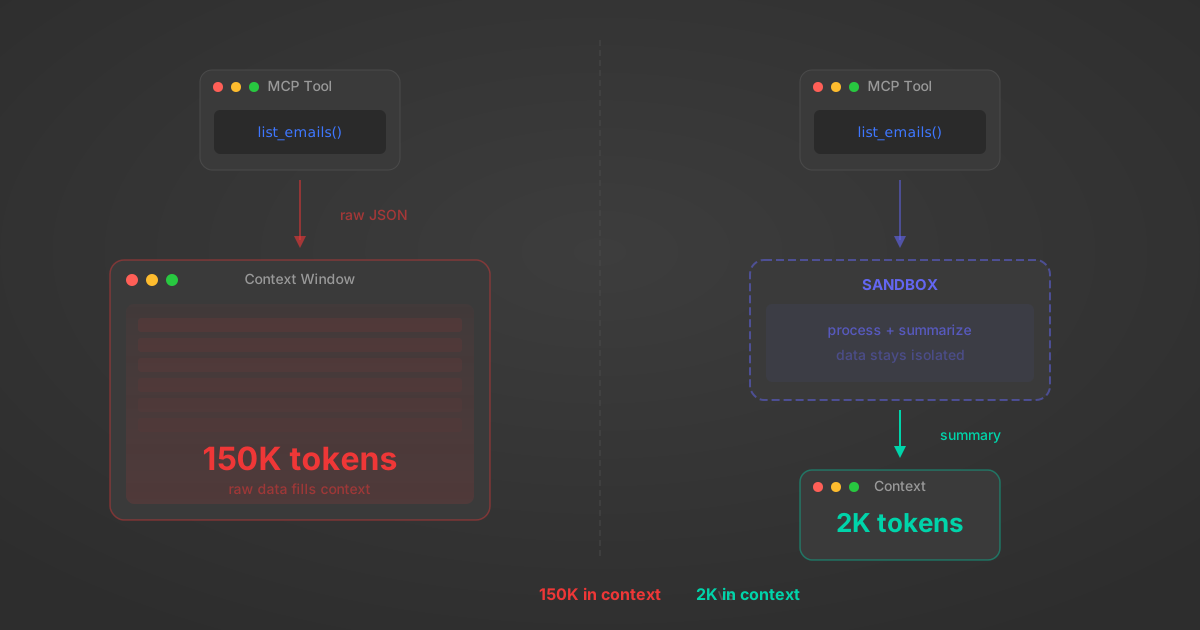
Anthropic's code_execution processes data already in context. Custom MCP code mode keeps raw tool responses in a sandbox. 14K tokens vs 500.
11 min
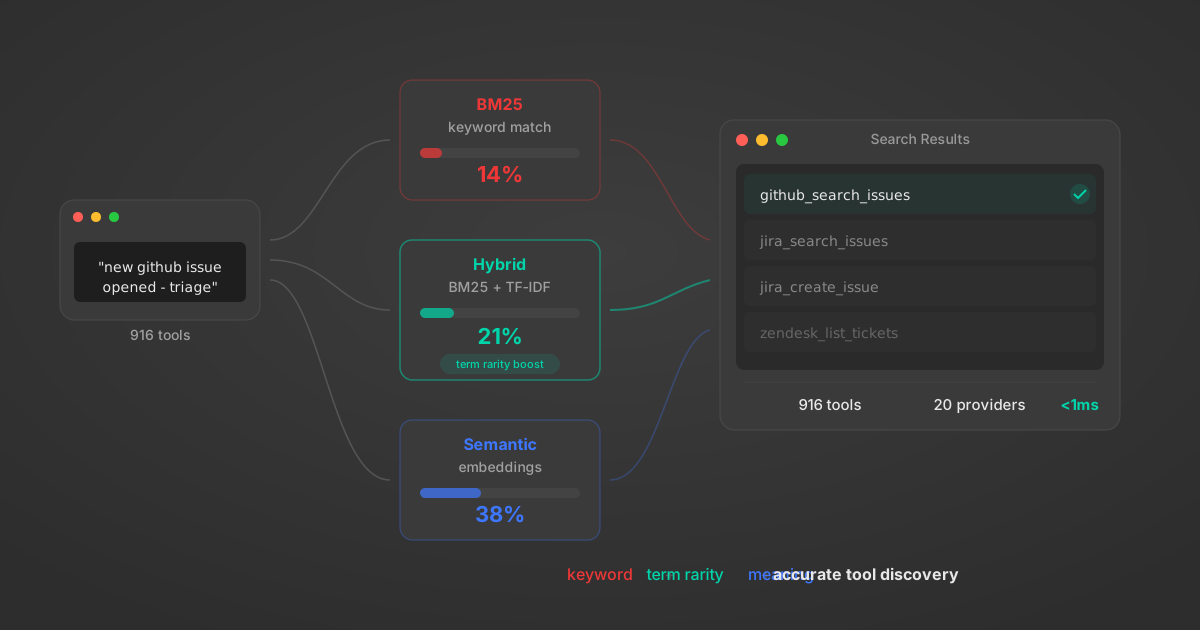
Benchmarking BM25, TF-IDF, and hybrid search for MCP tool discovery across 916 tools. The 80/20 TF-IDF/BM25 hybrid hits 21% Top-1 accuracy in under 1ms.
10 min
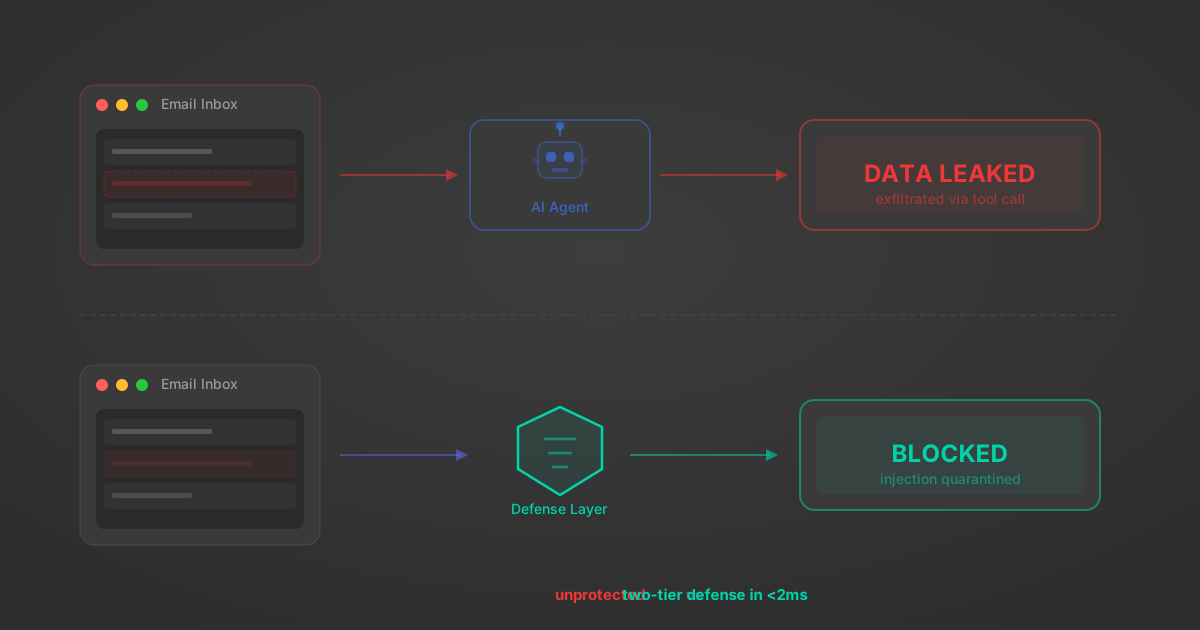
MCP tools that read emails, CRM records, and tickets are indirect prompt injection vectors. Here's how we built a two-tier defense that scans tool results in ~11ms.
12 min
origin_owner_id.All the tools you need to build and scale AI agent integrations, with best-in-class connectivity, execution, and security.