Connect
Optimize
Secure
Announcing StackOne Defender: leading open-source prompt injection guard for your agent • Read More →
Production-ready Chargify (Maxio) MCP server with 118 extensible actions — plus built-in authentication, security, and optimized execution.
 StackOne
Coverage
Create, read, update, and delete across Chargify (Maxio) — and extend your agent's capabilities with custom actions.

Authentication
Per-user OAuth in one call. Your Chargify (Maxio) MCP server gets session-scoped tokens with zero credentials stored on your infra.
Agent Auth →
Security
Every Chargify (Maxio) tool response scanned for prompt injection in milliseconds — 88.7% accuracy, all running on CPU.
Prompt Injection Defense →
Performance
Free up to 96% of your agent's context window to enhance reasoning and reduce cost, on every Chargify (Maxio) call.
Tools Discovery →A Chargify (Maxio) MCP server lets AI agents read and write Chargify (Maxio) data through the Model Context Protocol — Anthropic's open standard for connecting LLMs to external tools. StackOne's Chargify (Maxio) MCP server ships with 118 pre-built actions, fully extensible via the Connector Builder — plus managed authentication, prompt injection defense, and optimized agent context. Connect it from MCP clients like Claude Desktop, Cursor, and VS Code, or from agent frameworks like OpenAI Agents SDK, LangChain, and Vercel AI SDK.
Every action from Chargify (Maxio)'s API, ready for your agent. Create, read, update, and delete — scoped to exactly what you need.
Retrieve a list of all components across product families
Update an existing component by ID
Create a new coupon for a product family
Retrieve a list of all coupons for the site
Update an existing coupon by ID
Create metafields for a resource type
Retrieve a paginated list of metafields for a resource type
Update a metafield for a resource type
Delete a metafield for a resource type
Create metadata for a specific resource
Retrieve a paginated list of metadata for a specific resource
Update metadata for a specific resource
Delete metadata for a specific resource
Create a new customer
Retrieve a list of all customers
Update an existing customer by ID
Delete a customer by ID
Create a one-off invoice for a subscription
Send an invoice to the customer via email
Retrieve a paginated list of invoices
Create a prepayment for a subscription
Retrieve a paginated list of prepayments for a subscription
Create a new offer
Retrieve a paginated list of offers
Create a new payment profile for a customer
Retrieve a list of all payment profiles for the site
Update an existing payment profile by ID
Create a new product within a product family
Retrieve a list of all products
Update an existing product by ID
Create a new price point for a product
Retrieve a paginated list of price points for a product
Create a proforma invoice for a subscription
Retrieve a paginated list of proforma invoices for a subscription
Create a new churn reason code
Retrieve a paginated list of reason codes for the site
Update an existing churn reason code
Delete an existing churn reason code
Retrieve a list of components associated with a subscription
Retrieve a single component associated with a subscription
Create a usage record for a metered component on a subscription
Retrieve a list of usage records for a metered component on a subscription
Create a new subscription group
Retrieve a paginated list of subscription groups for the site
Delete a subscription group by UID
Create a new note for a subscription
Retrieve a paginated list of notes for a subscription
Create a new subscription for a customer with a specified product
Retrieve a paginated list of all subscriptions for the site
Update an existing subscription by its ID
Create a new webhook endpoint for the site.
Returns created endpoints for a site.
Update an existing webhook endpoint for the site.
Create a new metered component for a product family
Create a new quantity-based component for a product family
Create a new on/off component for a product family
Create a new product family
Retrieve a paginated list of all metadata for a resource type
Retrieve all subscriptions for a specific customer
Retrieve a list of events for the site
Retrieve a list of events for a specific subscription
Retrieve a paginated list of credit notes
Retrieve a paginated list of invoice events
Retrieve a list of all product families
Retrieve a list of allocations for a component on a subscription
Retrieve a list of webhooks for the site
Update the automatic resumption date for a paused subscription
Delete an unused payment profile by ID
Remove a coupon from an existing subscription
Enable the billing portal for a customer
Retrieve the billing portal management link for a customer
Retrieve a single component by product family and component ID
Archive a component by product family and component ID
Archive an existing coupon by ID
Retrieve a single coupon by ID
Find a coupon by code
Validate whether a coupon code is valid
Retrieve a single customer by ID
Look up a customer by their unique reference value
Retrieve a single invoice by UID
Void an invoice by UID
Issue a refund for an invoice by UID
Issue a refund for an invoice by UID
Record a payment for an invoice by UID
Retrieve a single credit note by UID
Record a payment across multiple invoices
Reopen a previously voided or cancelled invoice
Issue a pending invoice by UID
Retrieve the account balances for a subscription
Issue a service credit for a subscription
Retrieve a single offer by ID
Archive an existing offer
Unarchive a previously archived offer
Retrieve a single payment profile by ID
Retrieve a single product by ID
Archive a product by ID
Retrieve a single product family by ID
Retrieve a single reason code by its ID
Retrieve the current site details
Create an allocation for a component on a subscription
Retrieve a single subscription group by UID
Retrieve the details of a single subscription by its ID
Cancel an active subscription by its ID
Look up a subscription by its reference value
Reactivate a canceled or expired subscription
Place a subscription on hold to temporarily pause billing
Resume a paused subscription to restart billing
Activate a subscription that is in an inactive state
Retry a failed subscription payment
Schedule a subscription for cancellation at the end of the current billing period
Remove a scheduled delayed cancellation from a subscription
Cancel the dunning process for a past-due subscription
Preview a new subscription before creating it
Preview the next renewal for a subscription
Apply a coupon code to an existing subscription
Migrate a subscription to a different product or price point
Replay a webhook endpoint for the site.
Enable webhook endpoints for the site.
One endpoint. Any framework. Your agent is talking to Chargify (Maxio) in under 10 lines of code.
MCP Clients
Agent Frameworks

 JSON
JSON{
"mcpServers": {
"stackone": {
"command": "npx",
"args": [
"-y",
"mcp-remote@latest",
"https://api.stackone.com/mcp?x-account-id=<account_id>",
"--header",
"Authorization: Basic <YOUR_BASE64_TOKEN>"
]
}
}
}104+ actions
95+ actions
71+ actions
70+ actions
57+ actions
30+ actions
15+ actions
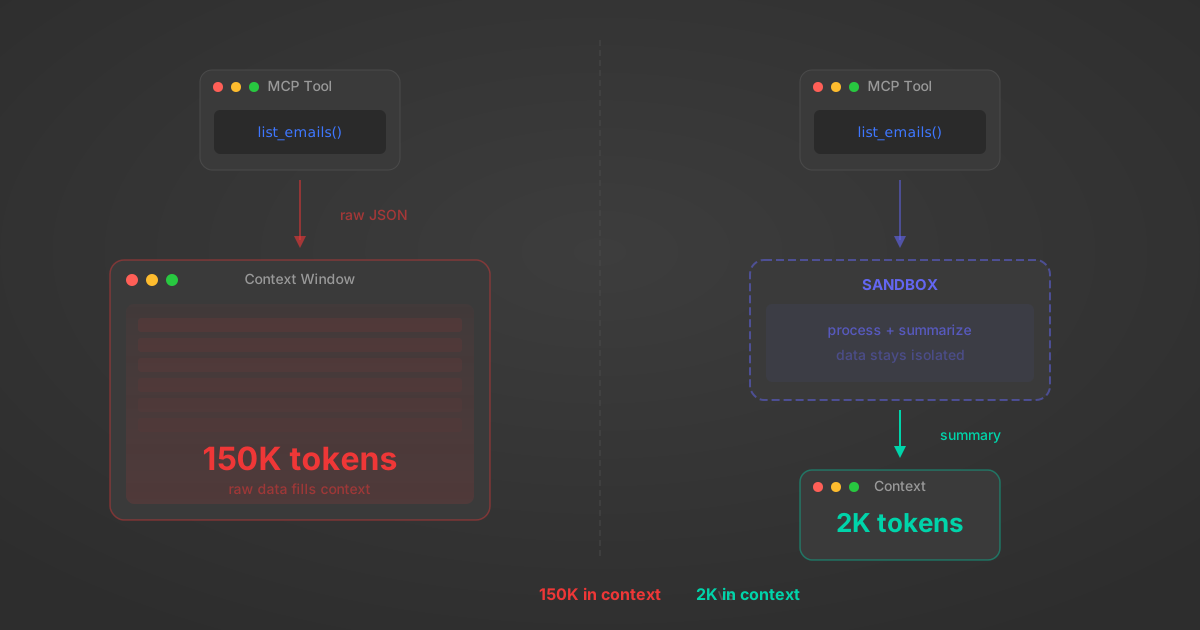
Anthropic's code_execution processes data already in context. Custom MCP code mode keeps raw tool responses in a sandbox. 14K tokens vs 500.
11 min
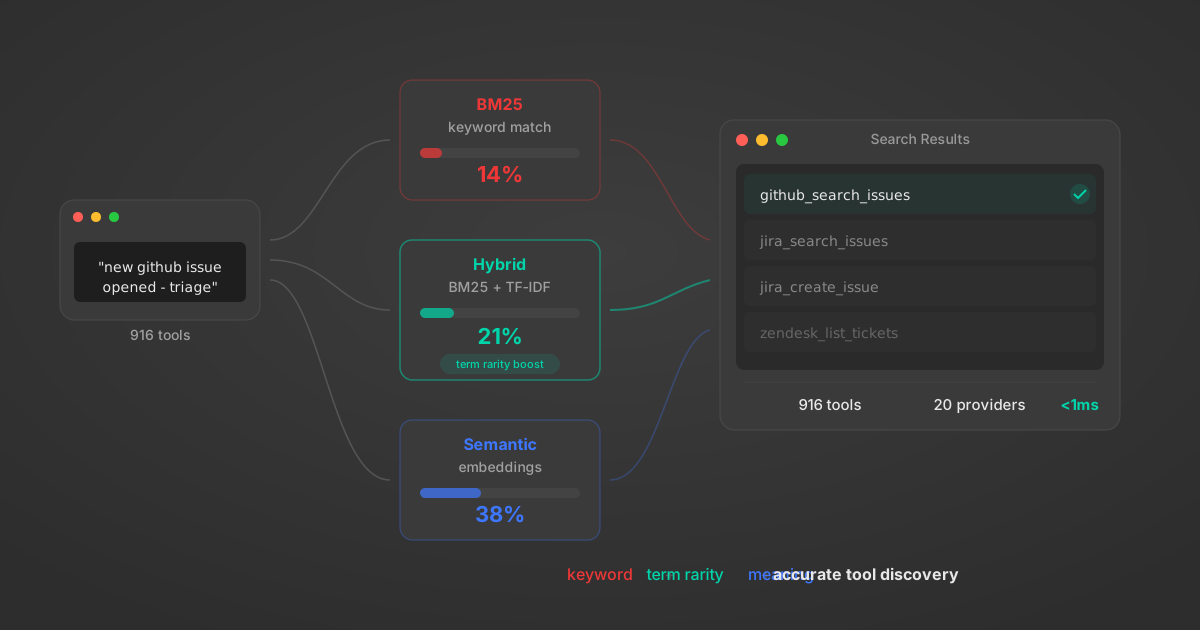
Benchmarking BM25, TF-IDF, and hybrid search for MCP tool discovery across 916 tools. The 80/20 TF-IDF/BM25 hybrid hits 21% Top-1 accuracy in under 1ms.
10 min
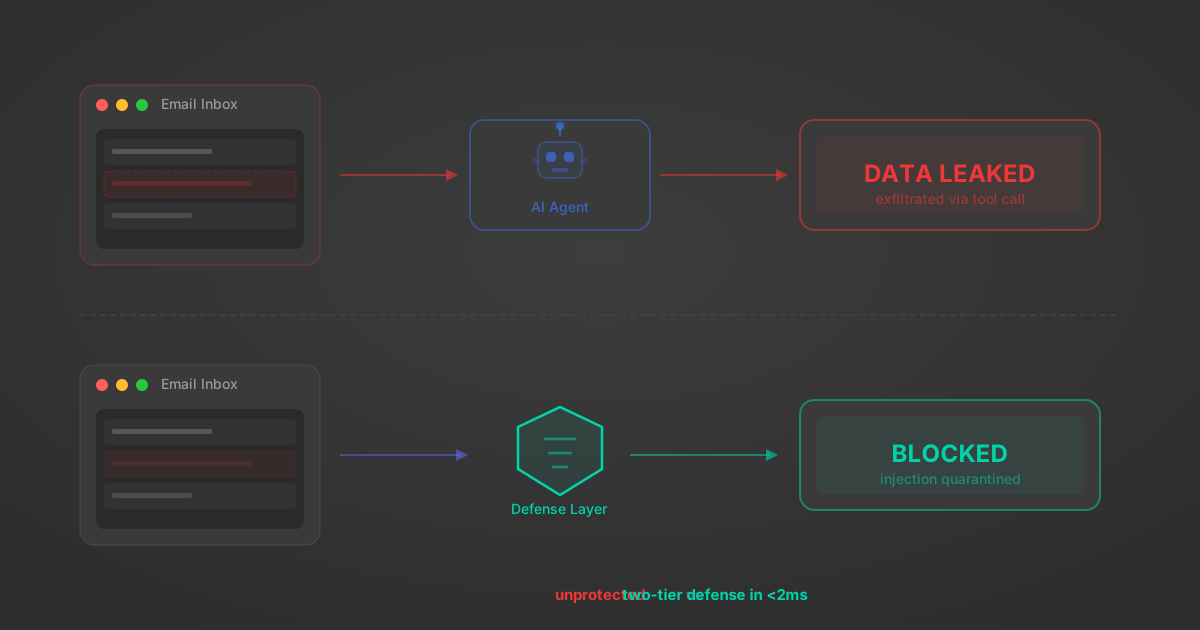
MCP tools that read emails, CRM records, and tickets are indirect prompt injection vectors. Here's how we built a two-tier defense that scans tool results in ~11ms.
12 min
origin_owner_id.All the tools you need to build and scale AI agent integrations, with best-in-class connectivity, execution, and security.