
Google Drive MCP Server
for AI Agents
Connect your AI agent to StackOne's Google Drive MCP server and give it 64 MCP tools out of the box. Auth, tool execution, and security all managed.
 StackOne





Coverage
64 Agent Actions
Create, read, update, and delete across Google Drive — and extend your agent's capabilities with custom actions.

Authentication
Agent Tool Authentication
Per-user OAuth in one call. Your Google Drive MCP server gets session-scoped tokens with zero credentials stored on your infra.
Agent Auth →
Security
Agent Protection
Every Google Drive tool response scanned for prompt injection in milliseconds — 88.7% accuracy, all running on CPU.
Prompt Injection Defense →
Performance
Max Agent Context. Min Cost.
Free up to 96% of your agent's context window to enhance reasoning and reduce cost, on every Google Drive call.
Tools Discovery →What is the Google Drive MCP Server?
A Google Drive MCP server lets AI agents read and write Google Drive data through the Model Context Protocol — Anthropic's open standard for connecting LLMs to external tools. StackOne's Google Drive MCP server ships with 64 pre-built actions, fully extensible via the Connector Builder — plus managed authentication, prompt injection defense, observability, and agent execution runtime. Connect it from MCP clients like Claude Desktop, Claude Code, Cursor, Goose, and VS Code, or from agent frameworks like OpenAI Agents SDK, LangChain, and Vercel AI SDK.
All Google Drive MCP Tools
Every action from Google Drive's API, ready for your agent. Create, read, update, and delete — scoped to exactly what you need.
Unified Files
- Upload Unified File
Upload a new file to Google Drive using the StackOne unified upload schema
- List Unified Files
List unified files in Google Drive with StackOne unified filters
- Get Unified File
Get a unified file by ID with metadata mapped to StackOne unified schema
- Download Unified File
Downloads unified file content from Google Drive
Unified Folders
- List Unified Folders
List unified folders in Google Drive with StackOne unified filters
- Get Unified Folder
Get a unified folder by ID with metadata mapped to StackOne unified schema
Unified Drives
- List Unified Drives
List unified shared drives in Google Drive
- Get Unified Drive
Get a unified shared drive by ID with metadata mapped to StackOne unified schema
Files
- Copy File
Creates a copy of a file and applies any requested updates with patch semantics
- Create File
Creates a new file or folder with metadata only
- List Files
List files, folders, and other Drive items. Returns raw Google Drive API response
- Get File
Get file, folder, or Drive item by ID
- Update File
Updates a file's metadata using patch semantics
- Delete File
Permanently deletes a file without moving it to the trash
Shared Drives
- Create Shared Drive
Creates a new shared drive
- List Shared Drives
Lists the user's shared drives (formerly Team Drives)
- Get Shared Drive
Gets a shared drive's metadata by ID
- Update Shared Drive
Updates the metadata for a shared drive
- Delete Shared Drive
Permanently deletes a shared drive for which the user is an organizer
Permissions
- Create Permission
Creates a new permission for a file or shared drive
- List Permissions
Lists a file's or shared drive's permissions
- Get Permission
Gets a permission by ID
- Update Permission
Updates a permission with patch semantics (modify role, expiration time, etc.)
- Delete Permission
Deletes a permission (revokes access)
Comments
- Create Comment
Creates a new comment on a file
- List Comments
Lists a file's comments
- Get Comment
Gets a comment by ID
- Update Comment
Updates a comment. Edits content and/or resolves/reopens it. NOTE — Google Drive's comments.update requires `content` to be present in EVERY PATCH call (including resolve-only or reopen-only updates); to avoid losing the existing text, fetch the current comment via `get_comment` first and pass its content back unchanged when only flipping `resolved`.
- Delete Comment
Deletes a comment
Replys
- Create Reply
Creates a reply to a comment
- Get Reply
Gets a reply by ID
- Update Reply
Updates a reply with patch semantics
- Delete Reply
Deletes a reply
Revisions
- List Revisions
Lists a file's revisions
- Get Revision
Gets a revision's metadata or content by ID
- Update Revision
Updates a revision with patch semantics
- Delete Revision
Permanently deletes a file version
Access Proposals
- List Access Proposals
Returns a paginated list of access proposals.
- Get Access Proposal
Retrieves an access proposal by ID
Unified Groups
- List Unified Groups
List unified groups in Google Drive.
- Get Unified Group
Get a unified Google Drive group by ID.
Unified Organizations
- List Unified Organizations
List unified organizations in Google Drive.
- Get Unified Organization
Get a unified Google Drive organization by ID.
Unified Roles
- List Unified Roles
List unified roles in Google Drive.
- Get Unified Role
Get a unified Google Drive role by ID.
Unified Users
- List Unified Users
List unified users in Google Drive.
- Get Unified User
Get a unified Google Drive user by ID.
Other (17)
- Upload File (Simple)
Upload raw file binary content to Google Drive using simple media upload (uploadType=media). Sends only the file bytes — no metadata (name, parents, description) is attached at upload time, but the supplied `contentType` is forwarded as the Content-Type header so the created file's mimeType reflects the actual format. Effective max raw file size is ~4.1 MB (see details).
- Upload File (Multipart)
Upload a file with both binary content and metadata in a single request using multipart upload (uploadType=multipart). Recommended when name, parent folder, or MIME type must be set at upload time. Effective max raw file size is ~4.1 MB (see details).
- Upload File (Resumable)
Upload a file to Google Drive using resumable upload (uploadType=resumable). The Google Drive API itself supports files up to 5 TB, but the StackOne RPC proxy enforces a ~4.1 MB effective ceiling on `file_content` (see details). Best for medium-sized files where the network may be unreliable and a robust upload path is needed.
- List Replies
Lists a comment's replies
- Get Changes Start Page Token
Returns a baseline pageToken representing the current state of Drive. Pass this token as `pageToken` to `list_changes` later to retrieve every file change that has happened since this call. By itself this action does NOT return change data — it just hands back the cursor.
- List Changes
Returns a paginated list of changes.
- Get About
Gets information about the user, the user's Drive, and system capabilities
- Get Unified Credentials
Get the current Google Drive connection's unified credentials and identity.
- List Unified Resource Types
List unified resource types in Google Drive.
- List Unified Resource Users
List unified resource users in Google Drive.
- Empty Trash
Permanently deletes all of the user's trashed files
- Generate IDs
Generates a set of file IDs which can be provided in create or copy requests
- Hide Shared Drive
Hides a shared drive from the default view
- Unhide Shared Drive
Restores a shared drive to the default view
- Check Permissions
Check what permissions a user has on a Google Drive file, folder, or shared drive, and whether a specific action is allowed. Uses ACL-based resolution exclusively for accuracy.
- Resolve Access Proposal
Approves or denies an access proposal
- IAM Auth Test
Debugging helper that validates the current OAuth access token by calling Google's token introspection endpoint (GET https://www.googleapis.com/oauth2/v3/tokeninfo) and returns the raw, unmapped JSON response — email, scope (space-delimited), sub (Google user ID), aud (OAuth client), expires_in, access_type. Bypasses the unified IAM credentials schema. No scope required. Prefer unified_get_me for normal flows; reach for this only when troubleshooting tokens.
Set Up Your Google Drive MCP Server in Minutes
One endpoint. Any framework. Your agent is talking to Google Drive in under 10 lines of code.
Agent Frameworks


 JSON
JSON{
"mcpServers": {
"stackone": {
"command": "npx",
"args": [
"-y",
"mcp-remote@latest",
"https://api.stackone.com/mcp?x-account-id=<account_id>",
"--header",
"Authorization: Basic <YOUR_BASE64_TOKEN>"
]
}
}
}Check More Cloud Storage MCP Servers
96+ actions
94+ actions
89+ actions
46+ actions
30+ actions
27+ actions
19+ actions
Platform Resources
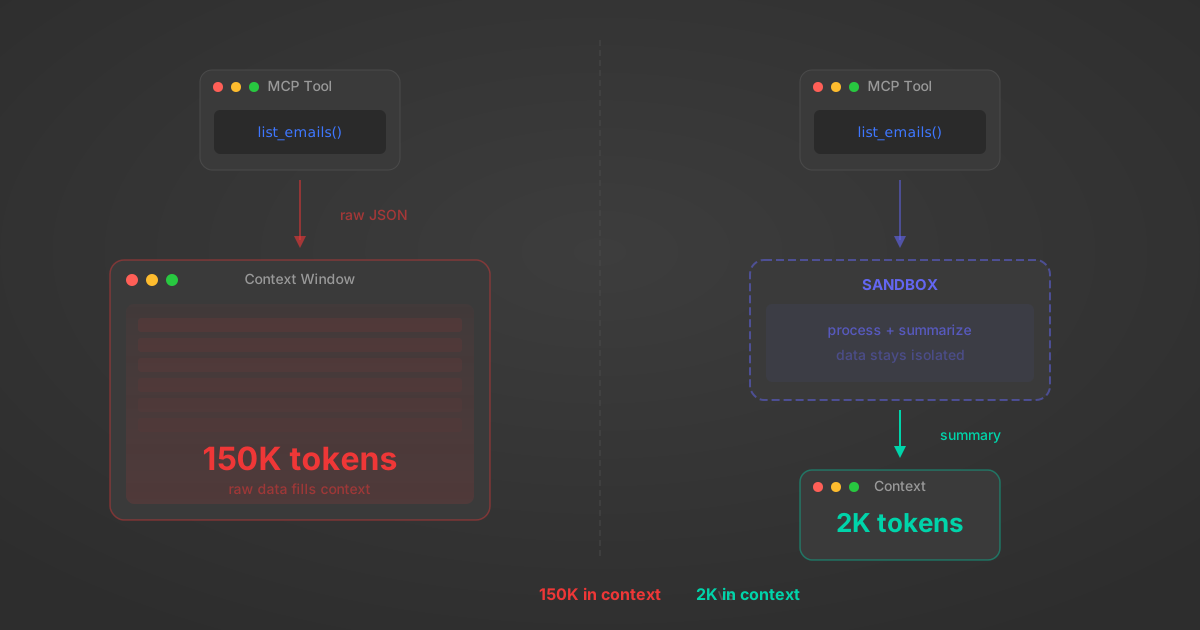
MCP Code Mode: Keeping Tool Responses Out of Agent Context
Anthropic's code_execution processes data already in context. Custom MCP code mode keeps raw tool responses in a sandbox. 14K tokens vs 500.
11 min
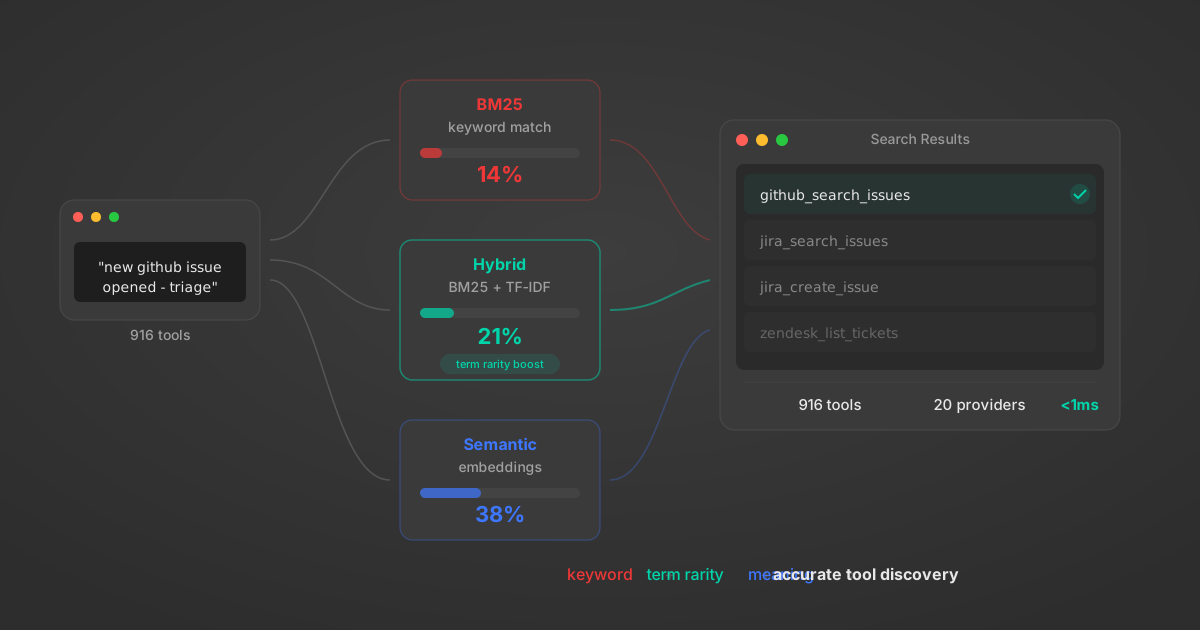
Comparing BM25, TF-IDF, and Hybrid Search for MCP Tool Discovery
Benchmarking BM25, TF-IDF, and hybrid search for MCP tool discovery across 916 tools. The 80/20 TF-IDF/BM25 hybrid hits 21% Top-1 accuracy in under 1ms.
10 min
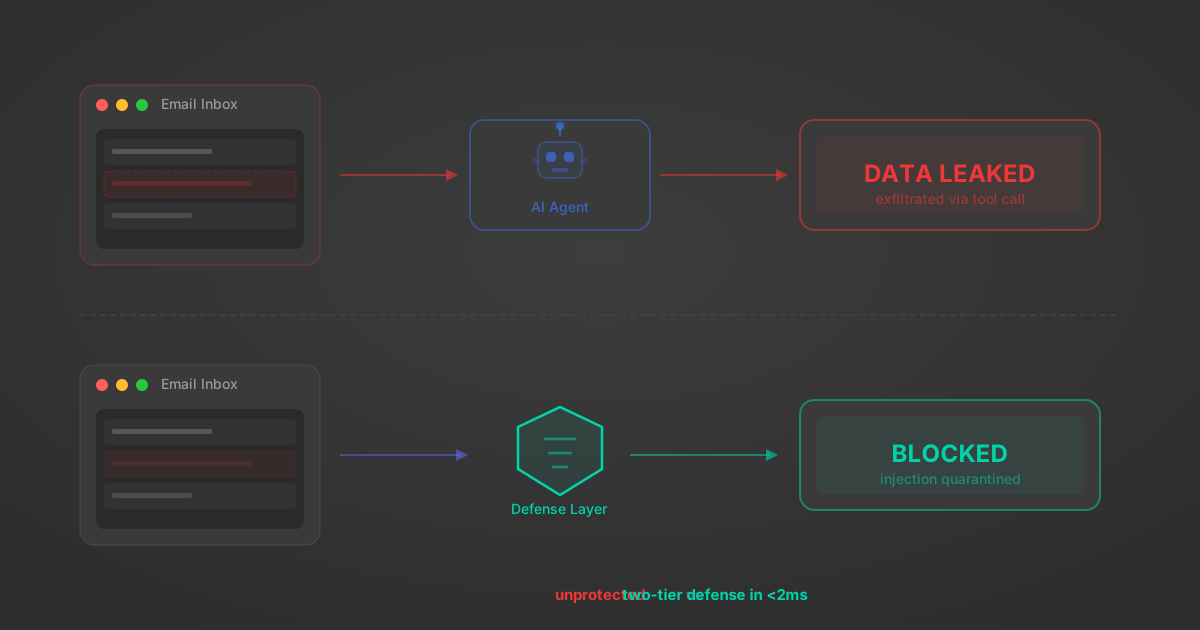
Indirect Prompt Injection Defense for MCP Tools: A Technical Guide
MCP tools that read emails, CRM records, and tickets are indirect prompt injection vectors. Here's how we built a two-tier defense that scans tool results in ~11ms.
12 min
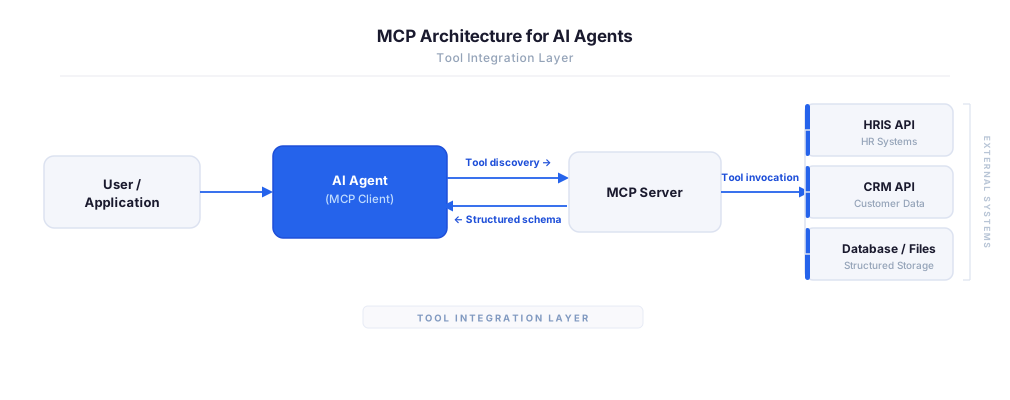
MCP vs A2A: Architecture, Security, and When to Use Each
MCP vs A2A: what each protocol standardizes, how they differ, their shared security risks including indirect prompt injection, and when to use one, both, or a hybrid architecture.
12 min
MCP vs API: What Hundreds of Connector Builds Taught Us
MCP wraps APIs, it doesn't replace them. After building hundreds of connectors that serve both, here's when each approach wins.
14 min read
Google Drive MCP Server FAQ
Does StackOne have a Google Drive MCP server?
Google Drive MCP server vs direct API integration — what's the difference?
How does Google Drive authentication work for AI agents?
origin_owner_id.Are Google Drive MCP tools vulnerable to prompt injection?
What is the context bloat of a Google Drive agent and how do I avoid it?
Can I limit which actions my Google Drive agent can access?
Can I create custom agent actions for my Google Drive MCP server?
When should I NOT use a Google Drive MCP server?
What AI frameworks and AI clients does the StackOne Google Drive MCP server support?
Put your AI agents to work
All the tools you need to build and scale AI agent integrations, with best-in-class connectivity, execution, and security.