
HubSpot MCP Server
for AI Agents
Connect your AI agent to StackOne's HubSpot MCP server and give it 90 MCP tools out of the box. Auth, tool execution, and security all managed.
 StackOne






Coverage
90 Agent Actions
Create, read, update, and delete across HubSpot — and extend your agent's capabilities with custom actions.

Authentication
Agent Tool Authentication
Per-user OAuth in one call. Your HubSpot MCP server gets session-scoped tokens with zero credentials stored on your infra.
Agent Auth →
Security
Agent Protection
Every HubSpot tool response scanned for prompt injection in milliseconds — 88.7% accuracy, all running on CPU.
Prompt Injection Defense →
Performance
Max Agent Context. Min Cost.
Free up to 96% of your agent's context window to enhance reasoning and reduce cost, on every HubSpot call.
Tools Discovery →What is the HubSpot MCP Server?
A HubSpot MCP server lets AI agents read and write HubSpot data through the Model Context Protocol — Anthropic's open standard for connecting LLMs to external tools. StackOne's HubSpot MCP server ships with 90 pre-built actions, fully extensible via the Connector Builder — plus managed authentication, prompt injection defense, observability, and agent execution runtime. Connect it from MCP clients like Claude Desktop, Claude Code, Cursor, Goose, and VS Code, or from agent frameworks like OpenAI Agents SDK, LangChain, and Vercel AI SDK.
All HubSpot MCP Tools
Every action from HubSpot's API, ready for your agent. Create, read, update, and delete — scoped to exactly what you need.
Associations
- Create Association
Create a default unlabeled association between two CRM records
- List Associations
Retrieve all associations for a specific CRM record with pagination
- Batch Create Associations
Create multiple labeled associations in a single request
- Delete Association
Remove all associations between two CRM records
Contacts
- Create Contact
Create a new contact in HubSpot CRM with specified properties
- List Contacts
Retrieve a paginated list of contacts from HubSpot CRM with filtering and property selection
- Get Contact
Retrieve a single contact by ID with optional property and association filtering
- Search Contacts
Search for contacts using filters, sorts, and queries in HubSpot CRM
- Update Contact
Update an existing contact's properties in HubSpot CRM
- Batch Create Contacts
Create multiple contacts in a single request (max 100)
- Batch Update Contacts
Update multiple contacts in a single request (max 100)
- Delete Contact
Delete a contact from HubSpot CRM by ID
Companies
- List Companies
Retrieve a paginated list of companies from HubSpot CRM with filtering and property selection
- Search Companies
Search for companies using filters, sorts, and queries in HubSpot CRM
- Batch Create Companies
Create multiple companies in a single request (max 100)
- Batch Update Companies
Update multiple companies in a single request (max 100)
Companys
- Create Company
Create a new company in HubSpot CRM with specified properties
- Get Company
Retrieve a single company by ID with optional property and association filtering
- Update Company
Update an existing company's properties in HubSpot CRM
- Delete Company
Delete a company from HubSpot CRM by ID
Deals
- Create Deal
Create a new deal in HubSpot CRM with specified properties
- List Deals
Retrieve a paginated list of deals from HubSpot CRM with filtering and property selection
- Get Deal
Retrieve a single deal by ID with optional property and association filtering
- Search Deals
Search for deals using filters, sorts, and queries in HubSpot CRM
- Update Deal
Update an existing deal's properties in HubSpot CRM
- Batch Create Deals
Create multiple deals in a single request (max 100)
- Batch Update Deals
Update multiple deals in a single request (max 100)
- Delete Deal
Delete a deal from HubSpot CRM by ID
Deal Pipelines
- Create Deal Pipeline
Create a new deal pipeline in HubSpot with its stages
- List Deal Pipelines
Retrieve all deal pipelines from HubSpot
- Get Deal Pipeline
Retrieve a specific deal pipeline by ID from HubSpot
- Update Deal Pipeline
Partially update a deal pipeline's top-level properties (label, displayOrder). Does not modify stages.
Deal Pipeline Stages
- Create Deal Pipeline Stage
Add a new stage to an existing deal pipeline
- List Deal Pipeline Stages
Retrieve all stages for a specific deal pipeline from HubSpot
- Get Deal Pipeline Stage
Retrieve a specific stage from a deal pipeline by ID
- Update Deal Pipeline Stage
Partially update a stage within a deal pipeline
Owners
- List Owners
Retrieve all current owners in the HubSpot account
- Get Owner
Retrieve detailed information about a specific owner by ID
CRM Objects
- Create CRM Object
Create a new CRM object of any type in HubSpot with optional associations
- List CRM Objects
Retrieve a paginated list of CRM objects of any type from HubSpot
- Get CRM Object
Retrieve a single CRM object of any type by ID from HubSpot
- Update CRM Object
Update properties of an existing CRM object in HubSpot
- Delete CRM Object
Delete a CRM object of any type from HubSpot by ID
Custom Object Schemas
- Create Custom Object Schema
Create a new custom object schema in HubSpot
- List Custom Object Schemas
Retrieve all custom object schemas defined in your HubSpot account
- Get Custom Object Schema
Retrieve a specific custom object schema by its object type or ID
- Update Custom Object Schema
Update an existing custom object schema
- Delete Custom Object Schema
Delete a custom object schema from HubSpot
Custom Object Associations
- Create Custom Object Association
Create a new association between a custom object and another object type
- Delete Custom Object Association
Remove an association definition from a custom object schema
Unified Groups
- List Unified Groups
List unified groups (HubSpot teams) in the connected account.
- Get Unified Group
Get a unified HubSpot group (team) by id.
Unified Organizations
- List Unified Organizations
List unified organizations (the HubSpot portal) for the connection.
- Get Unified Organization
Get a unified HubSpot organization (portal) by id.
Unified Roles
- List Unified Roles
List unified HubSpot roles (permission sets) in the connected account.
- Get Unified Role
Get a unified HubSpot role (permission set) by id.
Unified Users
- List Unified Users
List unified users in the connected HubSpot account.
- Get Unified User
Get a unified HubSpot user by id or email.
Campaigns
- Create Campaign
Create a new marketing campaign in HubSpot with custom properties
- List Campaigns
Search and retrieve marketing campaigns with filtering, sorting, and pagination
- Get Campaign
Retrieve a specific marketing campaign by ID with optional metrics
- Update Campaign
Perform a partial update of a marketing campaign in HubSpot
- Delete Campaign
Delete a marketing campaign from HubSpot by campaign ID
Marketing Emails
- Create Marketing Email
Create a new marketing email in HubSpot with comprehensive configuration
- Clone Marketing Email
Create a copy of an existing marketing email
- Publish Marketing Email
Publish a marketing email to make it available for sending
- List Marketing Emails
Retrieve a paginated list of marketing emails from HubSpot with filtering options
- Get Marketing Email
Retrieve a single marketing email by ID with optional property filtering
- Update Marketing Email
Update an existing marketing email in HubSpot with comprehensive configuration
- Delete Marketing Email
Delete a marketing email from HubSpot by ID
Forms
- List Forms
Retrieve all forms from HubSpot account with pagination
- Get Form
Retrieve a specific form by ID from HubSpot
Tickets
- Create Ticket
Create a new ticket in HubSpot
- List Tickets
Retrieve a paginated list of all tickets from HubSpot
- Get Ticket
Retrieve a specific ticket by ID from HubSpot
- Search Tickets
Search for tickets using filters, sorts, and queries in HubSpot CRM
- Update Ticket
Update an existing ticket in HubSpot
- Delete Ticket
Move a ticket to the recycling bin
Ticket Pipelines
- List Ticket Pipelines
Retrieve all ticket pipelines from HubSpot
- Get Ticket Pipeline
Retrieve a specific ticket pipeline by ID from HubSpot
Ticket Pipeline Stages
- List Ticket Pipeline Stages
Retrieve all stages for a specific ticket pipeline from HubSpot
- Get Ticket Pipeline Stage
Retrieve a specific stage from a ticket pipeline by ID
Other (8)
- Add Asset To Campaign
Associate an asset with a marketing campaign
- Get Account Details
Retrieve account configuration details for the authenticated HubSpot account
- Get Object Properties
Retrieve all properties for a specific CRM object type to discover available fields
- Get Unified Credentials
Get the current HubSpot connection's unified credentials and identity.
- List Campaign Assets
Retrieve assets associated with a marketing campaign by type with optional metrics
- List Form Submissions
Retrieve submissions for a specific form to track marketing funnel conversions
- Batch Read Associations
Retrieve associations for multiple CRM records in a single request with pagination
- Remove Asset From Campaign
Remove an asset's association with a marketing campaign
HubSpot AI Agent Use Cases
Connect your AI agent to HubSpot and help your team scale the sales operations they run by hand today.
Use StackOne to connect your AI agent to your CRM, email, and calendar tools to automate post-demo follow-up.
ViewUse StackOne to connect your AI agent to your CRM, email, and calendar tools to automate deal risk scoring and pipeline alerts.
ViewUse StackOne to connect your AI agent to your marketing automation, CRM, and email tools to automate lead nurture email sequences.
ViewSet Up Your HubSpot MCP Server in Minutes
One endpoint. Any framework. Your agent is talking to HubSpot in under 10 lines of code.
Agent Frameworks


 JSON
JSON{
"mcpServers": {
"stackone": {
"command": "npx",
"args": [
"-y",
"mcp-remote@latest",
"https://api.stackone.com/mcp?x-account-id=<account_id>",
"--header",
"Authorization: Basic <YOUR_BASE64_TOKEN>"
]
}
}
}Check More CRM MCP Servers
380+ actions
158+ actions
136+ actions
132+ actions
125+ actions
88+ actions
88+ actions
HubSpot Resources
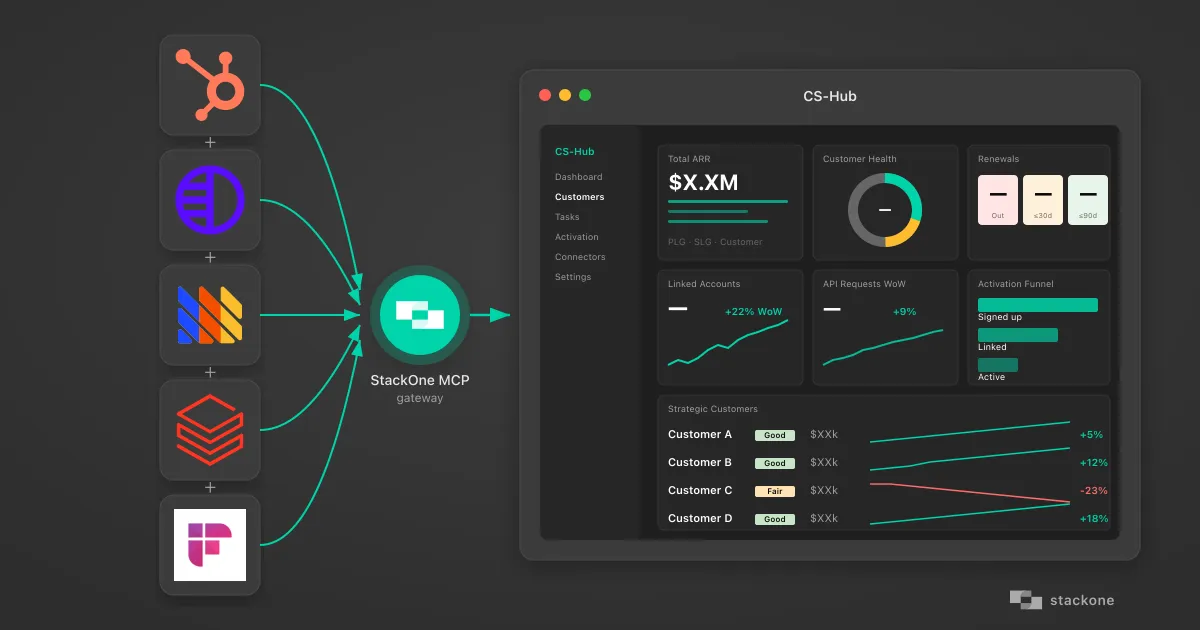
How I Vibe-Coded a Customer Success Hub Using StackOne's AI Native Integration Platform
How a non-developer vibe-coded a customer success dashboard pulling HubSpot, Pylon, PostHog, Databricks, and Fireflies through StackOne's MCP gateway.
7 min read
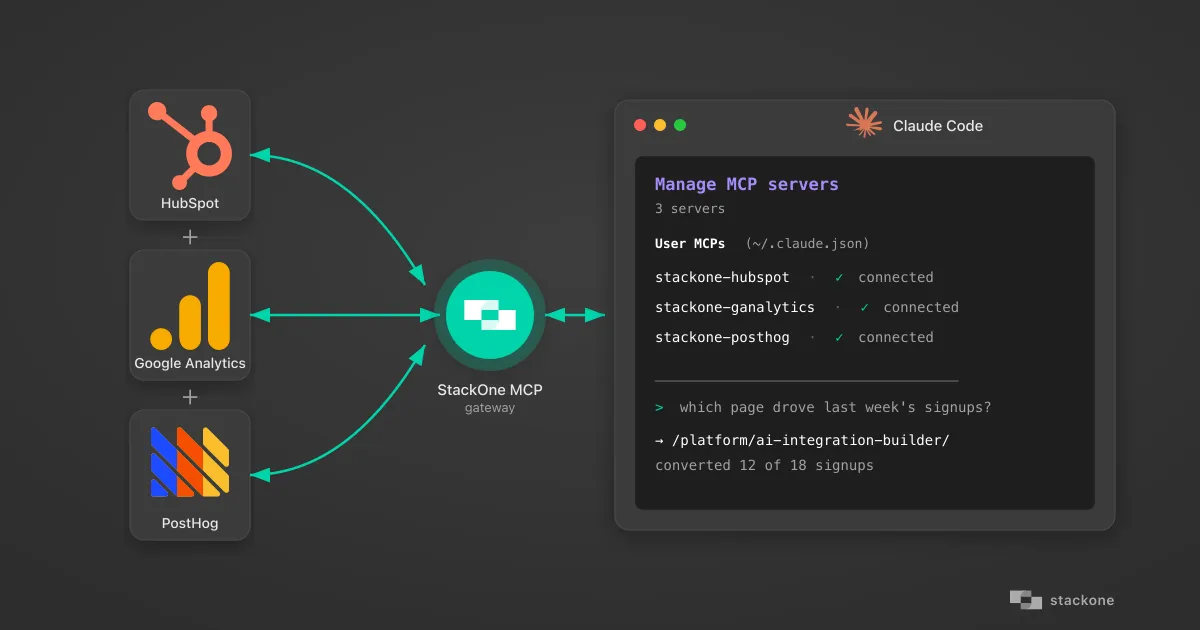
How to Build an AI Marketing Analytics Agent with Claude + an MCP Gateway
Connect Claude to GA4 and HubSpot through StackOne's MCP gateway. Surface bot traffic, funnel gaps, and signup attribution your dashboard doesn't show.
8 min read
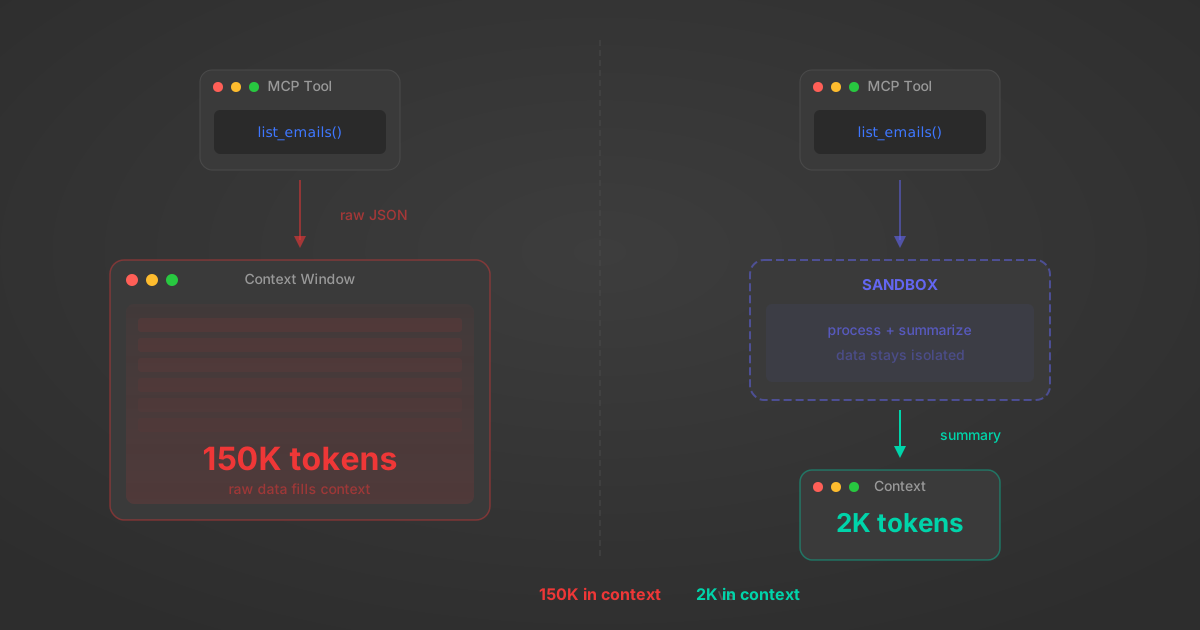
MCP Code Mode: Keeping Tool Responses Out of Agent Context
Anthropic's code_execution processes data already in context. Custom MCP code mode keeps raw tool responses in a sandbox. 14K tokens vs 500.
11 min
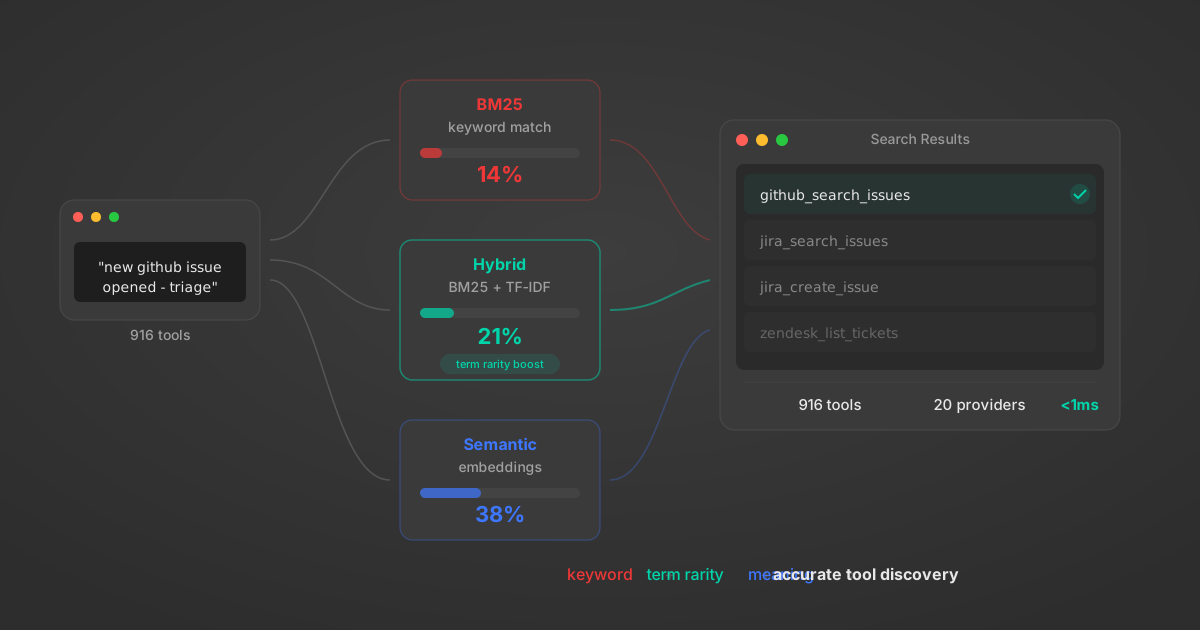
Comparing BM25, TF-IDF, and Hybrid Search for MCP Tool Discovery
Benchmarking BM25, TF-IDF, and hybrid search for MCP tool discovery across 916 tools. The 80/20 TF-IDF/BM25 hybrid hits 21% Top-1 accuracy in under 1ms.
10 min
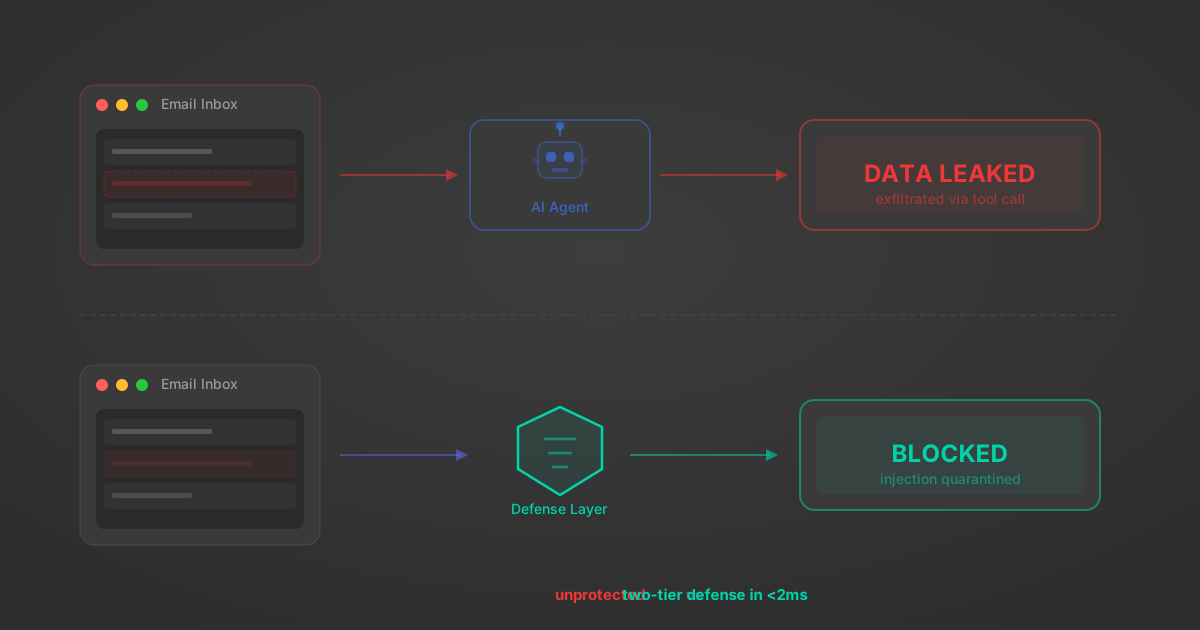
Indirect Prompt Injection Defense for MCP Tools: A Technical Guide
MCP tools that read emails, CRM records, and tickets are indirect prompt injection vectors. Here's how we built a two-tier defense that scans tool results in ~11ms.
12 min
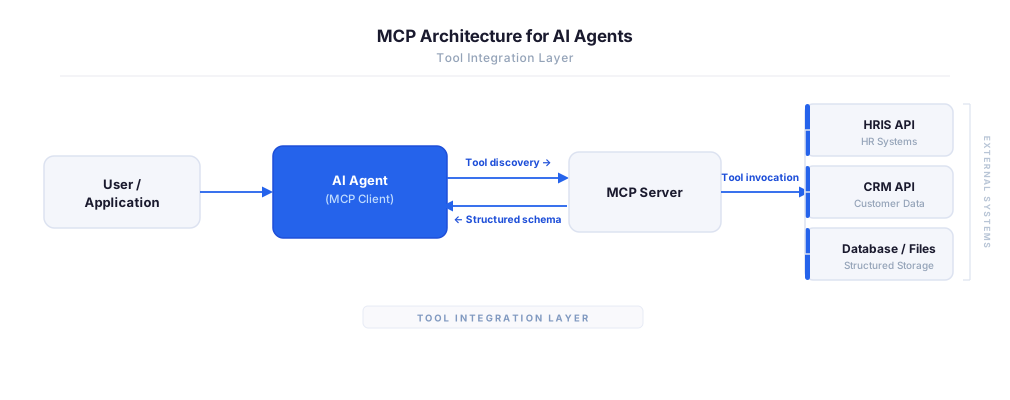
MCP vs A2A: Architecture, Security, and When to Use Each
MCP vs A2A: what each protocol standardizes, how they differ, their shared security risks including indirect prompt injection, and when to use one, both, or a hybrid architecture.
12 min
MCP vs API: What Hundreds of Connector Builds Taught Us
MCP wraps APIs, it doesn't replace them. After building hundreds of connectors that serve both, here's when each approach wins.
14 min read
HubSpot MCP Server FAQ
Does StackOne have a HubSpot MCP server?
HubSpot MCP server vs direct API integration — what's the difference?
How does HubSpot authentication work for AI agents?
origin_owner_id.Are HubSpot MCP tools vulnerable to prompt injection?
What is the context bloat of a HubSpot agent and how do I avoid it?
Can I limit which actions my HubSpot agent can access?
Can I create custom agent actions for my HubSpot MCP server?
When should I NOT use a HubSpot MCP server?
What AI frameworks and AI clients does the StackOne HubSpot MCP server support?
Put your AI agents to work
All the tools you need to build and scale AI agent integrations, with best-in-class connectivity, execution, and security.