Connect
Optimize
Secure
Announcing StackOne Defender: leading open-source prompt injection guard for your agent • Read More →
Production-ready Outlook Calendar MCP server with 77 extensible actions — plus built-in authentication, security, and optimized execution.
 StackOne
Coverage
Create, read, update, and delete across Outlook Calendar — and extend your agent's capabilities with custom actions.

Authentication
Per-user OAuth in one call. Your Outlook Calendar MCP server gets session-scoped tokens with zero credentials stored on your infra.
Agent Auth →
Security
Every Outlook Calendar tool response scanned for prompt injection in milliseconds — 88.7% accuracy, all running on CPU.
Prompt Injection Defense →
Performance
Free up to 96% of your agent's context window to enhance reasoning and reduce cost, on every Outlook Calendar call.
Tools Discovery →A Outlook Calendar MCP server lets AI agents read and write Outlook Calendar data through the Model Context Protocol — Anthropic's open standard for connecting LLMs to external tools. StackOne's Outlook Calendar MCP server ships with 77 pre-built actions, fully extensible via the Connector Builder — plus managed authentication, prompt injection defense, and optimized agent context. Connect it from MCP clients like Claude Desktop, Cursor, and VS Code, or from agent frameworks like OpenAI Agents SDK, LangChain, and Vercel AI SDK.
Every action from Outlook Calendar's API, ready for your agent. Create, read, update, and delete — scoped to exactly what you need.
Retrieve all calendars for a specific user. Supports filtering, selecting specific properties, and expanding related entities.
Retrieve the properties and relationships of a specific calendar for a user. Supports OData query parameters.
Update the properties of a calendar for a specific user
Delete a calendar for a specific user
Retrieve the properties and relationships of a specific calendar for the authenticated user. Supports OData query parameters.
Update the properties of a calendar for the authenticated user
Delete a calendar for the authenticated user
Create a new event in a specific calendar for the authenticated user
Update an existing event in a specific calendar for the authenticated user. All properties are optional and only provided values will be updated.
Create a new event in a specific calendar for a specific user
Update an existing event in a specific calendar for a specific user. All properties are optional and only provided values will be updated.
Retrieve a specific event from a specific calendar for the authenticated user
Delete an event from a specific calendar for the authenticated user. This moves the event to deleted items.
Retrieve a specific event from a specific calendar for a specific user
Delete an event from a specific calendar for a specific user. This moves the event to deleted items.
Add an attachment to an event in the authenticated user's specific calendar. Supports file attachments, item attachments, and reference attachments.
Retrieve the list of attachment objects attached to an event in the authenticated user's specific calendar.
Add an attachment to an event in a specific user's specific calendar. Supports file attachments, item attachments, and reference attachments.
Retrieve the list of attachment objects attached to an event in a specific user's specific calendar.
Add an attachment to an event in the authenticated user's calendars. Supports file attachments, item attachments, and reference attachments.
Retrieve the list of attachment objects attached to an event in the authenticated user's calendars.
Add an attachment to an event in a specific user's calendars. Supports file attachments, item attachments, and reference attachments.
Retrieve the list of attachment objects attached to an event in a specific user's calendars.
Create a new calendar group for the authenticated user.
Retrieve a list of calendar groups for the authenticated user.
Retrieve the properties and relationships of a calendar group for the authenticated user.
Update the properties of a calendar group for the authenticated user.
Delete a calendar group for the authenticated user.
Create a new calendar group for a specific user.
Retrieve a list of calendar groups for a specific user.
Retrieve the properties and relationships of a calendar group for a specific user.
Update the properties of a calendar group for a specific user.
Delete a calendar group for a specific user.
Create a calendar permission to specify the identity and role of the user with whom the calendar is being shared or delegated.
Retrieve a list of calendar permissions for a user's primary calendar.
Retrieve the properties and relationships of a specific calendar permission for a user's primary calendar.
Update the role of a calendar permission to change the permission level for a user with whom the calendar is shared or delegated.
Delete a specific calendar permission for a user's primary calendar.
Create a new user account in the organization with the specified properties
Retrieve a list of user objects. By default, returns a limited set of properties (businessPhones, displayName, givenName, id, jobTitle, mail, mobilePhone, officeLocation, preferredLanguage, surname, userPrincipalName). Use $select to specify alternative properties.
Retrieve the properties and relationships of a specific user by their ID or userPrincipalName. By default, only a limited set of properties are returned (businessPhones, displayName, givenName, id, jobTitle, mail, mobilePhone, officeLocation, preferredLanguage, surname, userPrincipalName). Use the select parameter to return an alternative property set.
Delete a specific user from the organization by their ID or userPrincipalName
Create a new calendar for the authenticated user in the default calendar group
Create a new calendar for a specific user in the default calendar group
Create a new event in the default calendar for the authenticated user
Create a new event in the default calendar for a specific user
Create a new calendar in a calendar group for the authenticated user.
Retrieve the properties and relationships of the default calendar for the authenticated user
Retrieve the events in a calendar view for the authenticated user's calendar within a specified time range
Retrieve the events in a calendar view for a specific user's calendar within a specified time range
Retrieve events from all calendars for the authenticated user. Supports OData query parameters. Note - Cannot use $filter on recurrence property.
Retrieve events from all calendars for a specific user. Supports OData query parameters. Note - Cannot use $filter on recurrence property.
Retrieve events from the authenticated user's default calendar. Supports OData query parameters.
Retrieve events from a specific user's default calendar. Supports OData query parameters.
Retrieve events from a specific calendar for the authenticated user. Supports OData query parameters.
Retrieve events from a specific calendar for a specific user. Supports OData query parameters.
Retrieve a specific event from the authenticated user's default calendar
Retrieve a specific event from a user's default calendar
Retrieve a list of calendars in a calendar group for the authenticated user.
Permanently delete an event for a specific user, bypassing deleted items. This action cannot be undone and the event cannot be recovered.
Forward an event from a specific calendar to a list of recipients with an optional comment.
Forward an event from a specific user's calendar to a list of recipients with an optional comment.
Forward an event from the authenticated user's calendars to a list of recipients with an optional comment.
Forward an event from a specific user's calendars to a list of recipients with an optional comment.
Cancel an event in the authenticated user's calendars and send a cancellation message to all attendees.
Cancel an event in a specific user's calendars and send a cancellation message to all attendees.
Cancel an event in a specific calendar for the authenticated user and send a cancellation message to all attendees.
Cancel an event in a specific calendar for a specific user and send a cancellation message to all attendees.
Accept an event in the authenticated user's calendars with an optional comment and response notification.
Accept an event in a specific user's calendars with an optional comment and response notification.
Accept an event in a specific calendar for the authenticated user with an optional comment and response notification.
Accept an event in a specific calendar for a specific user with an optional comment and response notification.
Decline an event in the authenticated user's calendars with optional comment, proposed new time, and response notification.
Decline an event in a specific user's calendars with optional comment, proposed new time, and response notification.
Decline an event in a specific calendar for the authenticated user with optional comment, proposed new time, and response notification.
Decline an event in a specific calendar for a specific user with optional comment, proposed new time, and response notification.
Change the password for the authenticated user. The user must provide their current password and the new password.
One endpoint. Any framework. Your agent is talking to Outlook Calendar in under 10 lines of code.
MCP Clients
Agent Frameworks

 JSON
JSON{
"mcpServers": {
"stackone": {
"command": "npx",
"args": [
"-y",
"mcp-remote@latest",
"https://api.stackone.com/mcp?x-account-id=<account_id>",
"--header",
"Authorization: Basic <YOUR_BASE64_TOKEN>"
]
}
}
}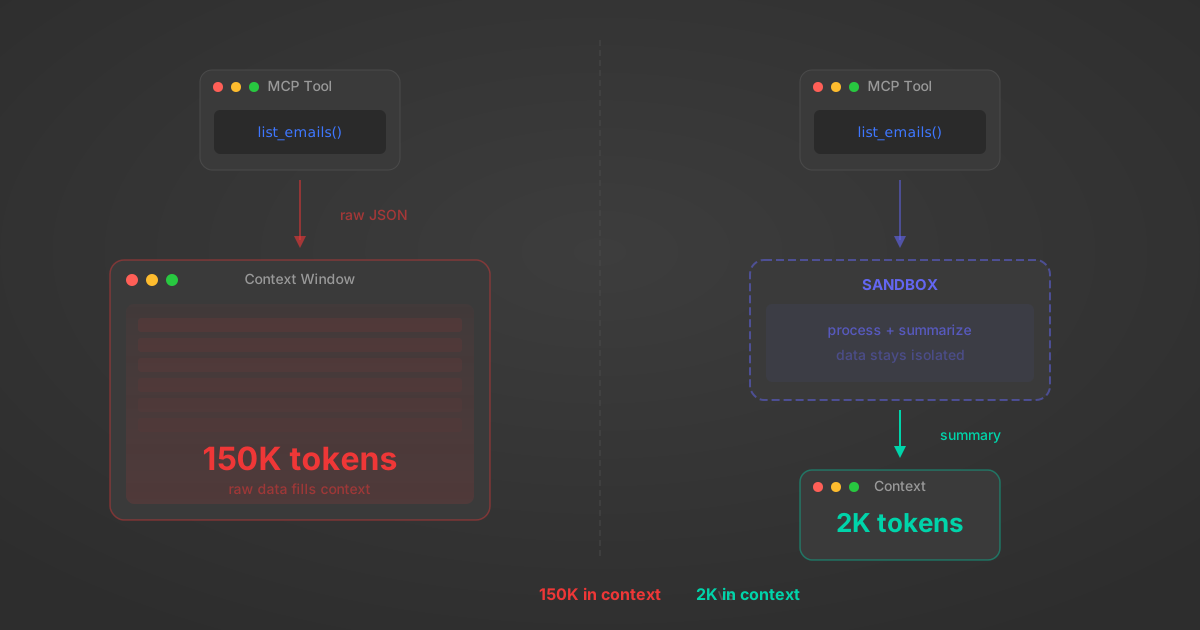
Anthropic's code_execution processes data already in context. Custom MCP code mode keeps raw tool responses in a sandbox. 14K tokens vs 500.
11 min
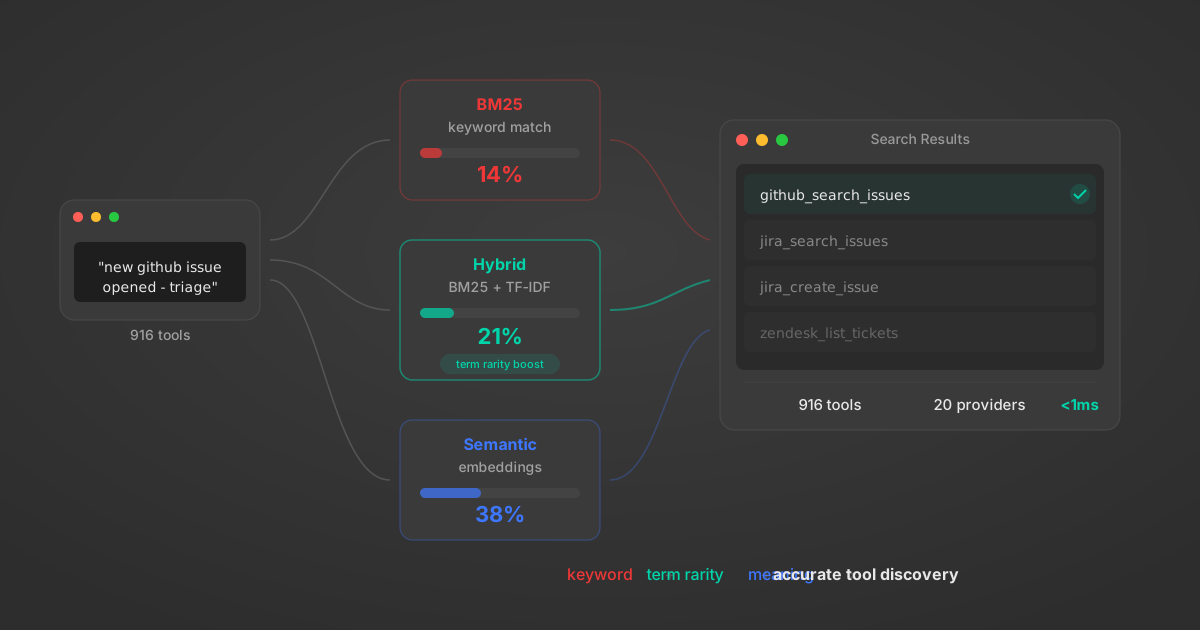
Benchmarking BM25, TF-IDF, and hybrid search for MCP tool discovery across 916 tools. The 80/20 TF-IDF/BM25 hybrid hits 21% Top-1 accuracy in under 1ms.
10 min
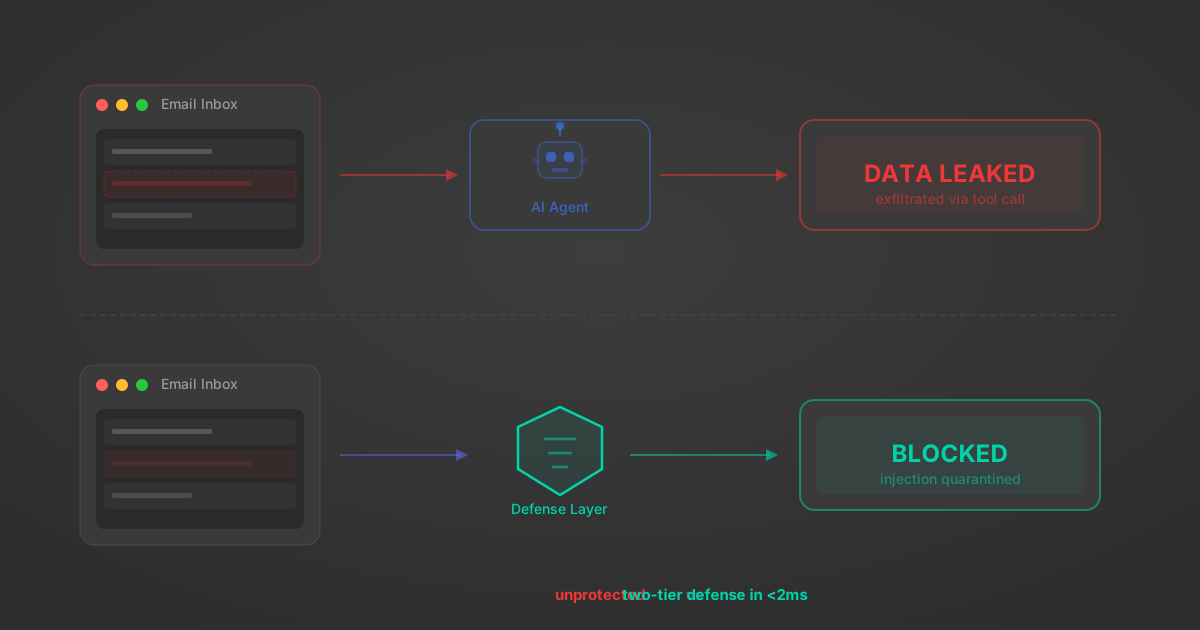
MCP tools that read emails, CRM records, and tickets are indirect prompt injection vectors. Here's how we built a two-tier defense that scans tool results in ~11ms.
12 min
origin_owner_id.All the tools you need to build and scale AI agent integrations, with best-in-class connectivity, execution, and security.