Connect
Optimize
Secure
Announcing StackOne Defender: leading open-source prompt injection guard for your agent • Read More →
Production-ready Qlik MCP server with 100 extensible actions — plus built-in authentication, security, and optimized execution.
 StackOne
Coverage
Create, read, update, and delete across Qlik — and extend your agent's capabilities with custom actions.

Authentication
Per-user OAuth in one call. Your Qlik MCP server gets session-scoped tokens with zero credentials stored on your infra.
Agent Auth →
Security
Every Qlik tool response scanned for prompt injection in milliseconds — 88.7% accuracy, all running on CPU.
Prompt Injection Defense →
Performance
Free up to 96% of your agent's context window to enhance reasoning and reduce cost, on every Qlik call.
Tools Discovery →A Qlik MCP server lets AI agents read and write Qlik data through the Model Context Protocol — Anthropic's open standard for connecting LLMs to external tools. StackOne's Qlik MCP server ships with 100 pre-built actions, fully extensible via the Connector Builder — plus managed authentication, prompt injection defense, and optimized agent context. Connect it from MCP clients like Claude Desktop, Cursor, and VS Code, or from agent frameworks like OpenAI Agents SDK, LangChain, and Vercel AI SDK.
Every action from Qlik's API, ready for your agent. Create, read, update, and delete — scoped to exactly what you need.
Create a new user in the Qlik Cloud tenant
Retrieve a paginated list of users in the Qlik Cloud tenant
Retrieve details of a specific user by ID
Delete a user from the Qlik Cloud tenant
Creates a space
Retrieves spaces that the current user has access to and match the query
Retrieves a single space by ID
Updates a space
Deletes a space
Retrieves a single assignment by assignment ID
Updates a single assignment by assignment ID
Creates a share
Retrieves a single space share by ID
Deletes a space share
Creates a new group
Returns a list of groups with cursor-based pagination
Returns the requested group
Updates the requested group
Deletes the requested group
Creates a custom role
Returns a list of roles using cursor-based pagination
Returns the requested role
Updates the requested role
Deletes the requested role
Lists items that the user has access to
Finds and returns an item
Updates an item
Deletes an item and removes the item from all collections
Creates and returns a new collection
Retrieves the collections that the user has access to
Finds and returns a collection
Updates a collection's name and description
Deletes a collection and removes all items from the collection
Finds and returns an item in a specific collection
Removes an item from a collection
Creates a new automation. The requesting user must be assigned the `AutomationCreator` role.
Retrieves a list of the automations that the requesting user has access to.
Retrieves the full definition of an automation. The requesting user must be the owner of the automation.
Updates the full definition of an automation. The requesting user must be the owner of the automation.
Changes the owner of an automation to another user. This action removes the history and change logs of this automation. All linked connections used in the automation are detached and not moved to the new owner.
Deletes an automation. The requesting user must be the owner of the automation, or be assigned the `TenantAdmin` role.
Retrieves a list of runs for a specific automation. The requesting user must be the owner of the automation, or be assigned the `TenantAdmin` role.
Retrieves a specific run for an automation. The requesting user must be the owner of the automation.
Retrieves list of events for subscribed services for your tenant. Stores events for 90 days, after which they can be accessed via `/v1/audits/archive`.
Finds and returns a specific audit events for the given event ID.
Creates an API key for a user or for configuring SCIM
Lists API keys for the tenant with cursor-based pagination
Returns an API key for a given ID
Updates an API key description using JSON Patch operations
Deletes or revokes an API key
Retrieves the API key configuration for a tenant
Updates the API keys configuration for a tenant using JSON Patch operations
List tasks
Get a task
Delete a task
List all extensions
Get a specific extension
Delete a specific extension
List brands
Retrieve a brand
Update a brand
Delete a brand
Download brand file
Delete a brand file
Adds an item to a collection and returns the item
Retrieve the currently authenticated user's profile
Retrieves the assignments of the space matching the query
Retrieves the shares of the space matching the query
Gets a list of distinct space types available for use in the tenant
Returns the tenant's group settings
Finds and returns the collections (and tags) of an item
Finds and returns the items service settings for the current tenant
Retrieves items from a collection that the user has access to
Lists the user's favorites collection
Retrieves the URL for the debug log of a specific automation run. The requesting user must be the owner of the automation.
Retrieves paginated usage metrics for automations. The requesting user must be assigned the `TenantAdmin` role.
Retrieves audit events from long-term storage. Returns all archived audit events for the specified date and tenant, formatted as a JSON array. Archived events are retained for the full lifetime of the tenant, and are not removed or size-limited.
Returns the server configuration options. It includes options that represent the server configuration state and parameters that were used to run the server with certain functionality.
Finds and returns the list of possible event sources for this tenant.
Finds and returns the list of possible event types for this tenant.
Download extension as an archive
Download file from extension archive
Retrieve active brand
Deletes an assignment
Get the total count of users in the tenant
Filter users using POST request with complex filter criteria
Send invitation emails to new users
Creates an assignment for a user or group (assignee) to a space with the specified roles
Retrieves a list of groups matching the filter using advanced query string
Changes the owner of an automation to another user. This action removes the history and change logs of this automation. All linked connections used in the automation are detached and not moved to the new owner.
Changes the space of an automation by specifying a new space.
Duplicates an existing automation. The requesting user must be the owner of the automation.
Disables an automation so that it cannot be run. The requesting user must be the owner of the automation, or be assigned the `TenantAdmin` role.
Enables an automation so that it can be run. The requesting user must be the owner of the automation, or be assigned the `TenantAdmin` role.
Creates a runs for a specific automation. The requesting user must be the owner of the automation.
Retries a specific run by creating a new run using the same inputs. The requesting user must be the owner of the automation.
Forcefully stops an automation run immediately. The requesting user must be the owner of the automation.
Start a task
Activate a brand
Deactivate a brand
One endpoint. Any framework. Your agent is talking to Qlik in under 10 lines of code.
MCP Clients
Agent Frameworks

 JSON
JSON{
"mcpServers": {
"stackone": {
"command": "npx",
"args": [
"-y",
"mcp-remote@latest",
"https://api.stackone.com/mcp?x-account-id=<account_id>",
"--header",
"Authorization: Basic <YOUR_BASE64_TOKEN>"
]
}
}
}114+ actions
104+ actions
101+ actions
80+ actions
63+ actions
53+ actions
34+ actions
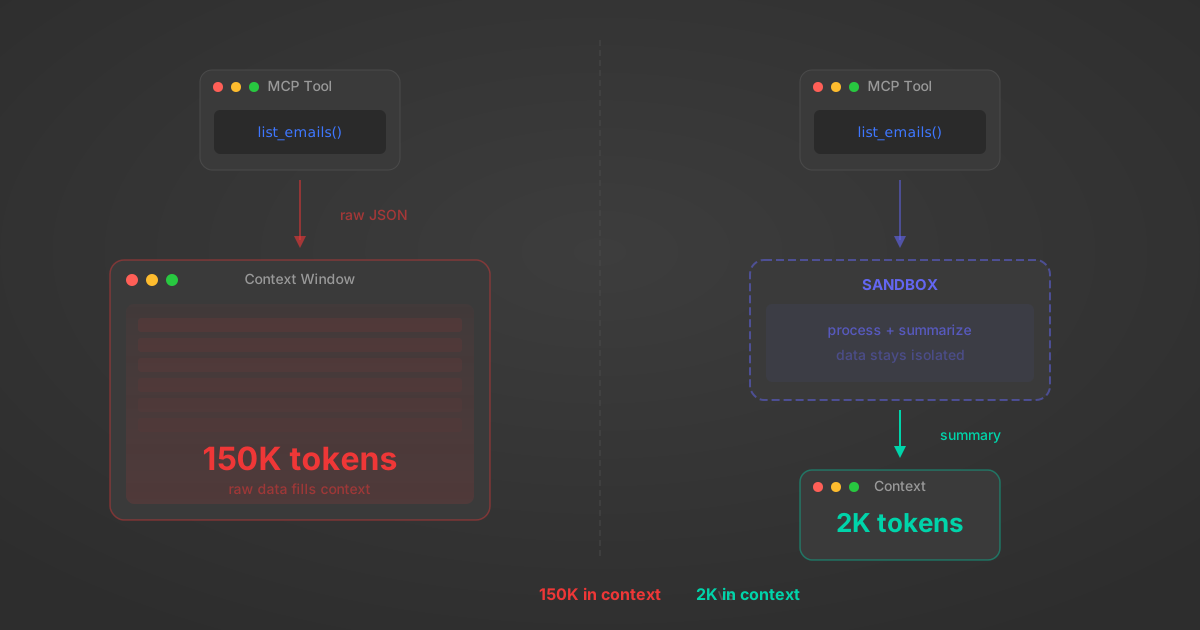
Anthropic's code_execution processes data already in context. Custom MCP code mode keeps raw tool responses in a sandbox. 14K tokens vs 500.
11 min
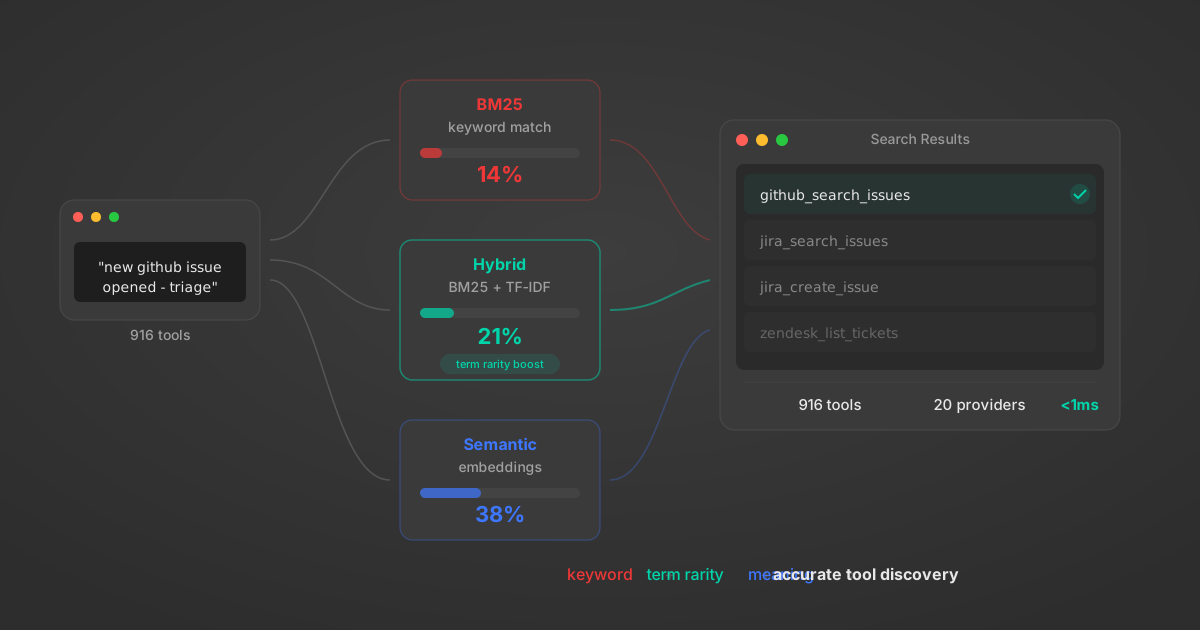
Benchmarking BM25, TF-IDF, and hybrid search for MCP tool discovery across 916 tools. The 80/20 TF-IDF/BM25 hybrid hits 21% Top-1 accuracy in under 1ms.
10 min
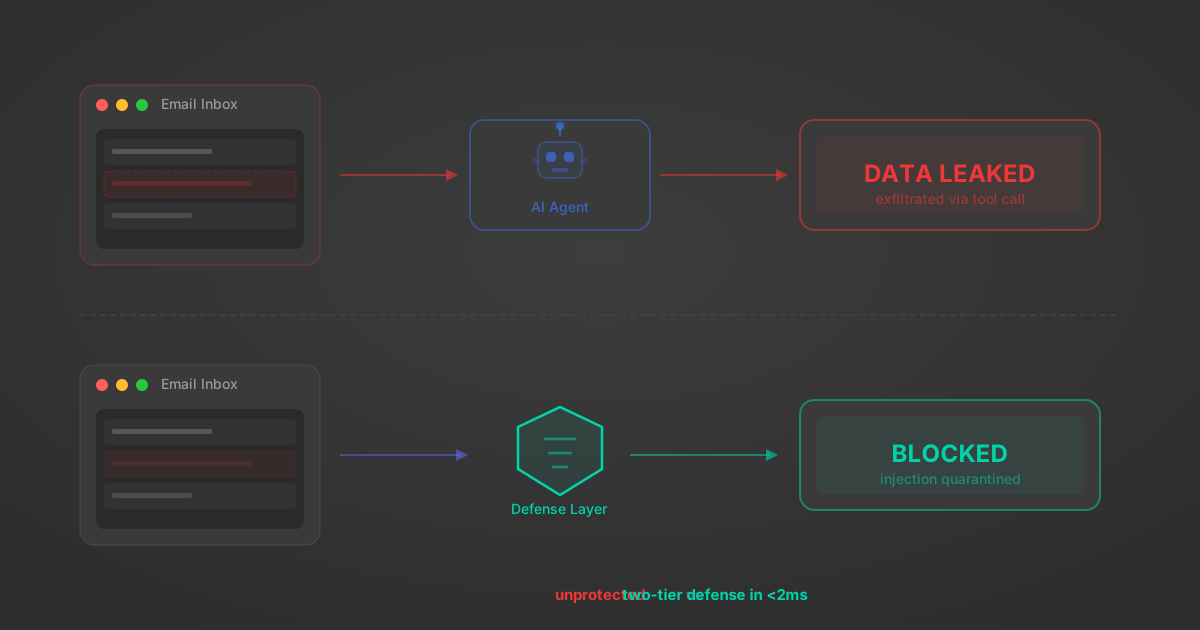
MCP tools that read emails, CRM records, and tickets are indirect prompt injection vectors. Here's how we built a two-tier defense that scans tool results in ~11ms.
12 min
origin_owner_id.All the tools you need to build and scale AI agent integrations, with best-in-class connectivity, execution, and security.