
Tribepad MCP Server
for AI Agents
Connect your AI agent to StackOne's Tribepad MCP server and give it 56 MCP tools out of the box. Auth, tool execution, and security all managed.
 StackOne






Coverage
56 Agent Actions
Create, read, update, and delete across Tribepad — and extend your agent's capabilities with custom actions.

Authentication
Agent Tool Authentication
Per-user OAuth in one call. Your Tribepad MCP server gets session-scoped tokens with zero credentials stored on your infra.
Agent Auth →
Security
Agent Protection
Every Tribepad tool response scanned for prompt injection in milliseconds — 88.7% accuracy, all running on CPU.
Prompt Injection Defense →
Performance
Max Agent Context. Min Cost.
Free up to 96% of your agent's context window to enhance reasoning and reduce cost, on every Tribepad call.
Tools Discovery →What is the Tribepad MCP Server?
A Tribepad MCP server lets AI agents read and write Tribepad data through the Model Context Protocol — Anthropic's open standard for connecting LLMs to external tools. StackOne's Tribepad MCP server ships with 56 pre-built actions, fully extensible via the Connector Builder — plus managed authentication, prompt injection defense, observability, and agent execution runtime. Connect it from MCP clients like Claude Desktop, Claude Code, Cursor, Goose, and VS Code, or from agent frameworks like OpenAI Agents SDK, LangChain, and Vercel AI SDK.
All Tribepad MCP Tools
Every action from Tribepad's API, ready for your agent. Create, read, update, and delete — scoped to exactly what you need.
Applications
- List Applications
Retrieve a paginated list of all applications
- Get Application
Retrieve a specific application by its ID
Jobs
- Get Job
Retrieve a specific job by its ID
- Search Jobs
Search for jobs using filters like keywords, type, category, salary, and location
Hierarchys
- Create Hierarchy
Create a new hierarchy node
- Get Hierarchy
Retrieve a specific hierarchy node by its ID
- Update Hierarchy
Update an existing hierarchy node
- Delete Hierarchy
Delete a hierarchy node by its ID
Hierarchy Types
- Create Hierarchy Type
Create a new hierarchy type
- List Hierarchy Types
Retrieve all hierarchy node types
Users
- Create User
Create a new admin user
- List Users
Retrieve a list of admin users
- Update User
Update an existing admin user identified by username
- Delete User
Soft-delete an admin user by their ID
Job Requisitions
- Create Job Requisition
Create a new job requisition
- List Job Requisitions
Retrieve a paginated list of job requisitions
Job Templates
- Create Job Template
Create a new job requisition template
- List Job Templates
Retrieve a paginated list of job requisition templates
Careers
- Create Career
Create a new career entry for a user
- Get Career
Retrieve a specific career entry by its ID
- List Careers
Retrieve a list of all user career history entries (work experience records)
- Delete Career
Delete a career entry by its ID
Custom Fields
- List Custom Fields
Retrieve a list of user custom field definitions
- Get Custom Field
Retrieve a specific custom field value for a user
- Update Custom Field
Update the value of a custom field for a user
- Delete Custom Field
Delete a custom field value for a user
Other (30)
- Create Application CV
Upload a CV file for an application
- List Hierarchies
Retrieve a list of all hierarchy nodes
- Get Hierarchy Extra Fields
Retrieve the extra fields available for hierarchy nodes
- List Career Defaults
Retrieve a list of default career template entries used as starting points for new career records
- Get Application Files
Retrieve all files associated with an application
- Get Application Contract Files
Retrieve contract files for an application
- Get Application CV Files
Retrieve CV/resume files for an application
- Get Application Integration Files
Retrieve integration files for an application
- Get Application Onboarding Files
Retrieve onboarding files for an application
- Get Application Profile Files
Retrieve profile files for an application
- Get All Options
Retrieve all reference data options in a single request
- Get Anonymous Policies
Retrieve anonymous application policies
- Get Application Statuses
Retrieve available application status options
- Get Business Regions
Retrieve available business regions
- Get Business Units
Retrieve available business units
- Get Countries
Retrieve available country options
- Get Currencies
Retrieve available currency options
- Get Job Categories
Retrieve available job category options
- Get Job Custom Fields
Retrieve job custom field definitions
- Get Job Types
Retrieve available job type options
- Get Mapping
Retrieve field mappings
- Get Piwik
Retrieve Piwik analytics configuration
- Get Regions
Retrieve available geographic region options
- Get Reject Reasons
Retrieve available reject reason options
- Get Salary Frequencies
Retrieve available salary frequency options
- Get Withdraw Reasons
Retrieve available withdraw reason options
- Get Job Options Business Unit
Retrieve business unit options specific to job configuration
- Get Data Security Preferences
Retrieve data security preference settings
- Register And Apply
Register a new candidate and apply to a job in one step
- Purge User
Permanently and irreversibly purge a user and all associated data
Tribepad AI Agent Use Cases
Connect your AI agent to Tribepad and help your team scale the recruiting operations they run by hand today.
Use StackOne to connect your AI agent to your ATS and job boards to automate job posting distribution.
ViewUse StackOne to connect your AI agent to your ATS, survey tools, and messaging systems to automate reference checks.
ViewUse StackOne to connect your AI agent to your ATS, HRIS, and document management tools to automate offer letter generation.
ViewSet Up Your Tribepad MCP Server in Minutes
One endpoint. Any framework. Your agent is talking to Tribepad in under 10 lines of code.
Agent Frameworks


 JSON
JSON{
"mcpServers": {
"stackone": {
"command": "npx",
"args": [
"-y",
"mcp-remote@latest",
"https://api.stackone.com/mcp?x-account-id=<account_id>",
"--header",
"Authorization: Basic <YOUR_BASE64_TOKEN>"
]
}
}
}Platform Resources
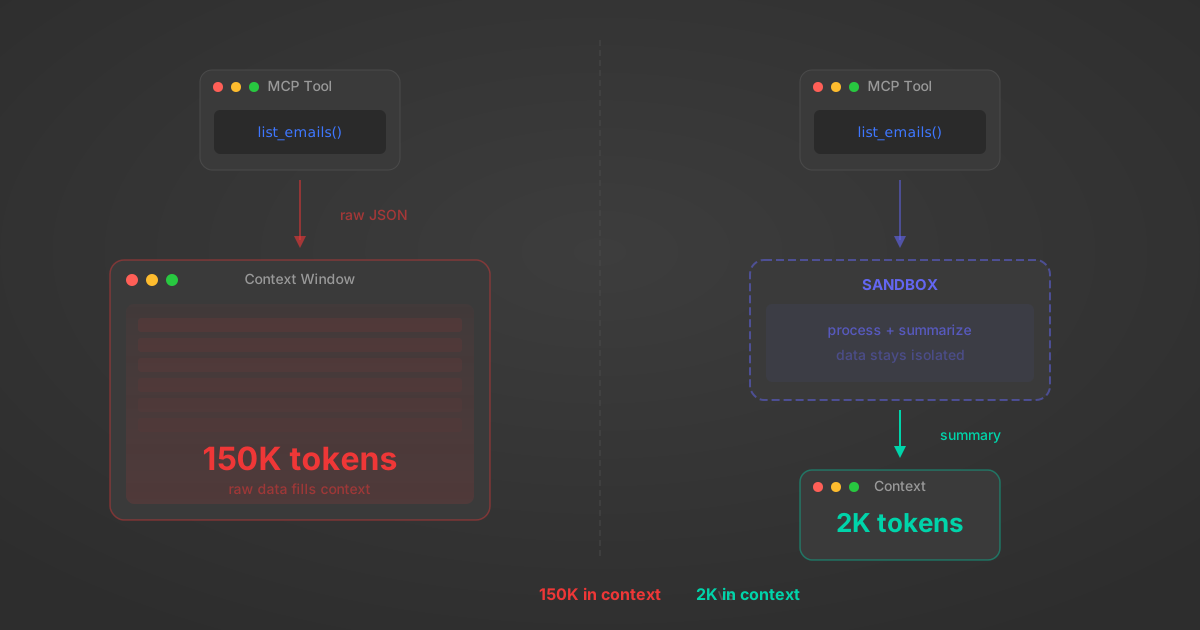
MCP Code Mode: Keeping Tool Responses Out of Agent Context
Anthropic's code_execution processes data already in context. Custom MCP code mode keeps raw tool responses in a sandbox. 14K tokens vs 500.
11 min
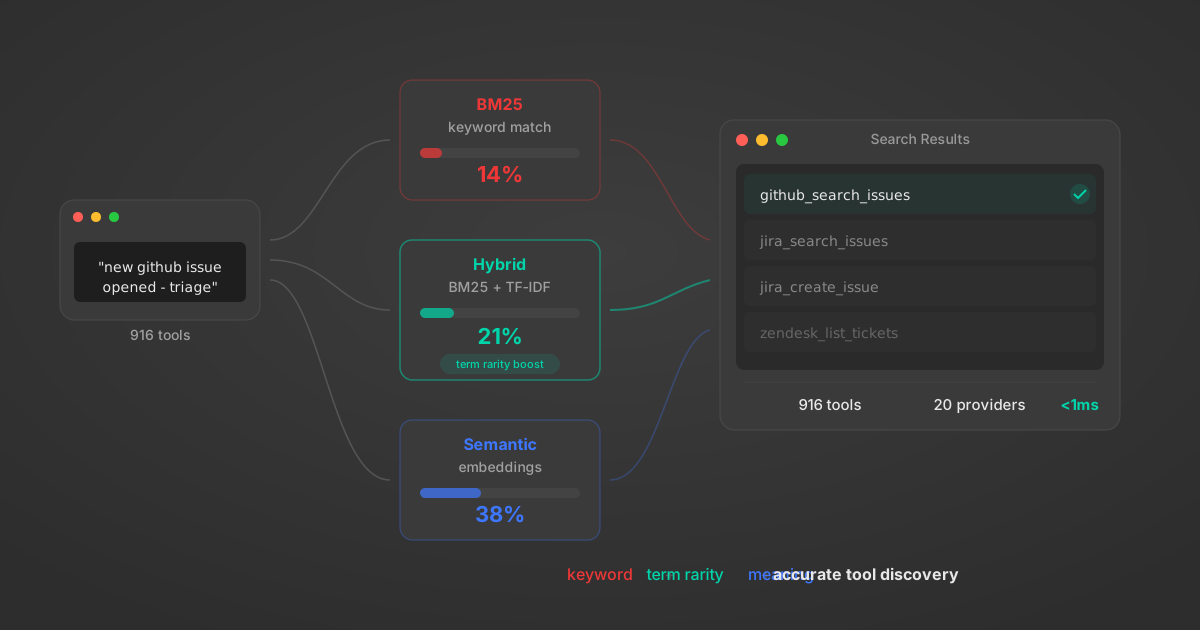
Comparing BM25, TF-IDF, and Hybrid Search for MCP Tool Discovery
Benchmarking BM25, TF-IDF, and hybrid search for MCP tool discovery across 916 tools. The 80/20 TF-IDF/BM25 hybrid hits 21% Top-1 accuracy in under 1ms.
10 min
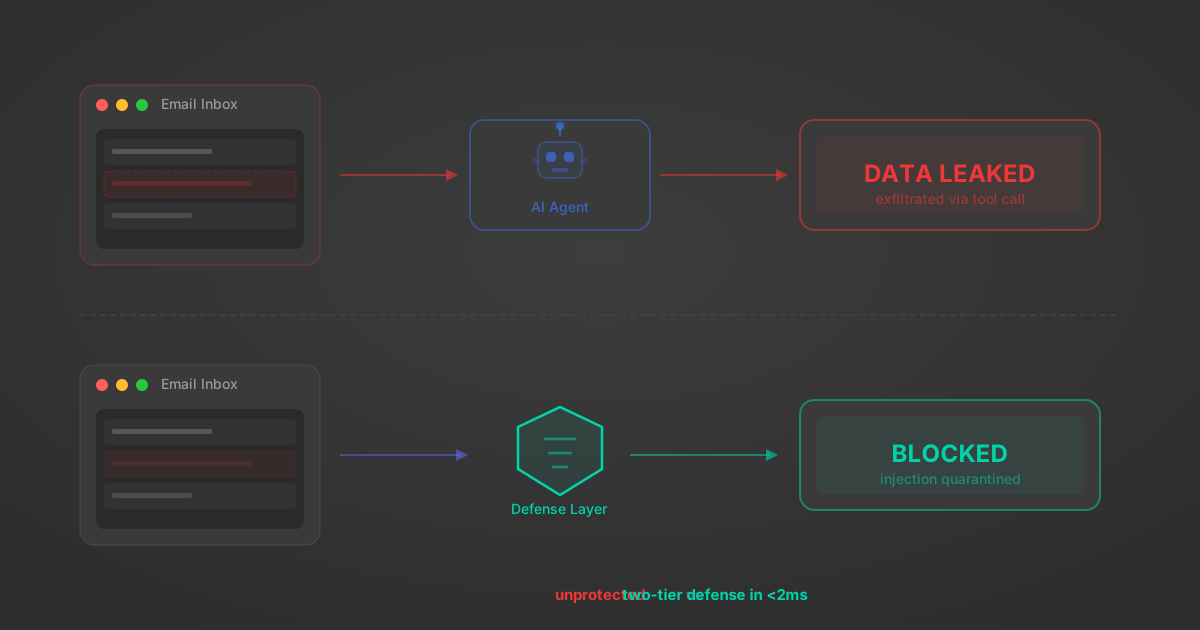
Indirect Prompt Injection Defense for MCP Tools: A Technical Guide
MCP tools that read emails, CRM records, and tickets are indirect prompt injection vectors. Here's how we built a two-tier defense that scans tool results in ~11ms.
12 min
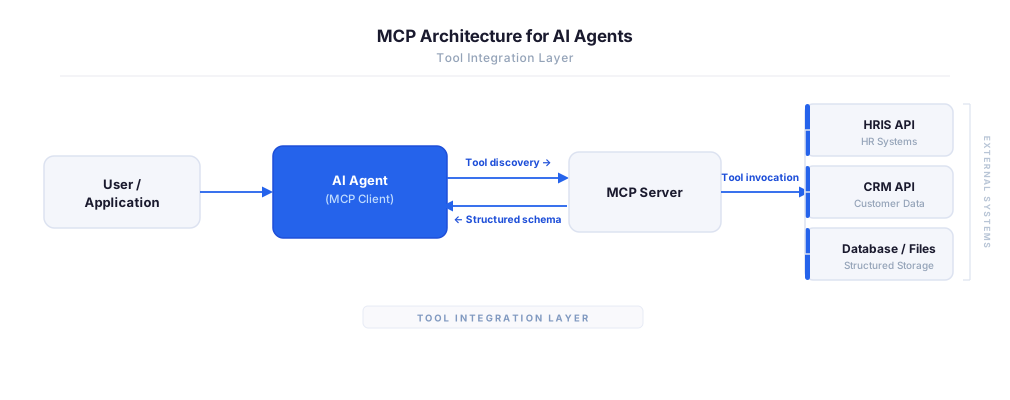
MCP vs A2A: Architecture, Security, and When to Use Each
MCP vs A2A: what each protocol standardizes, how they differ, their shared security risks including indirect prompt injection, and when to use one, both, or a hybrid architecture.
12 min
MCP vs API: What Hundreds of Connector Builds Taught Us
MCP wraps APIs, it doesn't replace them. After building hundreds of connectors that serve both, here's when each approach wins.
14 min read
Tribepad MCP Server FAQ
Does StackOne have a Tribepad MCP server?
Tribepad MCP server vs direct API integration — what's the difference?
How does Tribepad authentication work for AI agents?
origin_owner_id.Are Tribepad MCP tools vulnerable to prompt injection?
What is the context bloat of a Tribepad agent and how do I avoid it?
Can I limit which actions my Tribepad agent can access?
Can I create custom agent actions for my Tribepad MCP server?
When should I NOT use a Tribepad MCP server?
What AI frameworks and AI clients does the StackOne Tribepad MCP server support?
Put your AI agents to work
All the tools you need to build and scale AI agent integrations, with best-in-class connectivity, execution, and security.