Connect
Optimize
Secure
Announcing StackOne Defender: leading open-source prompt injection guard for your agent • Read More →
Production-ready Confluence MCP server with 133 extensible actions — plus built-in authentication, security, and optimized execution.
 StackOne
Coverage
Create, read, update, and delete across Confluence — and extend your agent's capabilities with custom actions.

Authentication
Per-user OAuth in one call. Your Confluence MCP server gets session-scoped tokens with zero credentials stored on your infra.
Agent Auth →
Security
Every Confluence tool response scanned for prompt injection in milliseconds — 88.7% accuracy, all running on CPU.
Prompt Injection Defense →
Performance
Free up to 96% of your agent's context window to enhance reasoning and reduce cost, on every Confluence call.
Tools Discovery →A Confluence MCP server lets AI agents read and write Confluence data through the Model Context Protocol — Anthropic's open standard for connecting LLMs to external tools. StackOne's Confluence MCP server ships with 133 pre-built actions, fully extensible via the Connector Builder — plus managed authentication, prompt injection defense, and optimized agent context. Connect it from MCP clients like Claude Desktop, Cursor, and VS Code, or from agent frameworks like OpenAI Agents SDK, LangChain, and Vercel AI SDK.
Every action from Confluence's API, ready for your agent. Create, read, update, and delete — scoped to exactly what you need.
Returns all attachments with pagination support via cursor parameter.
Deletes an attachment by its ID, moving it to trash.
Creates a new blog post in the specified space.
Returns all blog posts with pagination support via cursor parameter.
Updates a blog post by its ID.
Deletes a blog post by its ID, moving it to trash.
Retrieves the default classification level assigned to a specific space.
Updates the default classification level for a specific space.
Removes the default classification level from a specific space.
Retrieves the classification level assigned to a specific page.
Updates the classification level assigned to a specific page.
Retrieves the classification level assigned to a specific blog post.
Updates the classification level assigned to a specific blog post.
Retrieves the classification level assigned to a specific whiteboard.
Updates the classification level assigned to a specific whiteboard.
Retrieves the classification level assigned to a specific database.
Updates the classification level assigned to a specific database.
Creates a footer comment on a page, blog post, attachment, or as a reply to another comment.
Retrieves all footer comments across the Confluence instance with pagination support.
Updates the body content of an existing footer comment by its ID.
Permanently deletes a footer comment. This action cannot be undone.
Creates an inline comment on a page or blog post, anchored to specific text or location within the content.
Retrieves all inline comments across the Confluence instance with pagination support.
Updates the body content of an existing inline comment by its ID.
Permanently deletes an inline comment. This action cannot be undone.
Creates a new custom property on a page for storing application-specific metadata.
Updates an existing page property's value by its numeric ID, with optimistic locking via version number.
Permanently deletes a page property by its numeric ID. This action cannot be undone.
Creates a new custom property on a blog post for storing application-specific metadata.
Updates an existing blog post property's value by its numeric ID, with optimistic locking via version number.
Permanently deletes a blog post property by its numeric ID. This action cannot be undone.
Creates a new database (structured data table) in a Confluence space.
Retrieves detailed information about a specific database by its ID.
Moves a database to the trash by its ID, where it can be restored later or permanently deleted.
Creates a new folder in a Confluence space for organizing pages and other content.
Retrieves detailed information about a specific folder by its numeric ID.
Moves a folder to the trash by its numeric ID, where it can be restored later or permanently deleted.
Adds one or more labels to a specific attachment without modifying existing labels.
Retrieves all labels associated with a specific attachment.
Removes a specific label from an attachment by label name.
Adds one or more labels to a specific blog post without modifying existing labels.
Retrieves all labels associated with a specific blog post.
Removes a specific label from a blog post by label name.
Adds one or more labels to a specific page without modifying existing labels.
Retrieves all labels associated with a specific page.
Removes a specific label from a page by label name.
Creates a new page in a Confluence space, either as published or draft status.
Retrieves all pages across the Confluence instance with optional filtering by space, status, title, or subtype.
Retrieves detailed information about a specific page by its numeric ID, including optional content body, labels, properties, and collaborators.
Updates an existing page's content, title, status, or parent by its numeric ID.
Moves a page to the trash by its numeric ID, where it can be restored later or permanently deleted.
Creates a Smart Link (embedded URL) in a Confluence space's content tree for linking to external resources.
Moves a Smart Link to the trash by its numeric ID, where it can be restored later or permanently deleted.
Retrieves a specific space property by its numeric ID, returning the key, value, and version information.
Updates an existing space property's key or value by its numeric ID, with optimistic locking via version number.
Permanently deletes a space property by its numeric ID. This action cannot be undone.
Creates a new Confluence space with the specified unique key, name, and optional description for organizing content and collaboration.
Retrieves a paginated list of all Confluence spaces the authenticated user has access to, including global, personal, and archived spaces.
Updates a space's name, description, or homepage by its space key.
Permanently deletes a space by its key without sending it to trash.
Retrieves a paginated list of all tasks across Confluence pages and blog posts, with filters for status, assignee, dates, and content location.
Retrieves detailed information about a specific task by its ID, including status, assignee, creator, and associated content location.
Updates a task's status by ID. Currently only supports changing task status between complete and incomplete.
List all Confluence spaces as unified drives. Returns paginated results with a next cursor token for fetching subsequent pages.
Get a single Confluence space by its ID. Returns drive metadata mapped to StackOne unified schema.
Create a new Confluence page with HTML or plain text content.
List Confluence pages as unified files with optional filtering by space, folder, name, content, or date.
Get a specific Confluence page by ID with full metadata.
Download a Confluence page content as HTML or export as Word document.
List Confluence pages and folders as unified folders with optional filtering by space (drive_id) or parent folder (folder_id).
Get a specific Confluence page or folder by ID with full metadata.
Creates a new whiteboard in a specified Confluence space for visual collaboration, brainstorming, and diagramming.
Moves a whiteboard to the trash by its numeric ID, where it can be restored later or permanently deleted.
Creates a new key-value property on a Confluence space for storing custom metadata or configuration.
Returns a specific attachment by its ID.
Returns all attachments for a specific page.
Returns all attachments for a specific blog post.
Returns all attachments for a specific custom content item.
Returns all attachments associated with a specific label.
Returns a specific blog post by its ID.
Returns all blog posts associated with a specific label.
Returns all blog posts in a specific space.
Retrieves the version history of a specific blog post, showing all previous versions with their metadata and changes.
Retrieves all available classification levels in the Confluence instance.
Retrieves footer comments for a specific attachment with pagination support.
Retrieves footer comments for a specific custom content item with pagination support.
Retrieves root footer comments for a specific page with pagination support.
Retrieves root inline comments for a specific page with pagination support.
Retrieves root footer comments for a specific blog post with pagination support.
Retrieves root inline comments for a specific blog post with pagination support.
Retrieves detailed information about a specific footer comment by its ID.
Retrieves child replies to a specific footer comment with pagination support.
Retrieves detailed information about a specific inline comment by its ID.
Retrieves child replies to a specific inline comment with pagination support.
Retrieves all custom properties attached to a specific page with optional filtering by key.
Retrieves a specific page property by its numeric ID, returning the key, value, and version information.
Retrieves all custom properties attached to a specific blog post with optional filtering by key.
Retrieves a specific blog post property by its numeric ID, returning the key, value, and version information.
Retrieves all labels across the Confluence instance with optional filtering by label ID or prefix.
Retrieves all labels associated with a specific piece of custom content.
Retrieves all labels associated with a specific space.
Retrieves all labels used on content (pages, blog posts) within a specific space.
Retrieves the total number of likes for a specific blog post.
Retrieves the account IDs of all users who liked a specific blog post.
Retrieves the total number of likes for a specific page.
Retrieves the account IDs of all users who liked a specific page.
Retrieves the total number of likes for a specific footer comment.
Retrieves the account IDs of all users who liked a specific footer comment.
Retrieves the total number of likes for a specific inline comment.
Retrieves the account IDs of all users who liked a specific inline comment.
Retrieves all pages that have a specific label attached, with optional filtering by space.
Retrieves all pages within a specific Confluence space, with optional filtering by depth, status, or title.
Retrieves the version history of a specific page, showing all previous versions with their metadata and changes.
Retrieves all direct child pages of a specific page, allowing navigation down the content hierarchy.
Retrieves all ancestor pages in the hierarchy above a specific page, from immediate parent to root.
Retrieves detailed information about a specific Smart Link by its numeric ID, including the embedded URL, metadata, and version info.
Retrieves all permission assignments for a specific space, showing which users and groups have which operations allowed.
Retrieves all key-value properties stored on a specific Confluence space, with optional filtering by property key.
Retrieves the current space role mode for the Confluence site, indicating whether RBAC Beta features are enabled.
Retrieves detailed information about a specific Confluence space by its numeric ID, including metadata, permissions, and associated properties.
Retrieves detailed profile information for a specific Confluence user by their account ID, including display name, email, profile picture, and account status.
Retrieves the representation of anonymous users in Confluence, including their default profile picture and display name.
Retrieves the profile of the currently authenticated user, including display name, account ID, email, profile picture, and locale settings.
Retrieves all groups that a specific user is a member of, useful for permission auditing and access management.
Retrieves profile details for multiple users in a single request by their account IDs, with a maximum of 100 users per request.
Retrieves a user's email address regardless of profile visibility settings. Restricted to Atlassian-approved Connect apps only.
Retrieves email addresses for multiple users in a single request regardless of profile visibility. Restricted to Atlassian-approved Connect apps only.
Retrieves detailed information about a specific whiteboard by its numeric ID, including metadata, version info, and optional collaborators.
Updates only the title of a page by its numeric ID without modifying the page content.
Resets a page's classification level to the space default.
Resets a blog post's classification level to the space default.
Resets a whiteboard's classification level to the space default.
Resets a database's classification level to the space default.
One endpoint. Any framework. Your agent is talking to Confluence in under 10 lines of code.
MCP Clients
Agent Frameworks

 JSON
JSON{
"mcpServers": {
"stackone": {
"command": "npx",
"args": [
"-y",
"mcp-remote@latest",
"https://api.stackone.com/mcp?x-account-id=<account_id>",
"--header",
"Authorization: Basic <YOUR_BASE64_TOKEN>"
]
}
}
}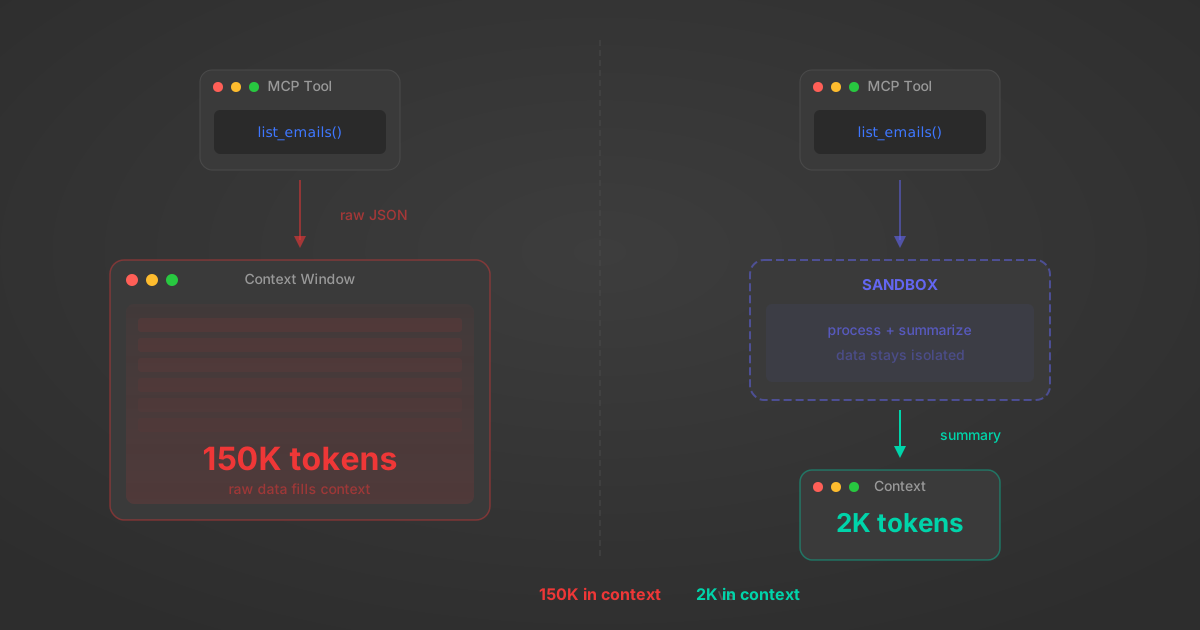
Anthropic's code_execution processes data already in context. Custom MCP code mode keeps raw tool responses in a sandbox. 14K tokens vs 500.
11 min
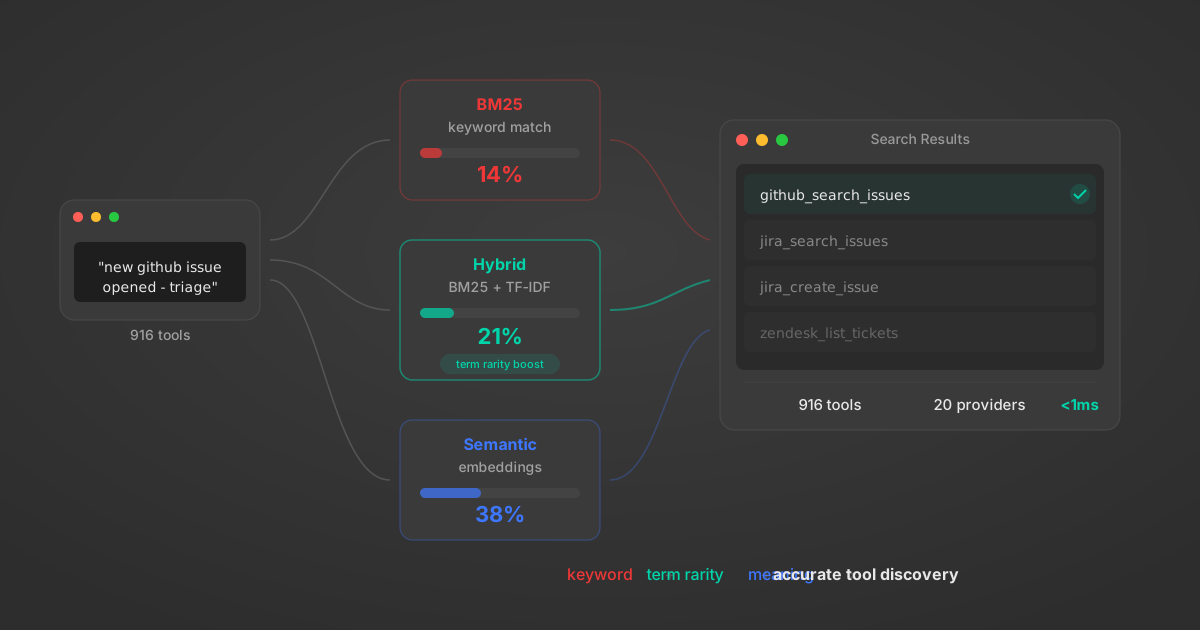
Benchmarking BM25, TF-IDF, and hybrid search for MCP tool discovery across 916 tools. The 80/20 TF-IDF/BM25 hybrid hits 21% Top-1 accuracy in under 1ms.
10 min
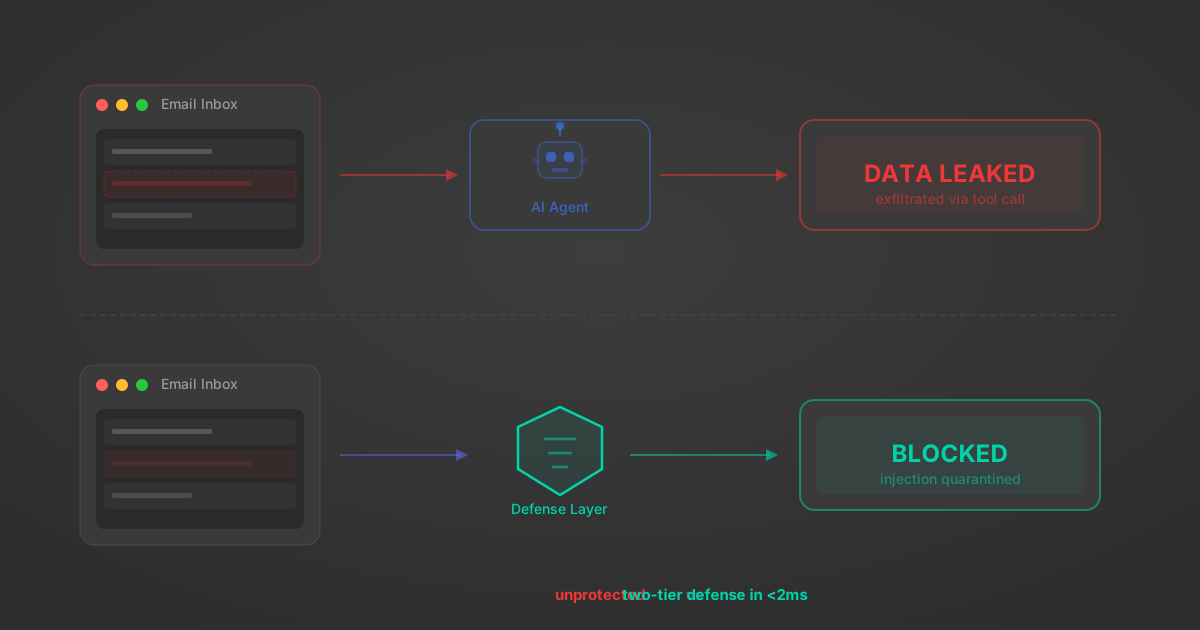
MCP tools that read emails, CRM records, and tickets are indirect prompt injection vectors. Here's how we built a two-tier defense that scans tool results in ~11ms.
12 min
origin_owner_id.All the tools you need to build and scale AI agent integrations, with best-in-class connectivity, execution, and security.