Connect
Optimize
Secure
Announcing StackOne Defender: leading open-source prompt injection guard for your agent • Read More →
Production-ready PagerDuty MCP server with 38 extensible actions — plus built-in authentication, security, and optimized execution.
 StackOne
Coverage
Create, read, update, and delete across PagerDuty — and extend your agent's capabilities with custom actions.

Authentication
Per-user OAuth in one call. Your PagerDuty MCP server gets session-scoped tokens with zero credentials stored on your infra.
Agent Auth →
Security
Every PagerDuty tool response scanned for prompt injection in milliseconds — 88.7% accuracy, all running on CPU.
Prompt Injection Defense →
Performance
Free up to 96% of your agent's context window to enhance reasoning and reduce cost, on every PagerDuty call.
Tools Discovery →A PagerDuty MCP server lets AI agents read and write PagerDuty data through the Model Context Protocol — Anthropic's open standard for connecting LLMs to external tools. StackOne's PagerDuty MCP server ships with 38 pre-built actions, fully extensible via the Connector Builder — plus managed authentication, prompt injection defense, and optimized agent context. Connect it from MCP clients like Claude Desktop, Cursor, and VS Code, or from agent frameworks like OpenAI Agents SDK, LangChain, and Vercel AI SDK.
Every action from PagerDuty's API, ready for your agent. Create, read, update, and delete — scoped to exactly what you need.
Manually create a new incident through the API with specified title, service, and urgency.
Retrieve a paginated list of incidents with filtering options by status, urgency, time range, service, or team.
Retrieve detailed information about a specific incident including timeline, responders, alerts, and notes.
Modify incident properties including title, service, urgency, priority, assignments, escalation policy, conference bridge, status, escalation level, and resolution to comprehensively update incident details.
Create a new service with escalation policy and settings to automate service provisioning during infrastructure deployment.
Retrieve all services in the account with filtering options to populate service directories, build catalogs, and audit configurations.
Fetch detailed configuration and metadata for a specific service including settings, integrations, and escalation policies.
Modify service configuration, settings, or associations to update properties, change escalation policies, or enable features.
Remove a service from the account to clean up deprecated services during decommissioning.
Add a new user to the account to automate user onboarding from HR systems or identity providers.
Retrieve all users in the account with filtering options to sync with HR systems, generate reports, and audit access.
Fetch detailed information about a specific user including contact methods, notification rules, and roles.
Modify user properties, roles, or settings to update information, change roles, or modify notification preferences.
Remove a user from the account to automate user offboarding during employee departures.
Create a new team to organize users and services by team structure within the organization.
Retrieve all teams in the account to organize users and services by team structure.
Fetch detailed team information including members to retrieve team composition and associated resources.
Modify team properties including name, description, or default role to update team structure.
Remove a team from the account to clean up unused teams during organizational restructuring.
Create a new on-call schedule with rotation layers to automate schedule creation during team onboarding.
Retrieve all on-call schedules in the account to display rotations and audit schedule coverage.
Fetch detailed schedule information including layers and overrides to retrieve full configuration for analysis or cloning.
Remove a schedule from the account to clean up unused schedules during reorganization.
List available incident types
Get detailed information about a single incident type
Retrieve available integration vendors and types to discover supported monitoring tools and integration options.
Fetch detailed information about a specific vendor including integration capabilities and configuration options.
Add contextual notes or comments to an incident to document investigation findings, remediation steps, or team communication.
Retrieve all notes associated with an incident for extracting communication history during postmortems or analysis.
Retrieve the complete timeline of actions and changes for an incident to audit handling, generate reports, and analyze response patterns.
List all existing escalation policies
Get information about an existing escalation policy
Query who is currently on-call across schedules and escalation policies to display current information in dashboards or chat bots.
Retrieve all incident priorities ordered by severity from most to least severe to populate priority dropdowns and validate priority selections during incident creation.
Retrieve all licenses available in the account to monitor license types and availability.
Retrieve all user license allocations to monitor license usage and identify unassigned licenses.
Retrieve the license allocated to a specific user to verify license assignment and type.
Retrieve audit trail of configuration changes and actions to track compliance, investigate changes, and perform security audits.
One endpoint. Any framework. Your agent is talking to PagerDuty in under 10 lines of code.
MCP Clients
Agent Frameworks

 JSON
JSON{
"mcpServers": {
"stackone": {
"command": "npx",
"args": [
"-y",
"mcp-remote@latest",
"https://api.stackone.com/mcp?x-account-id=<account_id>",
"--header",
"Authorization: Basic <YOUR_BASE64_TOKEN>"
]
}
}
}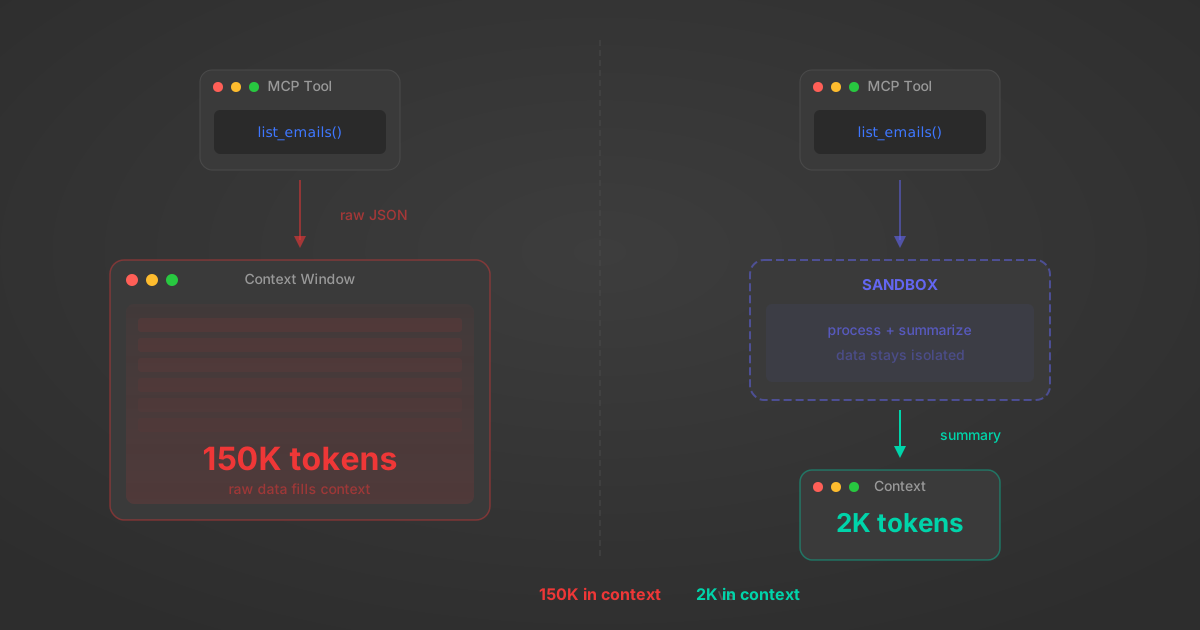
Anthropic's code_execution processes data already in context. Custom MCP code mode keeps raw tool responses in a sandbox. 14K tokens vs 500.
11 min
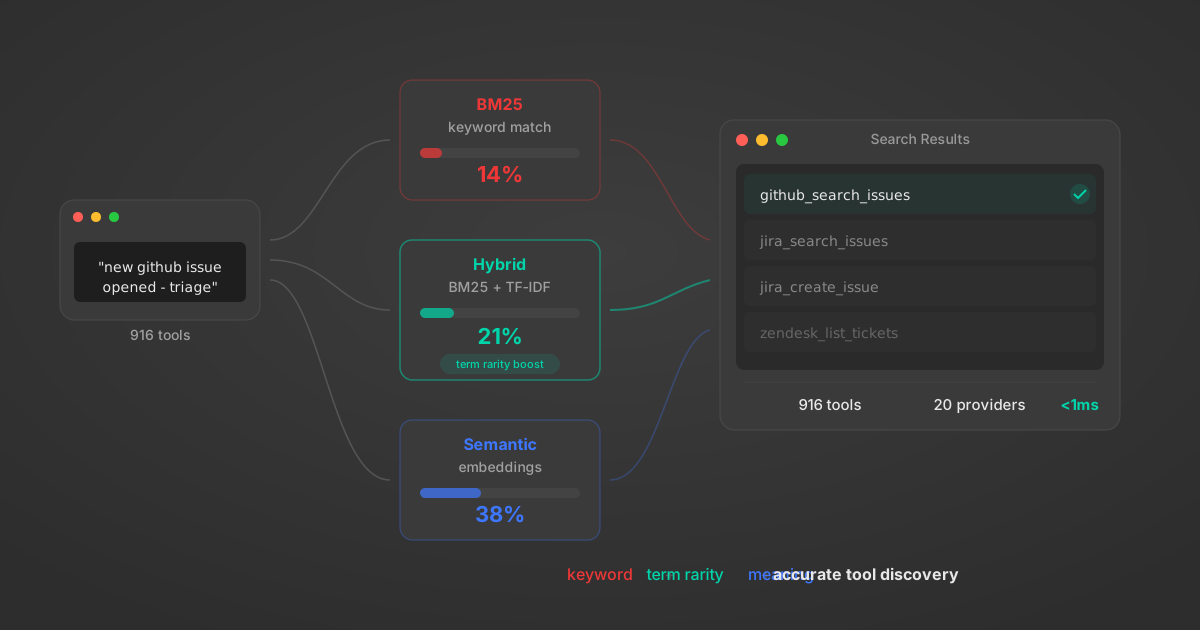
Benchmarking BM25, TF-IDF, and hybrid search for MCP tool discovery across 916 tools. The 80/20 TF-IDF/BM25 hybrid hits 21% Top-1 accuracy in under 1ms.
10 min
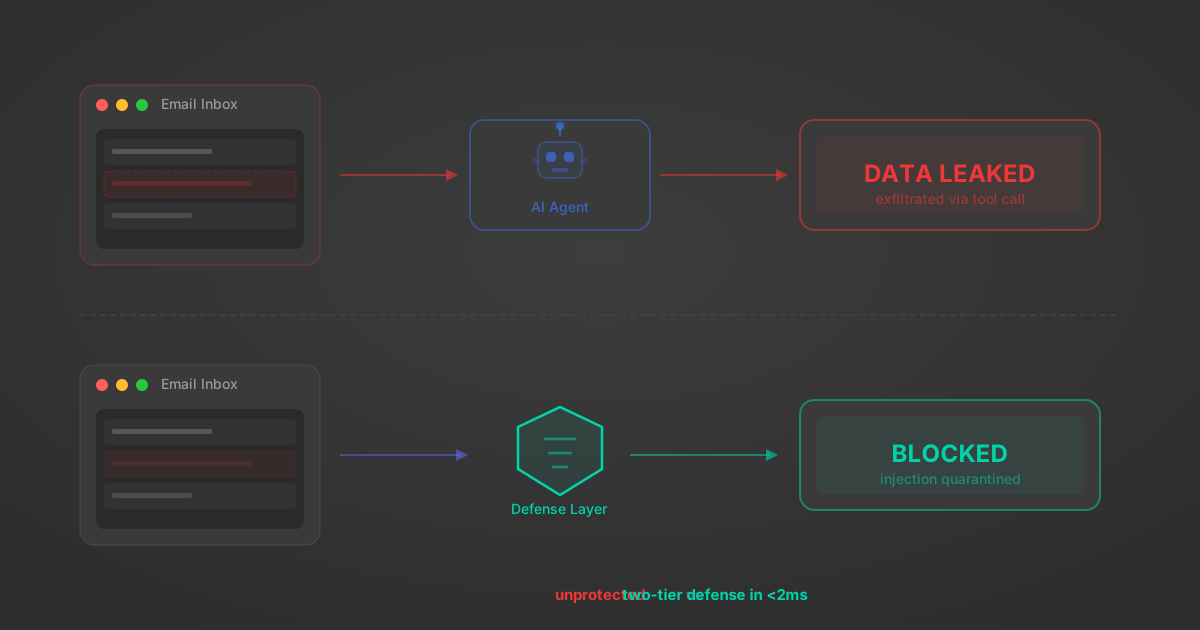
MCP tools that read emails, CRM records, and tickets are indirect prompt injection vectors. Here's how we built a two-tier defense that scans tool results in ~11ms.
12 min
origin_owner_id.All the tools you need to build and scale AI agent integrations, with best-in-class connectivity, execution, and security.