
Feedier MCP Server
for AI Agents
Connect your AI agent to StackOne's Feedier MCP server and give it 49 MCP tools out of the box. Auth, tool execution, and security all managed.
 StackOne






Coverage
49 Agent Actions
Create, read, update, and delete across Feedier — and extend your agent's capabilities with custom actions.

Authentication
Agent Tool Authentication
Per-user OAuth in one call. Your Feedier MCP server gets session-scoped tokens with zero credentials stored on your infra.
Agent Auth →
Security
Agent Protection
Every Feedier tool response scanned for prompt injection in milliseconds — 88.7% accuracy, all running on CPU.
Prompt Injection Defense →
Performance
Max Agent Context. Min Cost.
Free up to 96% of your agent's context window to enhance reasoning and reduce cost, on every Feedier call.
Tools Discovery →What is the Feedier MCP Server?
A Feedier MCP server lets AI agents read and write Feedier data through the Model Context Protocol — Anthropic's open standard for connecting LLMs to external tools. StackOne's Feedier MCP server ships with 49 pre-built actions, fully extensible via the Connector Builder — plus managed authentication, prompt injection defense, observability, and agent execution runtime. Connect it from MCP clients like Claude Desktop, Claude Code, Cursor, Goose, and VS Code, or from agent frameworks like OpenAI Agents SDK, LangChain, and Vercel AI SDK.
All Feedier MCP Tools
Every action from Feedier's API, ready for your agent. Create, read, update, and delete — scoped to exactly what you need.
Reports
- Create Report
Create a new report
- List Reports
Retrieve a paginated list of reports
A Reports
- Retrieve A Report
Retrieve a single report by ID
- Update A Report
Update an existing report by ID
- Delete A Report
Delete a report by ID
Feedbacks
- List Feedback
Retrieve a paginated list of feedback records
- Retrieve Feedback
Retrieve a single feedback record by ID
- Update Feedback
Update the status of a feedback record by ID
- Delete Feedback
Delete feedback records matching an FQL filter
A Segments
- Create A Segment
Create a new audience segment
- Retrieve A Segment
Retrieve a single segment by ID
- Update A Segment
Update an existing segment by ID
- Delete A Segment
Delete a segment by ID
Users
- Create User
Create a new user in the organization
- List Users
Retrieve a paginated list of users
A Users
- Retrieve A User
Retrieve a single user by ID
- Update A User
Update an existing user by ID
- Delete A User
Delete a user by ID
Teams
- Create Team
Create a new team
- List Teams
Retrieve a paginated list of teams
A Teams
- Retrieve A Team
Retrieve a single team by ID
- Update A Team
Update an existing team by ID
A Workflows
- Create A Workflow
Create a new workflow
- Retrieve A Workflow
Retrieve a single workflow by UUID
- Delete A Workflow
Delete a workflow by UUID
Referentials
- Create Referential
Create a new referential
- List Referentials
Retrieve a paginated list of referentials
A Referentials
- Retrieve A Referential
Retrieve a single referential by ID
- Update A Referential
Update an existing referential by ID
- Delete A Referential
Delete a referential by ID
Referential Items
- Create Referential Item
Create a new item in a referential
- List Referential Items
Retrieve a paginated list of items for a referential
A Referential Items
- Retrieve A Referential Item
Retrieve a single item from a referential by its primary attribute value
- Delete A Referential Item
Delete an item from a referential by its primary attribute value
Other (15)
- Create (Receive) Feedback
Create a new feedback record
- Upload A CSV Import
Upload a CSV file to an existing import configuration
- List All Segments
Retrieve a paginated list of all segments
- List Workflows
Retrieve a paginated list of workflows
- Retrieve An Import
Retrieve an import by its UUID
- Update (Sync) Attribute On Feedback
Sync (replace) attributes on feedback records matching an FQL filter
- Generate Shareable Link For A Report
Generate a shareable link for a report
- Bulk Update Feedback
Update the status of multiple feedback records matching an FQL filter
- Attach Attribute To Feedback
Attach attributes to feedback records matching an FQL filter
- Detach Attribute From Feedback
Detach attributes from feedback records matching an FQL filter
- Attach Owners To Feedback
Assign one or more owners to a feedback record
- Detach Owner From Feedback
Remove an owner from a feedback record
- Attach Link To Segment
Attach a team or user link to a segment
- Detach Link From Segment
Detach a link from a segment by segment and link IDs
- Evaluate A KPI Formula
Evaluate a KPI formula and return the computed result
Feedier AI Agent Use Cases
Connect your AI agent to Feedier and help your team scale the support operations they run by hand today.
Use StackOne to connect your AI agent to your helpdesk, CRM, and messaging tools to automate ticket triage and priority routing.
ViewUse StackOne to connect your AI agent to your telephony, CRM, and messaging tools to automate voice call summarization and CRM logging.
ViewUse StackOne to connect your AI agent to your helpdesk, CRM, and messaging tools to automate SLA breach prediction and escalation.
ViewSet Up Your Feedier MCP Server in Minutes
One endpoint. Any framework. Your agent is talking to Feedier in under 10 lines of code.
Agent Frameworks


 JSON
JSON{
"mcpServers": {
"stackone": {
"command": "npx",
"args": [
"-y",
"mcp-remote@latest",
"https://api.stackone.com/mcp?x-account-id=<account_id>",
"--header",
"Authorization: Basic <YOUR_BASE64_TOKEN>"
]
}
}
}Check More Customer Support MCP Servers
115+ actions
113+ actions
101+ actions
77+ actions
73+ actions
72+ actions
69+ actions
Platform Resources
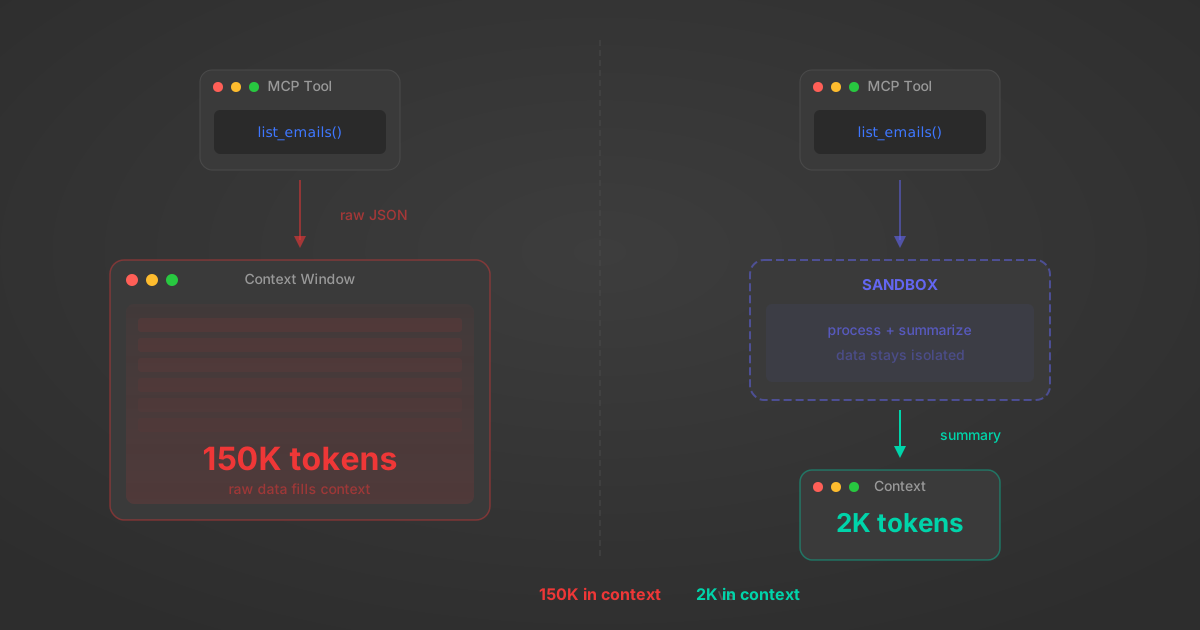
MCP Code Mode: Keeping Tool Responses Out of Agent Context
Anthropic's code_execution processes data already in context. Custom MCP code mode keeps raw tool responses in a sandbox. 14K tokens vs 500.
11 min
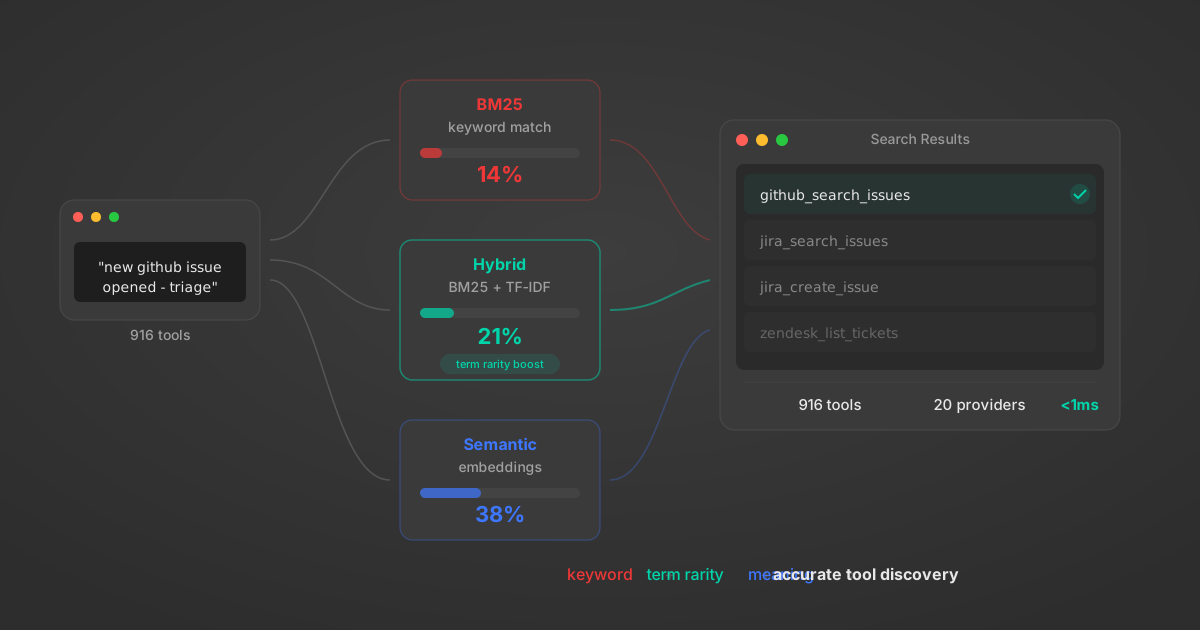
Comparing BM25, TF-IDF, and Hybrid Search for MCP Tool Discovery
Benchmarking BM25, TF-IDF, and hybrid search for MCP tool discovery across 916 tools. The 80/20 TF-IDF/BM25 hybrid hits 21% Top-1 accuracy in under 1ms.
10 min
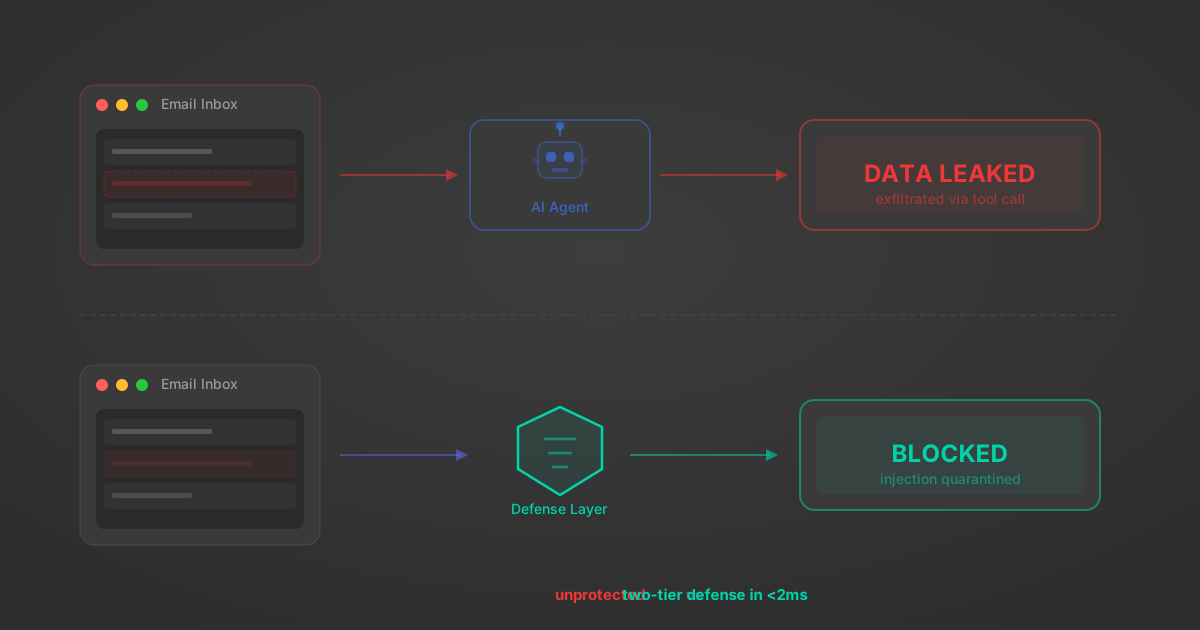
Indirect Prompt Injection Defense for MCP Tools: A Technical Guide
MCP tools that read emails, CRM records, and tickets are indirect prompt injection vectors. Here's how we built a two-tier defense that scans tool results in ~11ms.
12 min
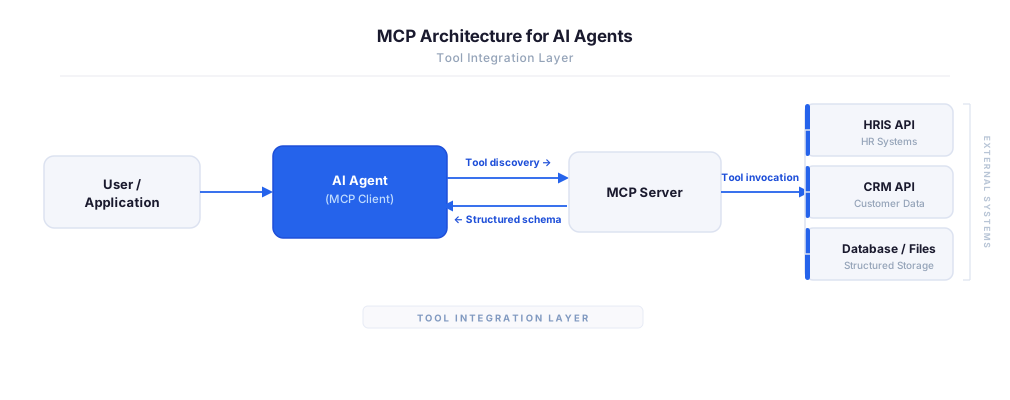
MCP vs A2A: Architecture, Security, and When to Use Each
MCP vs A2A: what each protocol standardizes, how they differ, their shared security risks including indirect prompt injection, and when to use one, both, or a hybrid architecture.
12 min
MCP vs API: What Hundreds of Connector Builds Taught Us
MCP wraps APIs, it doesn't replace them. After building hundreds of connectors that serve both, here's when each approach wins.
14 min read
Feedier MCP Server FAQ
Does StackOne have a Feedier MCP server?
Feedier MCP server vs direct API integration — what's the difference?
How does Feedier authentication work for AI agents?
origin_owner_id.Are Feedier MCP tools vulnerable to prompt injection?
What is the context bloat of a Feedier agent and how do I avoid it?
Can I limit which actions my Feedier agent can access?
Can I create custom agent actions for my Feedier MCP server?
When should I NOT use a Feedier MCP server?
What AI frameworks and AI clients does the StackOne Feedier MCP server support?
Put your AI agents to work
All the tools you need to build and scale AI agent integrations, with best-in-class connectivity, execution, and security.