Announcing StackOne Defender: leading open-source prompt injection guard for your agent Read More

Freshservice MCP Server
for AI Agents

Production-ready Freshservice MCP server with 84 extensible actions — plus built-in authentication, security, and optimized execution.

Freshservice logo
Freshservice MCP Server
Built by StackOne StackOne

Coverage

84 Agent Actions

Create, read, update, and delete across Freshservice — and extend your agent's capabilities with custom actions.

Authentication

Agent Tool Authentication

Per-user OAuth in one call. Your Freshservice MCP server gets session-scoped tokens with zero credentials stored on your infra.

Agent Auth →

Security

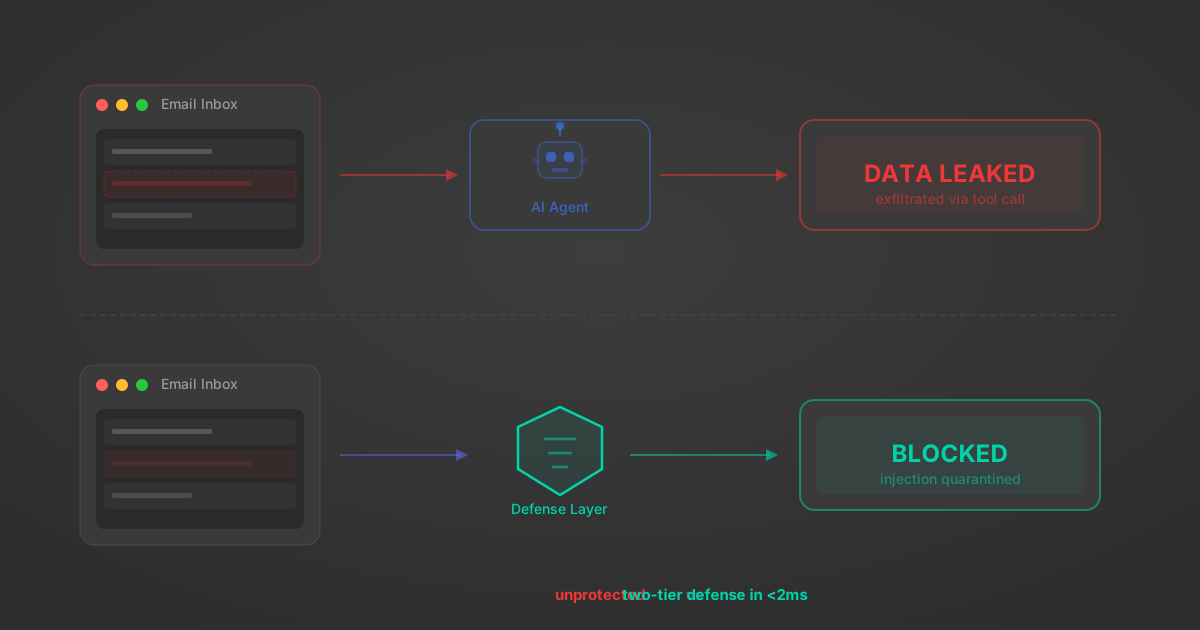
Agent Protection

Every Freshservice tool response scanned for prompt injection in milliseconds — 88.7% accuracy, all running on CPU.

Prompt Injection Defense →

Performance

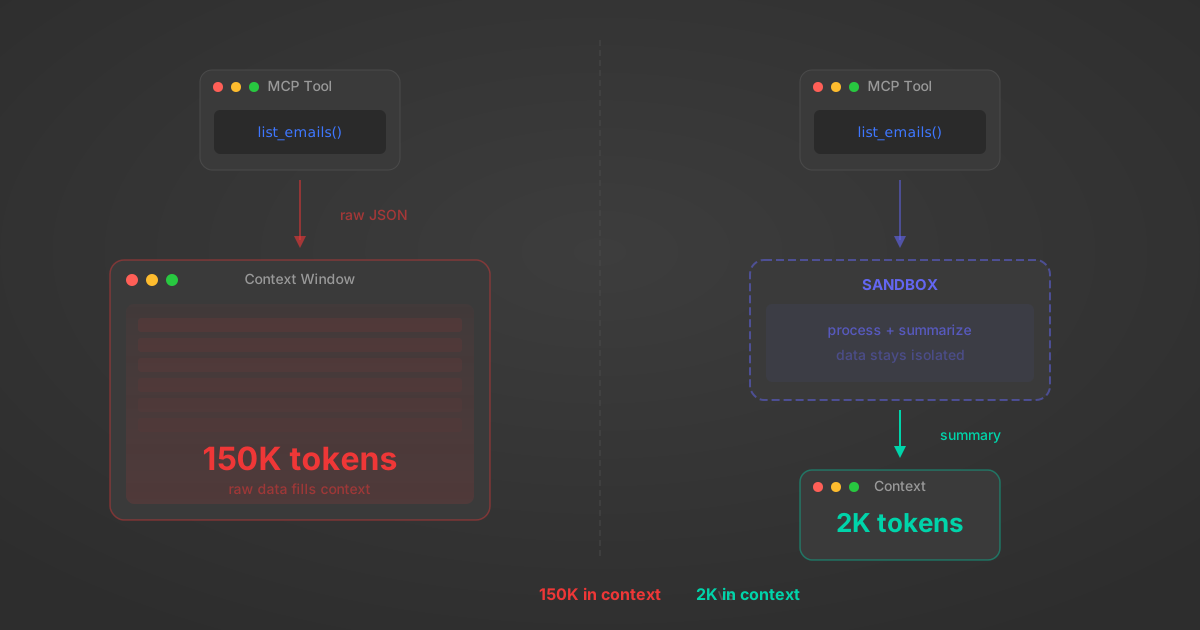
Max Agent Context. Min Cost.

Free up to 96% of your agent's context window to enhance reasoning and reduce cost, on every Freshservice call.

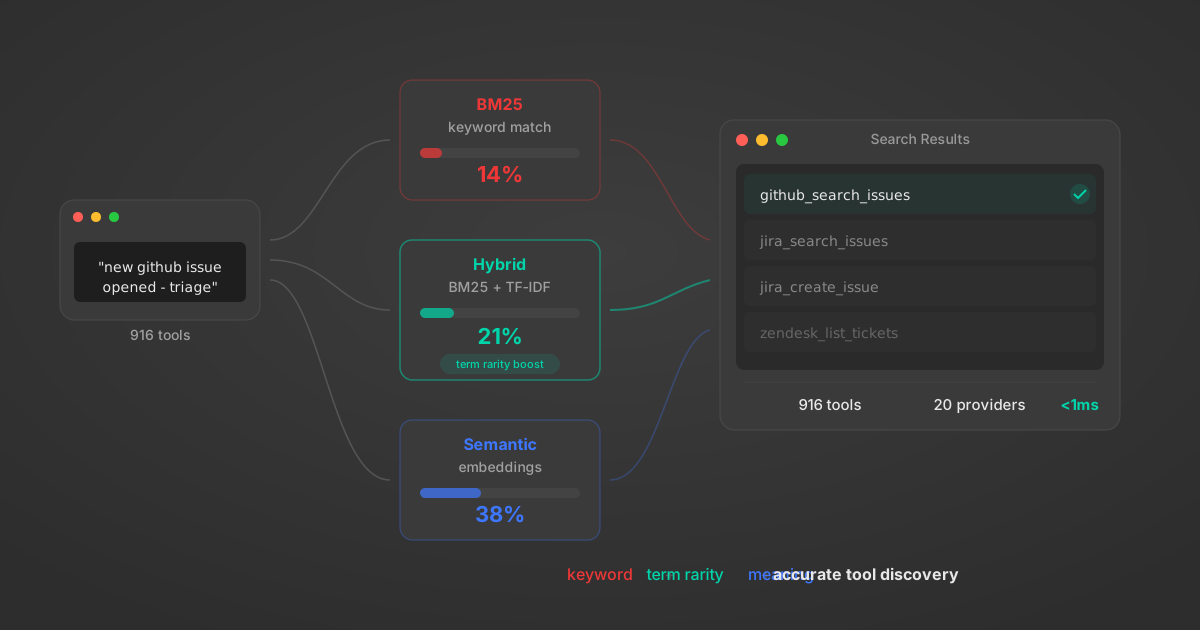
Tools Discovery →

What is the Freshservice MCP Server?

A Freshservice MCP server lets AI agents read and write Freshservice data through the Model Context Protocol — Anthropic's open standard for connecting LLMs to external tools. StackOne's Freshservice MCP server ships with 84 pre-built actions, fully extensible via the Connector Builder — plus managed authentication, prompt injection defense, and optimized agent context. Connect it from MCP clients like Claude Desktop, Cursor, and VS Code, or from agent frameworks like OpenAI Agents SDK, LangChain, and Vercel AI SDK.

All Freshservice MCP Tools and Actions

Every action from Freshservice's API, ready for your agent. Create, read, update, and delete — scoped to exactly what you need.

Agents

  • Create Agent

    Create a new agent in Freshservice

  • List Agents

    Retrieve a list of all agents

  • Get Agent

    Retrieve a specific agent by ID

  • Update Agent

    Update an existing agent

Assets

  • Create Asset

    Create a new asset

  • List Assets

    Retrieve a list of all assets

  • Get Asset

    Retrieve a specific asset by display ID

  • Update Asset

    Update an existing asset

  • Delete Asset

    Delete an asset (moves to trash)

Changes

  • Create Change

    Create a new change request

  • List Changes

    Retrieve a list of all changes

  • Get Change

    Retrieve a specific change by ID

  • Update Change

    Update an existing change

  • Delete Change

    Delete a change

Contracts

  • Create Contract

    Create a new contract

  • List Contracts

    Retrieve a list of all contracts

  • Get Contract

    Retrieve a specific contract by ID

  • Update Contract

    Update an existing contract

Departments

  • Create Department

    Create a new department

  • List Departments

    Retrieve a list of all departments

  • Get Department

    Retrieve a specific department by ID

  • Update Department

    Update an existing department

  • Delete Department

    Delete a department

Groups

  • Create Group

    Create a new group

  • List Groups

    Retrieve a list of all groups

  • Get Group

    Retrieve a specific group by ID

  • Update Group

    Update an existing group

  • Delete Group

    Delete a group

Problems

  • Create Problem

    Create a new problem

  • List Problems

    Retrieve a list of all problems

  • Get Problem

    Retrieve a specific problem by ID

  • Update Problem

    Update an existing problem

  • Delete Problem

    Delete a problem

Releases

  • Create Release

    Create a new release

  • List Releases

    Retrieve a list of all releases

  • Get Release

    Retrieve a specific release by ID

  • Update Release

    Update an existing release

  • Delete Release

    Delete a release

Requesters

  • Create Requester

    Create a new requester

  • List Requesters

    Retrieve a list of all requesters

  • Get Requester

    Retrieve a specific requester by ID

  • Update Requester

    Update an existing requester

Solution Categorys

  • Create Solution Category

    Create a new solution category

  • Get Solution Category

    Retrieve a specific solution category by ID

  • Update Solution Category

    Update an existing solution category

  • Delete Solution Category

    Delete a solution category

Solution Folders

  • Create Solution Folder

    Create a new solution folder

  • Get Solution Folder

    Retrieve a specific solution folder by ID

  • Update Solution Folder

    Update an existing solution folder

  • Delete Solution Folder

    Delete a solution folder

Tickets

  • Create Ticket

    Create a new support ticket

  • List Tickets

    Retrieve a paginated list of all tickets

  • Get Ticket

    Retrieve a single ticket by ID

  • Update Ticket

    Update an existing ticket

  • Delete Ticket

    Delete a ticket (moves to trash)

Ticket Tasks

  • Create Ticket Task

    Create a task on a ticket

  • List Ticket Tasks

    Retrieve all tasks for a ticket

  • Get Ticket Task

    Retrieve a specific task on a ticket

  • Update Ticket Task

    Update a task on a ticket

  • Delete Ticket Task

    Delete a task from a ticket

Ticket Time Entrys

  • Create Ticket Time Entry

    Log time spent on a ticket

  • Get Ticket Time Entry

    Retrieve a specific time entry for a ticket

  • Update Ticket Time Entry

    Update a time entry on a ticket

  • Delete Ticket Time Entry

    Delete a time entry from a ticket

Other (20)

  • Create Ticket Reply

    Add a public reply to a ticket

  • Create Child Ticket

    Create a child ticket under an existing ticket

  • Get Authenticated Agent

    Retrieve the currently authenticated agent's profile

  • List Contract Types

    Retrieve all contract types

  • List Solution Categories

    Retrieve all solution categories

  • List Ticket Conversations

    Retrieve all conversations for a ticket

  • List Ticket Time Entries

    Retrieve all time entries for a ticket

  • Get Ticket Activity

    Retrieve activity log for a ticket

  • Deactivate Agent

    Deactivate an agent

  • Filter Agents

    Search agents using query language

  • Forget Agent

    Permanently delete an agent and their tickets

  • Filter Assets

    Search assets using query language

  • Submit Contract For Approval

    Submit a contract for approval

  • Approve Contract

    Approve a pending contract

  • Reject Contract

    Reject a pending contract

  • Filter Departments

    Search departments using query language

  • Filter Requesters

    Search requesters using query language

  • Deactivate Requester

    Deactivate a requester

  • Forget Requester

    Permanently delete a requester's data

  • Filter Tickets

    Search tickets using query language

Set Up Your Freshservice MCP Server in Minutes

One endpoint. Any framework. Your agent is talking to Freshservice in under 10 lines of code.

MCP Clients

Agent Frameworks

Claude Desktop
{
  "mcpServers": {
    "stackone": {
      "command": "npx",
      "args": [
        "-y",
        "mcp-remote@latest",
        "https://api.stackone.com/mcp?x-account-id=<account_id>",
        "--header",
        "Authorization: Basic <YOUR_BASE64_TOKEN>"
      ]
    }
  }
}

More Customer Support MCP Servers

Intercom

123+ actions

SurveyMonkey

104+ actions

ServiceNow

74+ actions

Freshdesk

71+ actions

Gorgias

69+ actions

Discourse

67+ actions

Dixa

65+ actions

Freshservice MCP Server FAQ

Freshservice MCP server vs direct API integration — what's the difference?
A Freshservice MCP server and direct API integration serve different use cases. Direct API integration is for software-to-software — backend code calling Freshservice. A Freshservice MCP server is for AI agents — MCP clients like Claude and Cursor, plus framework agents built with OpenAI, LangChain, or Vercel AI — discovering and calling Freshservice at runtime. StackOne provides both.
How does Freshservice authentication work for AI agents?
Freshservice authentication for AI agents works through a StackOne Connect Session. Create one via the dashboard or the SDK — you get an auth link and ready-to-paste config for Claude Desktop, Cursor, and other MCP clients. Your user authenticates their own Freshservice account; StackOne handles token exchange, storage, and refresh. Credentials never reach the LLM, and each user is isolated via origin_owner_id.
Are Freshservice MCP tools vulnerable to prompt injection?
Yes — Freshservice MCP tools can be vulnerable to indirect prompt injection. Any tool that reads user-written content — documents, messages, tickets, records, or free-text fields — is a potential vector. StackOne Defender scans every tool response before it enters the agent's context — regex patterns in ~1ms, then a MiniLM classifier in ~4ms. 88.7% accuracy, CPU-only.
What is the context bloat of a Freshservice agent and how do I avoid it?
Context bloat happens when Freshservice tool schemas and API responses eat your Freshservice agent's memory, preventing it from reasoning effectively. A single Freshservice query can return a massive JSON response, and connecting multiple tools compounds the problem. Tools Discovery and Code Mode reduce context bloat — loading only relevant tools per query and keeping raw responses out of the agent's context.
Can I limit which actions my Freshservice agent can access?
Yes — you can limit which actions your Freshservice agent can access directly from the StackOne dashboard. Toggle actions on or off, or restrict them to specific accounts, with no code changes to your agent. Session tokens can be scoped to exact actions so if one leaks, exposure stays contained.
Can I create custom agent actions for my Freshservice MCP server?
Yes — you can create custom agent actions for your Freshservice MCP server using Connector Builder. It's an integration agent your coding assistant (Claude Code, Cursor, or Copilot) can invoke to research Freshservice's API, generate production-ready connector YAML, test against the live API, and validate before you ship.
When should I NOT use a Freshservice MCP server?
Skip a Freshservice MCP server if your integration is purely software-to-software — direct Freshservice API integration is simpler when no AI agent is involved. For deterministic, compliance-critical operations (financial transactions, regulatory reporting), direct API gives you predictable behavior without agent-driven decision-making. MCP shines when AI agents need to dynamically discover and call Freshservice actions at runtime.
What AI frameworks and AI clients does the StackOne Freshservice MCP server support?
The StackOne Freshservice MCP server supports both. MCP clients (paste-and-go apps): Claude Desktop, Claude Code, Cursor, VS Code, Goose. Agent frameworks (code SDKs you build with): OpenAI Agents SDK, Anthropic, Vercel AI, Google ADK, CrewAI, Pydantic AI, LangChain, LangGraph, Azure AI Foundry.

Put your AI agents to work

All the tools you need to build and scale AI agent integrations, with best-in-class connectivity, execution, and security.