Connect
Optimize
Secure
Announcing StackOne Defender: leading open-source prompt injection guard for your agent • Read More →
Production-ready Help Scout MCP server with 36 extensible actions — plus built-in authentication, security, and optimized execution.
 StackOne
Coverage
Create, read, update, and delete across Help Scout — and extend your agent's capabilities with custom actions.

Authentication
Per-user OAuth in one call. Your Help Scout MCP server gets session-scoped tokens with zero credentials stored on your infra.
Agent Auth →
Security
Every Help Scout tool response scanned for prompt injection in milliseconds — 88.7% accuracy, all running on CPU.
Prompt Injection Defense →
Performance
Free up to 96% of your agent's context window to enhance reasoning and reduce cost, on every Help Scout call.
Tools Discovery →A Help Scout MCP server lets AI agents read and write Help Scout data through the Model Context Protocol — Anthropic's open standard for connecting LLMs to external tools. StackOne's Help Scout MCP server ships with 36 pre-built actions, fully extensible via the Connector Builder — plus managed authentication, prompt injection defense, and optimized agent context. Connect it from MCP clients like Claude Desktop, Cursor, and VS Code, or from agent frameworks like OpenAI Agents SDK, LangChain, and Vercel AI SDK.
Every action from Help Scout's API, ready for your agent. Create, read, update, and delete — scoped to exactly what you need.
Create a new conversation in a mailbox with an initial thread.
Retrieve a paginated list of conversations across one or more mailboxes.
Retrieve the full details of a single conversation by its ID.
Apply a single JSON Patch operation to update one field of a conversation.
Permanently delete a conversation by its ID.
Create a new customer record in Help Scout.
Retrieve a paginated list of customers with optional filters.
Retrieve full profile details of a single customer by their ID.
Apply one or more JSON Patch operations to update a customer record.
Permanently delete a customer record by its ID.
Create a new saved reply in a mailbox.
Retrieve a single saved reply by its ID.
Update an existing saved reply in a mailbox.
Permanently delete a saved reply from a mailbox.
Retrieve a paginated list of all tags in the Help Scout account.
Retrieve a single tag by its ID.
Retrieve a paginated list of all users (agents) in the Help Scout account.
Retrieve the full profile of a specific user by their ID.
Add an outgoing reply to an existing conversation.
Add an internal note to an existing conversation.
Retrieve all threads (messages, notes, replies) for a conversation.
Retrieve all email addresses associated with a specific customer.
Retrieve all phone numbers associated with a specific customer.
Retrieve a list of all mailboxes in the Help Scout account.
Retrieve details of a specific mailbox by its ID.
Retrieve all custom fields configured for a mailbox.
Retrieve all folders within a specific mailbox.
Retrieve all saved replies for a mailbox.
Retrieve a paginated list of all teams in the Help Scout account.
Retrieve all members of a specific team.
Retrieve the current availability status of all users in the Help Scout account.
Retrieve the current availability status of a specific user.
Retrieve the profile of the currently authenticated user or app.
Retrieve a paginated list of all workflows in the Help Scout account.
Replace all tags on a conversation with a new set of tags.
Manually trigger a manual workflow on one or more conversations.
One endpoint. Any framework. Your agent is talking to Help Scout in under 10 lines of code.
MCP Clients
Agent Frameworks

 JSON
JSON{
"mcpServers": {
"stackone": {
"command": "npx",
"args": [
"-y",
"mcp-remote@latest",
"https://api.stackone.com/mcp?x-account-id=<account_id>",
"--header",
"Authorization: Basic <YOUR_BASE64_TOKEN>"
]
}
}
}123+ actions
104+ actions
84+ actions
74+ actions
71+ actions
69+ actions
67+ actions
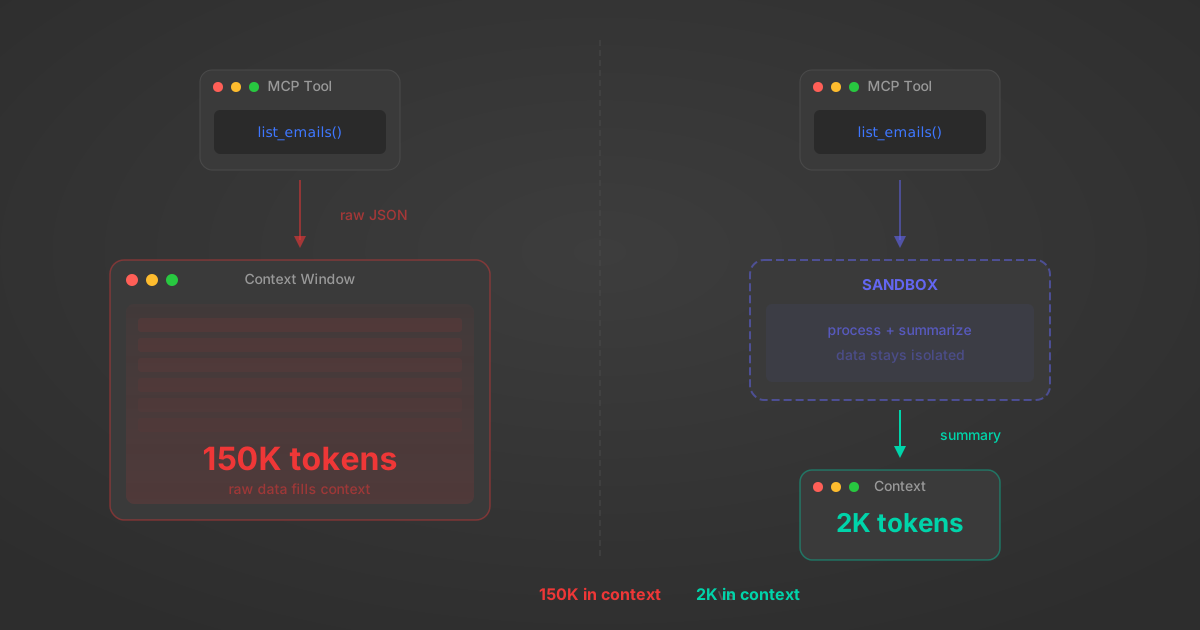
Anthropic's code_execution processes data already in context. Custom MCP code mode keeps raw tool responses in a sandbox. 14K tokens vs 500.
11 min
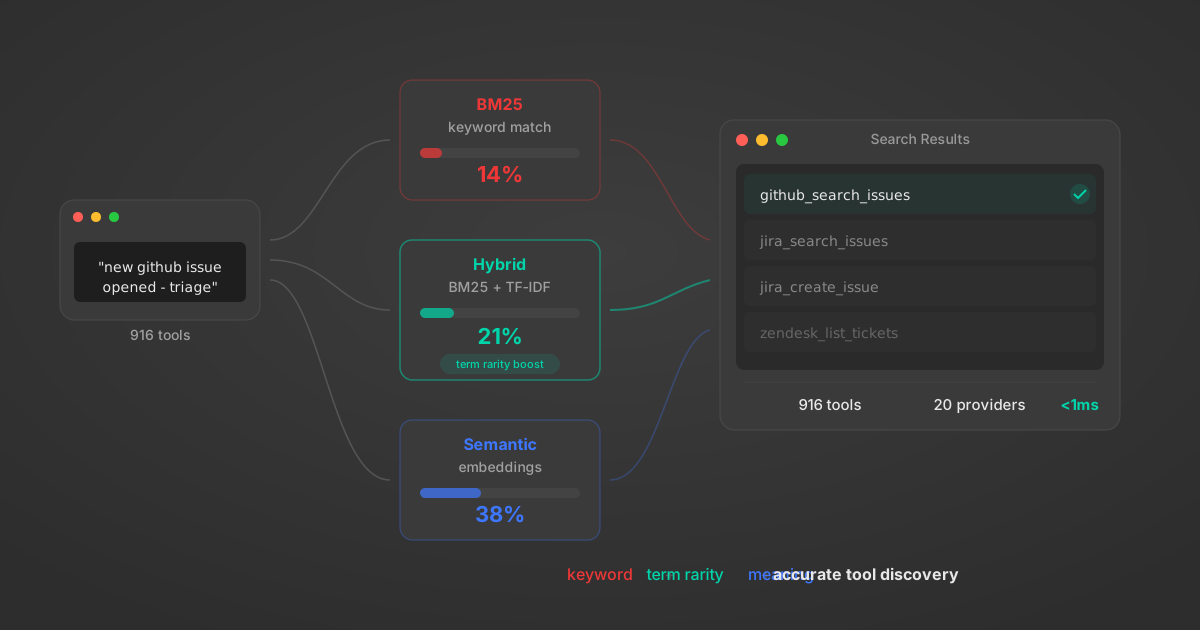
Benchmarking BM25, TF-IDF, and hybrid search for MCP tool discovery across 916 tools. The 80/20 TF-IDF/BM25 hybrid hits 21% Top-1 accuracy in under 1ms.
10 min
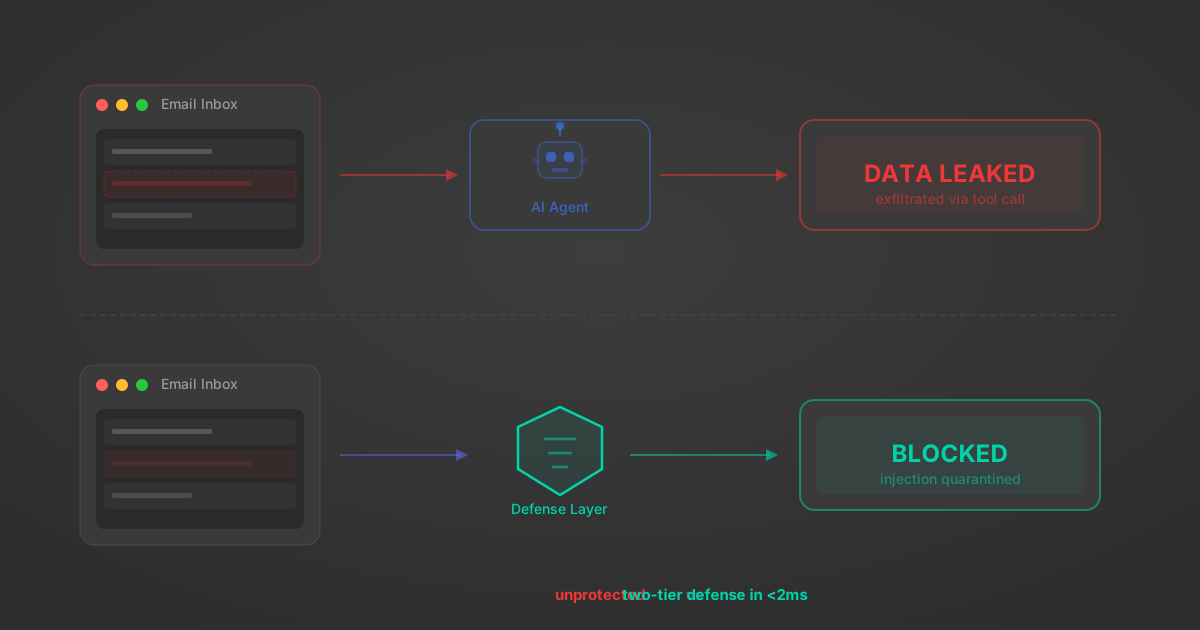
MCP tools that read emails, CRM records, and tickets are indirect prompt injection vectors. Here's how we built a two-tier defense that scans tool results in ~11ms.
12 min
origin_owner_id.All the tools you need to build and scale AI agent integrations, with best-in-class connectivity, execution, and security.